
Folate (Vitamin B9) Deficiency: Symptoms, Causes, Folic Acid Dosing, Treatment and Prevention – The Complete Doctor’s Guide
The vitamin that prevents birth defects and the dangerous mistake that lets nerves die while the blood looks normal
Written and reviewed by: Dr Qazi Taqweemulhaq, FCPS Medicine. Professor of Medicine, Women Medical and Dental College, Abbottabad, Pakistan. Consultant Physician, 32 Years Clinical Experience
📅 Last Updated: May 2026 | References: NIH ODS, NCBI StatPearls, CDC, AAP 2025, Cleveland Clinic, Merck Manual
⚡ Quick Answer: Folate deficiency symptoms include megaloblastic anaemia, depression, mouth ulcers, and most critically, neural tube defects in the developing baby. The neural tube closes by day 28 of pregnancy, before most women know they are pregnant. Every woman of childbearing age must take 400 mcg of folic acid daily. Always check B12 before treating folate deficiency. Folic acid corrects the anaemia but masks ongoing nerve destruction from B12 deficiency. Standard treatment is oral folic acid 5 mg per day for 4 months.
✅ KEY TAKEAWAYS: Folate (Vitamin B9) Deficiency |
• The neural tube closes by day 28 of pregnancy before most women know they are pregnant. Folic acid must be started before conception |
Every woman of childbearing age should take 400 mcg of folic acid daily, whether or not pregnancy is planned |
• Never treat folate deficiency with folic acid before checking B12. Folic acid corrects anaemia but masks ongoing B12-related nerve damage |
• Folate deficiency causes megaloblastic anaemia identical to B12 deficiency. MMA is the key differentiating test normal in folate deficiency, elevated in B12 |
• Every patient on methotrexate must be co-prescribed folic acid 5 mg weekly. This is standard of care, not optional |
• Folate stores last only 3 to 4 months. Deficiency develops much faster than B12 deficiency |
Overview
Day 28 – Your Baby’s Spine Is Already Forming. Does Your Body Have Enough Folate?
There is one fact I share with every young woman who comes to my clinic. I wish it were printed on the front page of every women’s health magazine in Pakistan.
By the time most women realise they are pregnant, the most critical window for folate has already closed.
The neural tube, the embryonic structure that becomes your baby’s brain and spinal cord closes between days 23 and 28 of pregnancy. Most women do not take a pregnancy test until they have missed a period, usually around day 35 to 42. By that point, the neural tube is already formed. If folate was inadequate during those first four weeks, the damage, spina bifida or anencephaly, has already occurred.
The CDC estimates that adequate folic acid supplementation prevents 50 to 70% of all neural tube defects. In countries with mandatory grain fortification, neural tube defect rates have fallen by 35%. In those areas of the world, where fortification is inconsistent, the rates remain far higher than they need to be.
But folic acid deficiency is not only a pregnancy issue. It causes megaloblastic anaemia identical to B12 deficiency. It drives depression through impaired neurotransmitter synthesis. It is depleted by alcohol, methotrexate, anticonvulsants, and the oral contraceptive pill.
And it hides a trap that even experienced clinicians fall into. Treating folate deficiency with folic acid can mask a concurrent B12 deficiency. Correcting the anaemia while B12 deficiency continues destroys the spinal cord in silence.
This article is about you if you are a woman of childbearing age, or you are on methotrexate and have never been prescribed folic acid, or you drink alcohol regularly and feel tired and depressed; your folate may already be compromised.
🏥 From My Clinic: A 26-year-old woman came to me after her second miscarriage. Her blood count showed megaloblastic anaemia. Her serum folate was critically low. She started folic acid 5 mg daily, waited four months, then conceived again. She delivered a healthy baby at term. A tablet that costs pennies. A conversation nobody had with her in five years on the pill.
How common is Folate deficiency?
In the United States, the CDC estimates that folic acid fortification of grain products since 1998 has reduced neural tube defects by 35%. However, despite mandatory fortification, approximately 400,000 pregnancies per year worldwide are affected by neural tube defects, including a significant number in the US where supplement compliance remains inconsistent.
In the UK, despite NICE recommending folic acid supplementation for all women planning pregnancy, surveys show fewer than one third of women begin supplementation before conception.
The European Food Safety Authority confirms that folate deficiency affects a significant proportion of European women of childbearing age, particularly in Eastern Europe.
Folate vs Folic Acid – Understanding the Critical Difference
Folate and folic acid are not the same thing, and the distinction matters clinically.
Folate is the naturally occurring form of Vitamin B9 found in food. Folic acid is the synthetic form used in supplements and fortified foods. Both must be converted to the active form, 5-methyltetrahydrofolate (5-MTHF) to work inside the body.
Feature | Folate (Natural) | Folic Acid (Synthetic) |
Definition | Naturally occurring in food | Synthetic, oxidised form in supplements |
Sources | Leafy greens, legumes, liver, eggs, citrus | Supplements, fortified flour, breakfast cereals |
Bioavailability | Around 50% from food | Around 85% from supplements |
NTD prevention | Food folate alone is unreliable | Folic acid is the ONLY form proven to prevent neural tube defects (CDC, AAP) |
MTHFR variants | Not applicable | 5-MTHF supplement bypasses MTHFR enzyme option for those with confirmed variants |
Table 1. Folate vs folic acid , clinical distinctions. Sources: NIH ODS; CDC; NCBI Bookshelf.
The Seven Critical Functions of Folate
- DNA synthesis and repair: Every dividing cell needs folate. Deficiency impairs cell division most visibly in bone marrow, gut epithelium, and the developing embryo.
- Neural tube formation: During weeks 3 to 4 of embryonic development, folate drives the cell division required to close the neural tube. Only pre-conception supplementation guarantees adequate levels at this moment.
- Red blood cell maturation: Folate is required for red cell precursor maturation. Deficiency causes megaloblastic anaemia identical to B12 deficiency on a blood count alone.
- Homocysteine metabolism: With B12 and B6, folate converts homocysteine to methionine. Deficiency causes elevated homocysteine, a risk factor for heart disease, stroke, and DVT.
- Methionine and SAMe production: SAMe is the body’s universal methyl donor. SAMe is required for neurotransmitter synthesis. This explains the strong connection between folate and depression.
- Brain development: Required throughout childhood and adult neurological function. Low folate is associated with dementia, depression, and psychiatric disorders in adults.
- Amino acid metabolism: Participates in metabolism of serine, glycine, and histidine, supporting protein synthesis throughout the body.
Risks & Dosage
Neural Tube Defects: The Most Devastating Consequence of Folate Deficiency
Neural tube defects are birth defects of the brain, spine, and spinal cord that develop when the neural tube fails to close properly during the first four weeks of embryonic life. They are the most serious and most preventable consequence of vitamin B9 deficiency.
The Two Major Neural Tube Defects
1. Spina Bifida
Spina bifida occurs when the lower neural tube fails to close. The most severe form, myelomeningocele results in paralysis, loss of bladder and bowel control, hydrocephalus requiring lifelong shunting, and multiple surgeries.
Periconceptional folic acid supplementation prevents 50 to 70% of spina bifida cases. This is one of the most powerful preventive interventions in all of medicine, at one of the lowest possible costs.
2. Anencephaly
Anencephaly is the failure of the upper neural tube to close, resulting in absent development of the brain, skull, and scalp. It is almost always fatal. It is almost completely preventable with adequate periconceptional folate.
The 28-Day Window – Why Pre-Conception Supplementation Is Non-Negotiable
The neural tube closes between days 23 and 28 of embryonic development. At this point, the embryo is only 5 to 6 weeks from the last menstrual period. Most women have not yet missed a period.
This is why the advice to start folic acid when you find out you are pregnant is dangerously wrong. By the time most women know they are pregnant, the critical window has already passed.
⚠️ Warning: Waiting until pregnancy is confirmed before starting folic acid is too late. The neural tube has already closed. Begin folic acid before conception, not after confirmation. This is the most important single piece of advice in this entire article.
Other Pregnancy Complications of Folate Deficiency
- Recurrent miscarriage: elevated homocysteine impairs placental function
- Placental abruption: premature separation of the placenta
- Preterm birth and low birth weight
- Congenital heart defects: Hungarian trials showed folic acid-containing multivitamins prevented around 40% of congenital heart defects
💡 Clinical Insight: The UK introduced mandatory fortification of wheat flour with folic acid in 2024, expected to prevent approximately 200 neural tube defects per year. Food fortification reaches women with unplanned pregnancies who may never take a supplement.
How Much Folate Do You Need Per Day?
Folate requirements are expressed in Dietary Folate Equivalents (DFE), a unit that accounts for the difference in bioavailability between food folate and synthetic folic acid.
1 mcg food folate = 0.6 mcg folic acid from supplements.
Life Stage / Group | RDA / AI (mcg DFE/day) | Notes |
Adults ≥19 years | 400 mcg DFE | Standard adult requirement |
Women planning pregnancy | 400 mcg folic acid BEFORE conception | Begin at least 1 month, ideally 3 months, before conception. |
Pregnant women | 600 mcg DFE (400 mcg supplement) | Pre-conception supplementation is the only reliable strategy |
Breastfeeding women | 500 mcg DFE | Breast milk folate reflects maternal status |
Women with previous neural tube defect pregnancy | 4,000 mcg (4 mg) folic acid daily | CDC/AAP: 10× standard dose. Begin 1 month before conception. |
Children 1–3 years | 150 mcg DFE | |
Teens 14–18 years | 400 mcg DFE |
Table 2. Folate RDA by life stage. Sources: NIH ODS; CDC; AAP (reaffirmed March 2025).
⚠️ The Most Important Recommendation in This Article: Every woman who could possibly become pregnant should take 400 mcg of folic acid every day, regardless of whether pregnancy is planned. The neural tube closes by day 28. Most women do not know they are pregnant until day 35 to 42. Waiting until pregnancy is confirmed is too late. This is the recommendation of the CDC, WHO, AAP, and every major obstetric authority in the world.
Symptoms & Diagnosis
Folate Deficiency Symptoms: What Your Body Is Telling You
Symptoms emerge within weeks to months of inadequate intake, much faster than B12 deficiency, because folate stores last only 3 to 4 months. The blood picture is identical to B12 deficiency, but the neurological consequences are less severe.
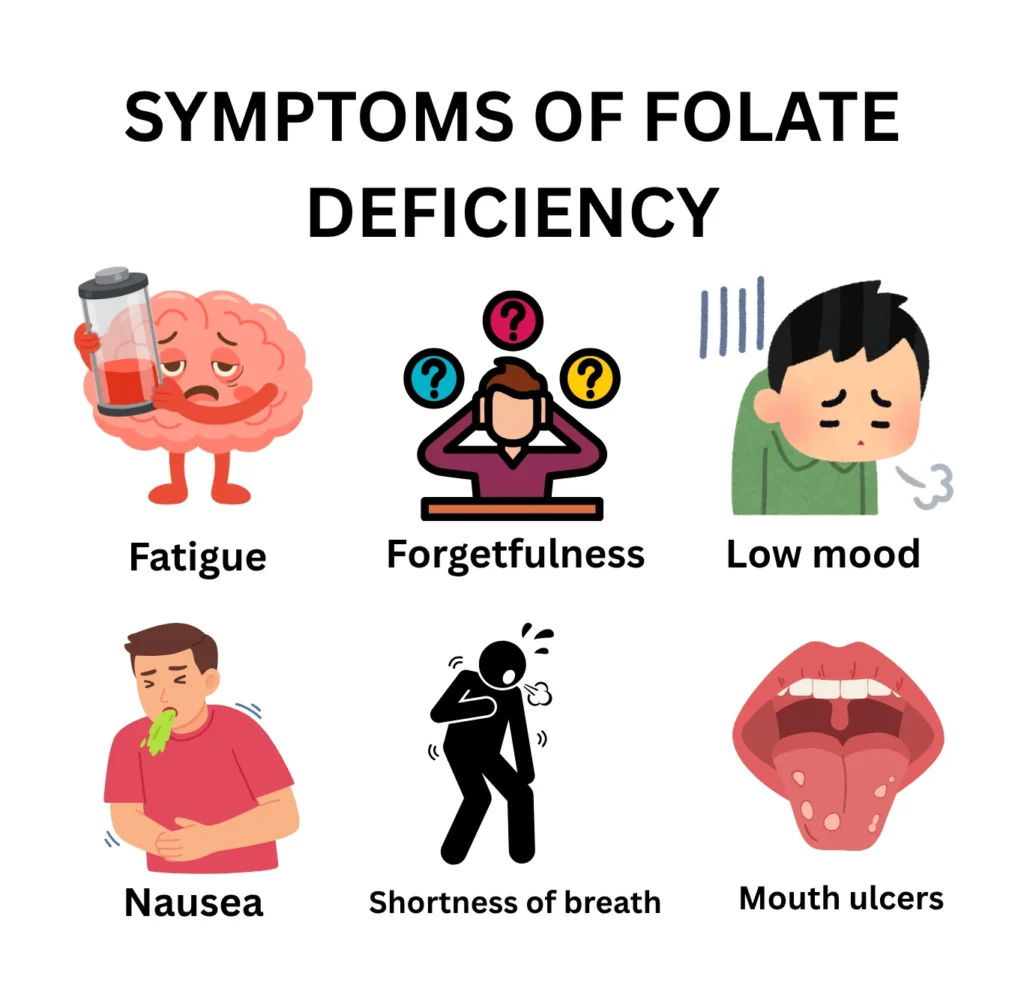
System | Mild–Moderate Deficiency | Severe / Prolonged Deficiency |
Blood | Fatigue, pallor, shortness of breath on exertion | Megaloblastic anaemia, large, immature red cells; pancytopenia in severe cases |
Neurological | Mild cognitive blunting, forgetfulness, irritability | Peripheral neuropathy (less common than B12); rarely myelopathy |
Mental Health | Depression, anxiety, low mood, brain fog | Severe depression; treatment-resistant depression linked to low folate |
Mouth & Tongue | Mouth ulcers, sore mouth | Glossitis: smooth, inflamed, painful tongue; angular stomatitis |
Gastrointestinal | Nausea, loss of appetite | Diarrhoea, malabsorption, weight loss |
Pregnancy | Increased miscarriage risk | Neural tube defects, foetal growth restriction, preterm birth |
Cardiovascular | Elevated homocysteine | Hyperhomocysteinaemia, independent risk factor for heart disease, stroke, DVT |
Table 3. Folate deficiency symptoms by severity. Sources: NCBI StatPearls; Cleveland Clinic; Merck Manual.
1. Megaloblastic Anaemia, Identical to B12 but Without the Nerve Damage
Folate deficiency produces megaloblastic anaemia, the exact same blood picture as B12 deficiency: large oval red cells, hypersegmented neutrophils, elevated MCV, raised LDH. The critical difference:
- Folate deficiency does NOT cause subacute combined degeneration of the spinal cord
- B12 deficiency DOES and treating B12 with folic acid alone allows nerve destruction to continue
- MMA is the key differentiating test: normal in folate deficiency, elevated in B12 deficiency
2. Depression and Treatment-Resistant Mood Disorders
The link between folate and depression is one of the most clinically important and most overlooked associations in nutritional psychiatry:
- Low folate found in 15–38% of depressed patients
- Low folate is independently associated with poor antidepressant response
- 5-MTHF (methylfolate) is licensed as an augmentation agent for antidepressants in the USA
💡 Clinical Insight: I check folate and B12 in every patient presenting with new-onset depression or inadequate response to antidepressants. This simple step transforms outcomes in a significant proportion of cases.
3. Mouth Ulcers and Glossitis – An Underused Clinical Clue
Recurrent mouth ulcers and a smooth, sore, inflamed tongue (glossitis) are among the most consistent early signs of folate deficiency. The rapidly dividing cells of the oral mucosa are among the first to show the effects of impaired DNA synthesis.
💡 Clinical Insight: A patient with recurrent unexplained mouth ulcers, particularly if they drink alcohol regularly, eat poorly, or take methotrexate, should have their folate checked immediately.
4. Elevated Homocysteine – The Silent Cardiovascular Threat
Hyperhomocysteinaemia from folate deficiency is an independent risk factor for:
- Myocardial infarction and stroke
- Peripheral vascular disease and DVT
- Alzheimer’s disease and cognitive decline
Causes & Treatment
What Causes Folate Deficiency? Every Cause Explained
Cause | Specific Cause | Key Mechanism |
Dietary | Poor intake of leafy vegetables, legumes, fruit | Most common cause. Folate is heat-sensitive. Boiling destroys up to 50% of food folate. |
Alcohol | Heavy or chronic alcohol consumption | Blocks folate absorption, impairs hepatic storage, increases urinary losses, displaces folate-rich foods from diet |
Drug-induced | Methotrexate | Directly inhibits DHFR, the enzyme that activates folate. Always co-prescribe folic acid 5 mg weekly |
Drug-induced | Anticonvulsants (phenytoin, carbamazepine, valproate) | Reduce folate absorption and accelerate hepatic metabolism. Valproate also independently causes NTDs. |
Drug-induced | Oral contraceptive pill (OCP) | Oestrogen-containing OCPs reduce plasma folate. Women stopping OCP to conceive should begin folic acid immediately |
Malabsorption | Coeliac disease | Proximal small intestine is the primary folate absorption site. It is destroyed by gluten-triggered inflammation |
Malabsorption | IBD (Crohn’s, UC) | Mucosal inflammation reduces absorption; sulfasalazine (used in IBD treatment) further depletes folate. |
Increased demand | Pregnancy and lactation | Folate demand doubles. Body stores last only weeks at increased demand. Pre-conception supplementation is the only solution |
Increased demand | Haemolytic anaemia | Rapid red cell turnover massively increases folate demand for bone marrow DNA synthesis |
Genetic | MTHFR gene variants (C677T, A1298C) | Reduce efficiency of folate activation by 35–70%. Found in 5–15% of some populations. Increases NTD and cardiovascular risk when combined with low dietary folate |
Table 4. Complete causes of folate deficiency. Sources: NIH ODS; NCBI StatPearls; Cleveland Clinic; CDC.
The Methotrexate-Folate Relationship, Every MTX Patient Must Know This
Methotrexate works by inhibiting dihydrofolate reductase (DHFR), the enzyme that activates folate. This is its therapeutic mechanism in cancer, but also its toxicity mechanism in autoimmune disease.
- Every patient on low-dose methotrexate for autoimmune disease should be prescribed folic acid 5 mg once weekly taken on a DIFFERENT day from the methotrexate dose
- This dramatically reduces MTX side effects: mouth ulcers, nausea, liver toxicity, hair loss
- It does NOT reduce therapeutic anti-inflammatory efficacy
- This is standard of care, yet I regularly see patients on methotrexate who have never been prescribed folic acid
⚠️ Warning: If you are on methotrexate for any condition and have NOT been prescribed folic acid ask your doctor today. This co-prescription is not optional. It is a fundamental patient safety measure.
Alcohol, The Most Potent Dietary Cause
Alcohol is simultaneously the most common dietary cause of folate deficiency and the most underappreciated. It:
- Blocks active folate transport across the intestinal mucosa
- Impairs hepatic storage of folate
- Increases urinary folate excretion
- Displaces folate-rich foods from the diet
💡 Clinical Insight: A patient with alcohol use disorder presenting with megaloblastic anaemia almost certainly has concurrent folate, B12, and thiamine deficiency. All three should be replaced. Thiamine must be given FIRST before glucose, to prevent precipitation of Wernicke’s encephalopathy.
How Is Folate Deficiency Diagnosed? Including the Critical B12 Masking Trap
Diagnosis requires blood tests but which tests, in which order, and what to do with borderline results all have clinically important answers.
The Blood Tests
- Serum folate: first-line test. Deficiency: < 3 ng/mL (< 7 nmol/L). Reflects recent dietary intake. Can be low after just days of poor eating. Useful but can be misleading.
- Red cell folate: better measure of long-term folate status. Deficiency: < 140 ng/mL. Less affected by recent diet. Preferred when chronic deficiency is suspected.
- Homocysteine: elevated in both folate and B12 deficiency, useful supportive marker but not specific
- Methylmalonic acid (MMA): normal in folate deficiency. Elevated in B12 deficiency. This is the key differentiating test.
- Serum B12: must ALWAYS be measured alongside folate. See the masking trap below
- Full blood count: macrocytosis (MCV > 100 fL), hypersegmented neutrophils. Concurrent iron deficiency can normalise MCV and mask megaloblastic changes
The Critical Diagnostic Trap, The B12 Masking Problem
Never treat presumed folate deficiency with folic acid before checking Vitamin B12.
Here is exactly why this matters:
- Folic acid given to a patient with B12 deficiency will correct the megaloblastic anaemia: the haemoglobin rises, the red cells normalise, the patient feels better
- But the neurological destruction from B12 deficiency continues unchecked, now hidden by a normal blood count that gives both patient and doctor false reassurance
- By the time the neurological damage becomes obvious, it may be irreversible
Feature | Folate Deficiency | Vitamin B12 Deficiency |
Anaemia type | Megaloblastic, identical blood picture | Megaloblastic: identical blood picture |
Neurological damage? | Rare. No spinal cord damage | Yes, SCD; potentially irreversible |
Homocysteine | Elevated | Elevated |
MMA | NORMAL, key differentiator | Elevated, key differentiator |
Speed of onset | Faster, stores last only 3–4 months | Slower, liver stores last 3–5 years |
CRITICAL WARNING | Treating with folic acid MASKS B12 deficiency. Corrects anaemia while nerve destruction continues | Always exclude B12 before treating folate. Check B12 FIRST |
Table 5. Folate vs Vitamin B12 deficiency — clinical and biochemical differentiation. Source: NCBI StatPearls; Merck Manual.
⚠️ Warning: Check B12 before treating folate deficiency every time, without exception.If both are low, treat B12 first with injections or high-dose oral, then add folic acid. Never give folic acid alone when B12 has not been checked or excluded.
Folate Deficiency Treatment: Doses, Duration, and the Methotrexate Protocol
Once B12 deficiency has been excluded (or treated), folate deficiency responds rapidly and completely to folic acid supplementation.
Clinical Scenario | Treatment | Duration & Notes |
Dietary folate deficiency | Oral folic acid 5 mg/day | 4 months; then maintain with dietary improvement and standard supplement (400 mcg/day) |
Megaloblastic anaemia from folate deficiency | Oral folic acid 5 mg/day ONLY after B12 deficiency is excluded | 4 months until haematological recovery. Never give folic acid alone when B12 has not been checked |
Women planning pregnancy | Folic acid 400 mcg/day | Begin at least 1 month before conception (ideally 3 months). Continue throughout first trimester |
Previous NTD-affected pregnancy | Folic acid 4,000 mcg (4 mg)/day | Begin 1 month before conception; continue through first trimester. CDC/AAP recommendation |
Methotrexate therapy | Folic acid 5 mg once weekly NOT on methotrexate day | Reduces MTX toxicity without reducing therapeutic efficacy. Essential co-prescription. Mandatory |
Anticonvulsants in women of childbearing age | Folic acid 5 mg/day under medical supervision | Higher dose needed – accelerated folate catabolism. Discuss drug switch with neurologist if pregnancy planned |
Haemolytic anaemia | Folic acid 5 mg/day | Long-term supplementation often required. Monitor folate levels |
Table 6. Folate deficiency treatment protocol. Sources: NIH ODS; NCBI StatPearls; Cleveland Clinic; CDC; AAP (reaffirmed March 2025).
Recovery Timeline
What Improves | Timeline After Starting Treatment |
Reticulocyte count rises (bone marrow responding) | 3–5 days |
Energy, mood, and mouth ulcers | 1–2 weeks |
Haemoglobin normalises | 6–8 weeks |
Red cell folate (long-term marker) | 4 months to fully correct |
Table 7. Folate deficiency recovery timeline. Source: NCBI StatPearls; Merck Manual.
The underlying cause must be corrected alongside supplementation, otherwise relapse is virtually guaranteed. A patient with alcohol use disorder given folic acid who continues drinking will become deficient again within weeks of stopping supplementation.
Sources & Prevention
Best Dietary Sources of Folate
The name folate comes from the Latin folium meaning leaf, which tells you everything about where it is primarily found. Dark green leafy vegetables are the richest natural sources. But folate is heat-sensitive: prolonged boiling destroys up to 50% of the folate content of vegetables.
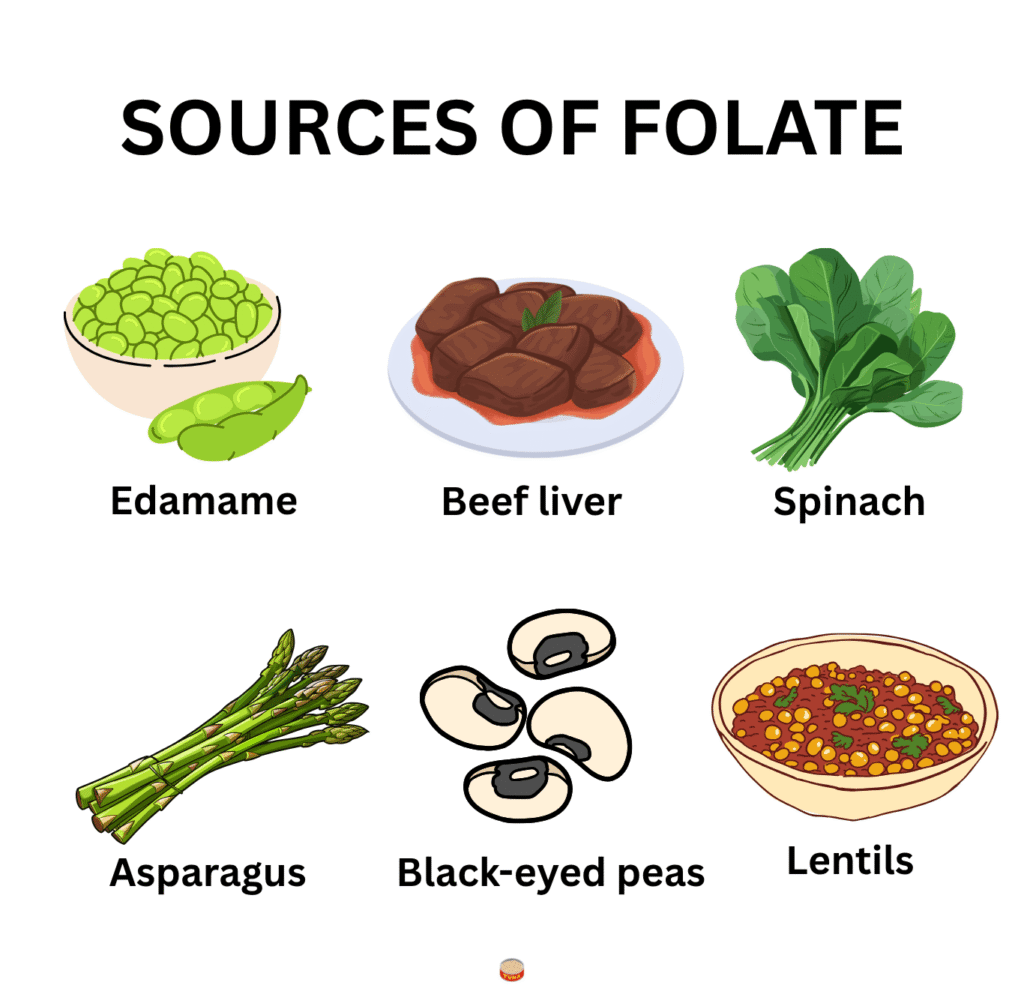
Food Source | Serving Size | Folate (mcg DFE) |
Edamame (cooked) | ½ cup (~75 g) | 241 mcg ✦ Excellent source |
Beef liver (cooked) | 85 g (3 oz) | 215 mcg |
Lentils (cooked) | ½ cup (~99 g) | 179 mcg |
Spinach (cooked) | ½ cup (~90 g) | 131 mcg |
Black-eyed peas (cooked) | ½ cup (~86 g) | 105 mcg |
Asparagus (boiled) | 4 spears | 89 mcg |
Brussels sprouts (cooked) | ½ cup (~78 g) | 78 mcg |
Avocado (raw) | ½ medium | 59 mcg |
Orange (fresh) | 1 medium | 55 mcg |
Fortified breakfast cereal | 1 serving (varies) | Up to 400 mcg check label |
Table 8. Top dietary sources of folate. Source: NIH ODS / USDA FoodData Central. Adult RDA = 400 mcg DFE/day.
Practical Tips for Maximising Dietary Folate
- Eat greens raw when possible: spinach in a salad retains far more folate than boiled spinach
- Legumes are your best friend: lentils, edamame, black-eyed peas, affordable, filling, and folate-rich
- Fortified foods matter: fortified flour, bread, pasta, and breakfast cereals contribute significantly especially in countries with fortification programmes
- Do not over-rely on diet alone in pregnancy: even a perfect diet may not reliably deliver 400 mcg of folic acid every day. A supplement is the only guaranteed strategy.
How to Prevent Folate Deficiency: Evidence-Based Strategies
For All Women of Childbearing Age
- Take 400 mcg of folic acid daily regardless of whether pregnancy is planned. Half of all pregnancies are unplanned.
- Start at least 1 month before trying to conceive, ideally 3 months, to build adequate stores
- If you have had a previous neural tube defect-affected pregnancy: 4,000 mcg (4 mg) daily under medical supervision
- Stopping the OCP to conceive? Begin folic acid immediately . OCP depletes folate stores
For the General Population
- Eat dark green leafy vegetables, legumes, and citrus fruits daily
- Choose fortified grain products, bread, pasta, breakfast cereal
- Avoid prolonged boiling of vegetables: steam, microwave, or eat raw
- Limit alcohol. Even moderate regular consumption depletes folate
For High-Risk Groups
- Methotrexate users: folic acid 5 mg weekly is mandatory. Never omit this co-prescription
- Anticonvulsant users (women): higher-dose folate supplementation; specialist review before conception
- Alcohol use disorder: folic acid 5 mg daily; alongside thiamine and B12
- IBD and coeliac disease: routine folate monitoring; supplement if deficient; treat the underlying condition
- Haemolytic anaemia: long-term folic acid 5 mg daily
Comparisons & Resources
Folate vs Vitamin B12 vs Iron Deficiency – How to Tell Them Apart
Feature | Folate Deficiency | B12 Deficiency | Iron Deficiency |
Anaemia type | Megaloblastic (macrocytic) | Megaloblastic (macrocytic) | Microcytic, hypochromic |
Key distinguishing test | Normal MMA | Elevated MMA | Low serum ferritin |
Nerve damage? | Rare | Yes, SCD risk | No |
Speed of onset | 3–4 months | Years (liver stores) | Months to years |
Pregnancy impact | Neural tube defects, most critical | Foetal nervous system damage | Preterm birth, low birth weight |
Table 9. Comparative guide: Folate vs B12 vs Iron deficiency. Source: Clinical experience + NCBI StatPearls; NIH ODS.
Frequently Asked Questions About Folate (Vitamin B9) Deficiency
Related Articles on MedBeaconHub.com
- Nutritional Deficiency Diseases: A Doctor’s Complete Guide (Pillar Article)
- Vitamin B12 Deficiency: Why You Must Check B12 Before Treating Folate
- Iron Deficiency Anaemia: The Other Great Cause of Anaemia in Women
- Vitamin B6 Deficiency: The Third Member of the Homocysteine Trio
- Vitamin C Deficiency: Another Nutrient Depleted by the Oral Contraceptive Pill
References and Authoritative Sources
- NIH Office of Dietary Supplements — Folate Fact Sheet for Health Professionals
- CDC — Folic Acid and Neural Tube Defects (Updated May 2026)
- NCBI StatPearls — Folate Deficiency
- American Academy of Pediatrics — Folic Acid for Prevention of Neural Tube Defects (Reaffirmed March 2025)
- Cleveland Clinic — Folate Deficiency (Updated November 2025)
- Merck Manual Professional Edition — Folate Deficiency
- PMC — Periconceptional Folate Deficiency and Neural Tube Defects
- PMC — Folate and Folic Acid: Prevention of NTDs and Congenital Heart Defects
- NCBI Bookshelf — MTHFR Gene Deficiency (Updated November 2024)
- Linus Pauling Institute — Folate