
Selenium Deficiency: Symptoms, Keshan Disease, Thyroid Dysfunction, Treatment and Prevention: The Complete Doctor’s Guide
The trace mineral that converts your thyroid hormone, neutralises your free radicals, and protects your heart and why one Brazil nut a day may be all you need.
✍️ Written and Reviewed by: Prof. Dr. Qazi Taqweemulhaq, FCPS Medicine. Professor of Medicine, Women Medical and Dental College, Abbottabad, Pakistan. Consultant Physician with 32 Years of Clinical Experience.📅 Last Updated: June 2026 | References: References: NIH ODS, NCBI StatPearls (2025), PMC Nutrients 2024, European Journal of Endocrinology, WHO, Cleveland Clinic, Medscape
⚡ Quick Answer: Selenium is an essential trace mineral required for thyroid hormone conversion, antioxidant defence, and immune function. Selenium Deficiency symptoms include Keshan disease (dilated cardiomyopathy), impaired T4-to-T3 thyroid hormone conversion, elevated TPO antibodies in Hashimoto’s thyroiditis, weakened immunity, and male infertility. The RDA for adults is 55 mcg daily. Selenomethionine 200 mcg daily reduces TPO antibodies by approximately 21% in Hashimoto’s thyroiditis. Do not exceed 400 mcg daily. Toxicity (selenosis) causes hair loss, brittle nails, and peripheral neuropathy. Two Brazil nuts daily provide the entire adult requirement.
✅ KEY TAKEAWAYS — Selenium Deficiency |
• Selenium is required for 25 known selenoproteins including glutathione peroxidase (antioxidant defence), thioredoxin reductase (DNA repair), and the three deiodinase enzymes that convert T4 to active T3 thyroid hormone |
• Keshan disease is the classic selenium deficiency syndrome: a fatal dilated cardiomyopathy first described in the selenium-depleted soils of Keshan County, China. It has been virtually eliminated by selenium supplementation |
• Selenium deficiency impairs T4-to-T3 conversion at all three deiodinase enzymes. A patient on levothyroxine who is selenium deficient will have normal T4 but inadequate active T3 at the tissue level |
• Clinical trials confirm that selenomethionine 200 mcg daily reduces TPO antibodies by approximately 21% in Hashimoto’s thyroiditis patients and may slow disease progression |
• Selenium content of food varies dramatically with soil content. The US Great Plains produces selenium-rich wheat. Parts of the Pacific Northwest, New England, and much of Europe have lower selenium soil content |
Selenium toxicity (selenosis) causes hair loss, brittle nails, garlic-smelling breath, and peripheral neuropathy. The upper safe limit is 400 mcg daily from all sources. Never exceed this |
The Levothyroxine Paradox: Perfect T4, Starving Tissues
She was 44 years old with Hashimoto’s thyroiditis. Two years on levothyroxine 100 mcg daily. Her TSH was normal. Her free T4 was normal. And yet she felt hypothyroid.
The fatigue was unchanged. The brain fog persisted. She was cold all the time. Her endocrinologist had increased her levothyroxine dose twice.
When I reviewed her, I checked what nobody had checked, her free T3.
T3 was low. Her T4 was adequate. Her TSH was controlled. But the conversion of T4 to active T3 was failing. And the most common reason for this in a patient with Hashimoto’s is something nobody had tested: selenium deficiency.
Her serum selenium was low. Her TPO antibodies were 680 IU/mL. I added selenomethionine 200 mcg daily.
At three months her TPO antibodies had fallen to 420 IU/mL. At six months she described herself as functioning normally for the first time in two years. Her levothyroxine dose was unchanged. The selenium was doing the work her medication alone could not do.
This is selenium deficiency as it presents in everyday clinical practice. Not Keshan disease. Not dramatic cardiomyopathy. Just a patient whose thyroid treatment was failing because one trace mineral was missing.
🏥 From My Clinic: I now check serum selenium in every Hashimoto’s patient I manage. The finding of deficiency is common. The response to selenomethionine supplementation is clinically meaningful in a significant proportion. For the complete picture of nutritional deficiencies in hypothyroidism, see our dedicated article: Nutritional Deficiency Diseases: The Complete Doctor’s Guide.
Understanding Selenium & Its Essential Roles
What Is Selenium and What Do Selenoproteins Do
Selenium is an essential trace mineral. The human body contains approximately 15 mg, distributed across skeletal muscle (approximately 28%), thyroid gland (with the highest concentration per gram of any tissue), liver, kidney, and testes.
Selenium is incorporated into proteins as selenocysteine, the 21st amino acid. The resulting proteins are called selenoproteins. There are 25 known human selenoproteins, each with specific biological functions.
The most clinically important are:
Glutathione peroxidase (GPx1-6)
The primary antioxidant selenoproteins. They neutralise hydrogen peroxide and lipid hydroperoxides, protecting cells from oxidative damage. In the thyroid, hydrogen peroxide is generated during thyroid hormone synthesis. GPx neutralises this H2O2 before it can damage thyroid tissue. Without selenium, H2O2 accumulates and the oxidative damage drives autoimmune thyroid inflammation.
Thioredoxin reductase (TrxR)
Controls the cellular redox environment. Critical for DNA repair, cell division, and antiviral immunity. TrxR is also essential for the regeneration of Vitamin C from its oxidised form. Vitamin C deficiency and selenium deficiency therefore interact bidirectionally.
Deiodinase enzymes (D1, D2, D3):
The three enzymes that convert T4 to T3 and regulate thyroid hormone activity throughout the body. All three are selenoproteins. Without selenium, thyroid hormone conversion fails.
Selenoprotein P
The primary selenium transport protein in plasma. Also functions as an antioxidant in the vasculature. Falling selenoprotein P is one of the most sensitive early markers of selenium deficiency.
Sperm selenoprotein (SELENOP)
Required for sperm tail structure and motility. Selenium deficiency causes male infertility through impaired sperm motility.
How Much Selenium Do You Need Per Day
Selenium requirements are expressed as mcg per day. The body regulates selenium with reasonable efficiency over a moderate range of intake, but both deficiency and excess have serious consequences.
Group | RDA (mcg per day) | Upper Limit (mcg per day) |
Infants 0 to 6 months | 15 mcg | 45 mcg |
Infants 7 to 12 months | 20 mcg | 60 mcg |
Children 1 to 3 years | 20 mcg | 90 mcg |
Children 4 to 8 years | 30 mcg | 150 mcg |
Children 9 to 13 years | 40 mcg | 280 mcg |
Adults 14 years and over | 55 mcg | 400 mcg |
Pregnant women | 60 mcg | 400 mcg |
Breastfeeding women | 70 mcg | 400 mcg |
Table 1. Selenium RDA and Tolerable Upper Intake Levels. Source: NIH ODS.
The margin between therapeutic and toxic doses is narrower for selenium than for most other trace minerals. The difference between 55 mcg (RDA) and 400 mcg (upper limit) leaves less room for supplementation error than vitamins like Vitamin D or calcium.
Selenium Status in the United States and Europe
In the United States
Selenium status in America is variable and geography-dependent. The Great Plains states North Dakota, South Dakota, Nebraska, Kansas, and Montana have selenium-rich soils. Wheat grown in these states has high selenium content. Americans eating wheat-based products from these regions typically have adequate selenium intake.
The Pacific Northwest, New England, the Southeast coastal plain, and parts of the Midwest have lower selenium soils. Americans living in these regions and eating primarily locally grown foods may have lower selenium intake.
NHANES data shows that mean selenium intake in US adults is approximately 93 to 134 mcg per day well above the 55 mcg RDA for most Americans eating a varied diet. However, specific subgroups are at risk: vegans and vegetarians avoiding meat and seafood, patients on highly restricted elimination diets, patients with severe malabsorption, and people living on very limited food budgets eating primarily local low-selenium produce.
In Europe
Europe has a more widespread selenium deficiency problem than the United States. European soils are generally lower in selenium than North American soils. Most of Western Europe, Scandinavia, the UK, and Eastern Europe produce crops with lower selenium content.
Finland recognised this problem in the 1980s. Since 1985, Finland has added selenium to all agricultural fertilizers nationally. This policy dramatically raised selenium levels in Finnish residents and serves as a model for other European countries.
The UK has seen declining selenium status since the 1970s, when it switched from importing high-selenium North American wheat to using domestically grown lower-selenium European wheat. The British National Diet and Nutrition Survey shows mean selenium intakes of 55 to 60 mcg per day just at the RDA and below the levels associated with optimal selenoprotein activity.
The European Food Safety Authority (EFSA) population reference intake for selenium is 70 mcg per day, which most Europeans do not consistently reach.
Clinical Insight: In my practice, patients presenting with Hashimoto’s thyroiditis who follow a plant-based diet or who are from UK or European backgrounds warrant selenium assessment as a routine part of their workup. Their selenium status is far more likely to be suboptimal than a North American meat-eater eating commercial wheat products.
Recognizing Selenium Deficiency & Its Risks
Symptoms of Selenium Deficiency
Selenium deficiency symptoms depend on whether deficiency is mild and chronic (the pattern most common in clinical practice) or severe (producing Keshan disease and Kashin-Beck disease).
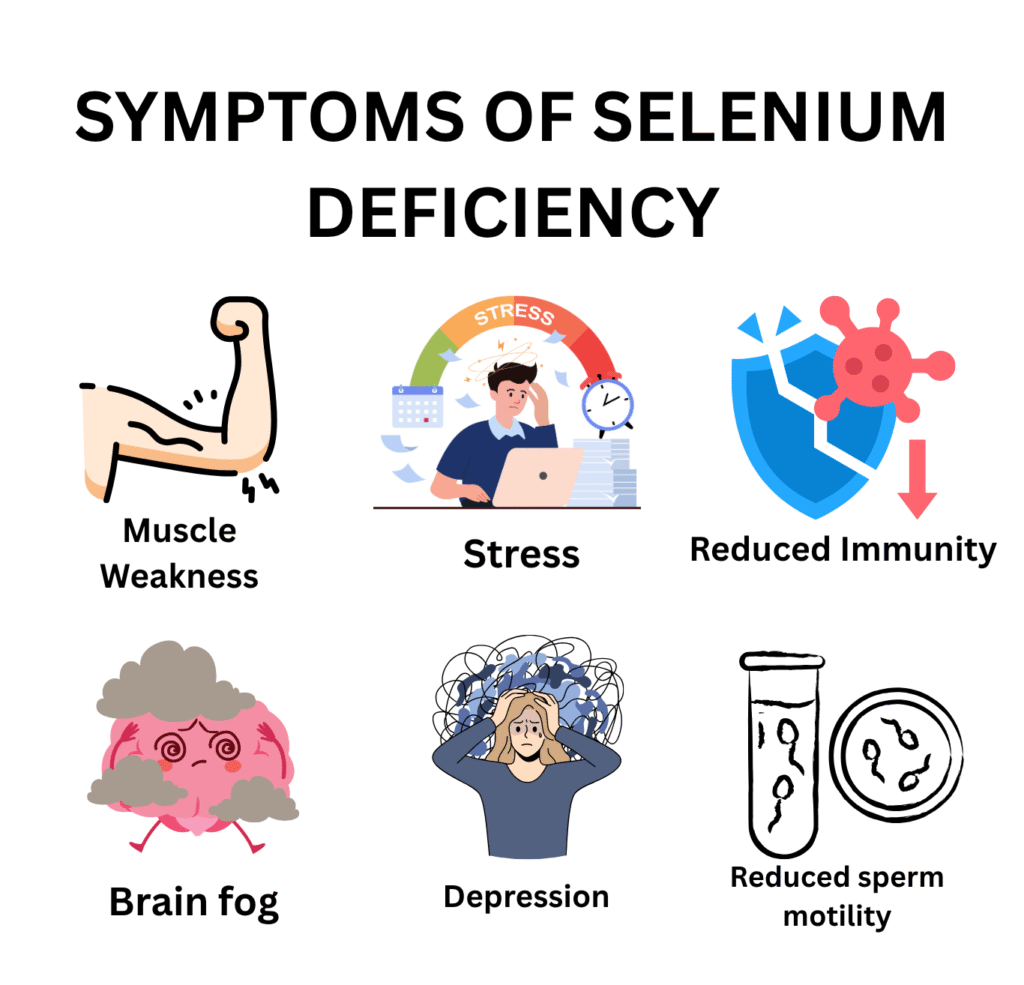
System | Mild to Moderate Deficiency | Severe Deficiency |
Thyroid | Impaired T4-to-T3 conversion. Low free T3 despite normal T4. Elevated TPO antibodies in Hashimoto’s | Myxoedema from combined iodine and selenium depletion |
Cardiovascular | Subclinical cardiac oxidative stress | Keshan disease: dilated cardiomyopathy, heart failure, arrhythmia, death |
Musculoskeletal | Muscle weakness, myalgia | Kashin-Beck disease: skeletal deformity, joint destruction, growth failure in children |
Immune | Impaired T-cell and NK cell function. Reduced antibody response to vaccines | Severe immunosuppression. Increased viral susceptibility |
Male reproductive | Reduced sperm motility | Infertility. Azoospermia in severe cases |
Cognitive | Poor concentration, brain fog | Cognitive decline in elderly |
Mood | Depression and anxiety | Worsening with concurrent Vitamin D deficiency |
Antioxidant capacity | Elevated oxidative stress markers | Accelerated cellular ageing |
Table 2. Selenium deficiency symptoms by severity. Sources: NIH ODS; NCBI StatPearls (2025); PMC Nutrients 2024; Cleveland Clinic.
💡 Clinical Insight: The most common presentation of selenium deficiency in clinical practice is not Keshan disease. It is an incomplete thyroid treatment response. The patient on levothyroxine whose TSH looks controlled but whose free T3 is low and whose symptoms persist. Always check selenium in this scenario. The connection between selenium, iodine, and thyroid hormone is inseparable.
Keshan Disease; The Cardiac Killer
Keshan disease is the classic syndrome of severe selenium deficiency. It was first described in Keshan County, Heilongjiang Province, China. This is a region with extremely selenium-depleted soils where the local population ate almost entirely locally grown food.
The condition produces a devastating dilated cardiomyopathy. The heart muscle weakens progressively. Cardiac failure, arrhythmia, and sudden death result. Before the cause was identified, Keshan disease killed thousands of people annually in the affected Chinese regions.
The mechanism: severe selenium depletion eliminates glutathione peroxidase activity in cardiac muscle. Oxidative damage accumulates unchecked. Mitochondrial function in cardiomyocytes fails. The cardiac muscle is literally destroyed by oxidative stress.
Once selenium supplementation programs were introduced to the affected Chinese population in the 1970s, Keshan disease was virtually eliminated.
Keshan disease does not occur in Western countries under normal circumstances. But it has been reported in patients receiving long-term total parenteral nutrition (TPN) without adequate selenium supplementation, and in patients with severe malabsorption who are not receiving selenium replacement.
⚠️ Warning: Any patient on long-term total parenteral nutrition must have selenium included in the TPN formulation. Selenium deficiency from TPN-related malnutrition causes a preventable, fatal cardiomyopathy. This is not a theoretical risk. It is documented in the clinical literature.
The Thyroid Connection: From T4 to Active T3
Selenium and the Thyroid
The thyroid-selenium relationship is the most clinically important application of selenium knowledge for the practising physician.
The thyroid gland contains the highest selenium concentration per gram of any human organ. This concentration serves a specific purpose: the thyroid generates massive amounts of hydrogen peroxide during hormone synthesis. H2O2 is required for the iodinase reaction that attaches iodine to thyroglobulin. But H2O2 is also profoundly toxic to cells if not neutralised immediately.
Glutathione peroxidase, a selenoprotein, neutralises the H2O2 before it can destroy thyroid tissue. In selenium deficiency, this protection fails. H2O2 accumulates. Thyroid cell damage occurs. Inflammation is triggered. In a genetically predisposed individual, this is one mechanism by which autoimmune thyroid disease is initiated or worsened.
This explains the connection between iodine excess in Hashimoto’s and disease worsening. High iodine increases H2O2 production. In a selenium-deficient thyroid, there is insufficient GPx to neutralise it. The oxidative damage is amplified. This is why the combination of excess iodine and selenium deficiency is particularly damaging to the autoimmune thyroid.
The T4-to-T3 Conversion Failure
The three deiodinase enzymes (D1, D2, D3) that convert T4 to T3 are all selenoproteins.
- D1 converts T4 to T3 in the liver and kidney, supplying circulating T3.
- D2 converts T4 to T3 locally within the brain, pituitary, and brown fat.
- D3 inactivates T4 and T3, the regulatory deiodinase.
In selenium deficiency, all three are impaired. The clinical result: T4 accumulates. T3 (the biologically active hormone) falls. The patient may have a normal TSH and a normal total T4 but a low free T3. They feel hypothyroid despite technically “controlled” thyroid function tests.
Every patient on levothyroxine who has persistent hypothyroid symptoms despite a controlled TSH should have free T3 measured. If free T3 is low, selenium deficiency is a strong consideration. Check serum selenium and selenoprotein P before increasing the levothyroxine dose.
💡 Clinical Insight: This pattern, controlled TSH, normal T4, low T3, persistent symptoms, is one of the most frustrating clinical situations in thyroid medicine. The standard response is to keep increasing levothyroxine. The correct response is to check selenium. Correcting selenium deficiency restores T4-to-T3 conversion far more effectively than any dose adjustment of levothyroxine.
Selenium and Hashimoto’s Thyroiditis
The evidence for selenium in Hashimoto’s thyroiditis has accumulated over two decades.
Multiple randomised controlled trials have shown that selenomethionine 200 mcg daily reduces TPO antibody titres by approximately 21% over 12 months in Hashimoto’s patients. This is a meaningful clinical reduction. It does not cure Hashimoto’s, but it attenuates the autoimmune activity.
The mechanism involves two pathways: first, the GPx neutralisation of thyroid H2O2 reduces the oxidative trigger for autoimmune inflammation. Second, selenium modulates T-regulatory cells and reduces pro-inflammatory cytokine production, dampening the immune attack on the thyroid.
The Vitamin D-selenium combination is worth noting. Both have immunomodulatory roles in Hashimoto’s. Both are frequently deficient in the same patients. Both work through regulatory T-cell pathways. Correcting both simultaneously produces better results than correcting either alone.
Zinc is the third component of this thyroid-protective triad. Zinc is required for TRH synthesis and T3 receptor binding. A Hashimoto’s patient with deficiencies in selenium, Vitamin D, and zinc; a combination I see frequently, has three simultaneous nutritional hits on thyroid function.
💡 Clinical Insight: My standard workup for any patient with Hashimoto’s thyroiditis includes: TSH, free T4, free T3, TPO antibodies, serum selenium (or a therapeutic trial if unavailable), serum 25(OH)D, serum zinc, and serum ferritin (iron deficiency impairs TPO function). This comprehensive screen costs very little and identifies the nutritional deficiencies that can transform the trajectory of the disease.
What Causes Selenium Deficiency
Cause | Mechanism | Who Is Most Affected |
Low-selenium soil | Plants absorb selenium from soil. Selenium-poor soils produce selenium-poor food regardless of crop type | Populations in parts of Europe, New Zealand, and some US regions eating primarily local produce |
Vegan and plant-based diet | Animal products concentrate selenium from their feed. Plants vary enormously by soil. A vegan eating low-selenium soil produce has no animal product buffer | Growing vegan and vegetarian populations in the US and EU |
Malabsorption | IBD, coeliac disease, short bowel syndrome, chronic pancreatitis all reduce selenium absorption | Patients with gastrointestinal diseases |
Total parenteral nutrition without selenium | TPN solutions historically contained no selenium. Selenium must be added explicitly | Patients on long-term TPN in hospital and community settings |
Bariatric surgery | Reduced food intake and bypassed absorptive surface. Selenium is one of the trace minerals most commonly deficient post-bariatric surgery | Post-gastric bypass patients |
Renal dialysis | Selenium is water-soluble and removed in dialysate. Chronic kidney disease also impairs selenium metabolism | Patients on haemodialysis or peritoneal dialysis |
HIV/AIDS | Both reduced intake and increased utilisation from chronic oxidative stress and immune activation | People living with HIV, particularly those with advanced disease |
Advanced age | Reduced dietary variety, decreased absorption efficiency, multiple medications | Adults over 65 in care homes or living alone |
Table 3. Causes of selenium deficiency. Sources: NIH ODS; NCBI StatPearls (2025); PMC Nutrients 2024.
The geographic variation in selenium deserves emphasis. The selenium content of a Brazil nut depends entirely on where it was grown. A Brazil nut from selenium-rich Amazonian soil may contain 500 mcg per nut. One from lower-selenium soil may contain 10 mcg. The same variability applies to wheat, rice, and vegetables. This is why blanket dietary advice without considering geographic soil content is often insufficient.
Diagnosis, Treatment & Supplementation Guide
How Is Selenium Deficiency Diagnosed
No single test perfectly reflects total body selenium status, but several markers are clinically useful.
Serum selenium: The most widely available test. Reflects recent intake more than long-term tissue stores. Reference range: 70 to 150 ng/mL in most laboratories. Below 60 ng/mL indicates deficiency. Below 45 ng/mL indicates severe deficiency.
Plasma selenoprotein P: More sensitive than serum selenium. Reflects longer-term selenium status and the functional adequacy of selenium delivery to tissues. Available in specialist centres.
Erythrocyte selenium: Reflects selenium stores over the preceding 3 to 4 months (the lifespan of a red blood cell). More stable than serum selenium and less affected by acute dietary changes.
Glutathione peroxidase activity (GPx): A functional marker showing whether selenoprotein activity is adequate. More clinically relevant than the selenium level alone in borderline deficiency cases.
Free T3: Clinically important in the context of thyroid disease. A low free T3 with normal T4 and TSH in a patient with known thyroid disease raises immediate suspicion of impaired T4-to-T3 conversion from selenium deficiency.
Therapeutic trial: When serum selenium testing is unavailable, a supervised 3-month trial of selenomethionine 200 mcg daily is clinically justified in a symptomatic patient with Hashimoto’s and persistent free T3 insufficiency.
Treatment and Supplementation Protocol
Clinical Scenario | Treatment | Duration and Notes |
Selenium deficiency — dietary cause | Selenomethionine 100 to 200 mcg daily OR 2 Brazil nuts daily | 3 to 6 months then reassess. Address dietary source. Recheck serum selenium at 3 months |
Hashimoto’s thyroiditis — selenium supplementation | Selenomethionine 200 mcg daily | Minimum 12 months. Monitor TPO antibodies at 3 and 12 months. Combine with Vitamin D and zinc correction simultaneously |
Keshan disease — acute severe deficiency | IV or oral sodium selenite 100 to 200 mcg daily acutely | Under specialist supervision. Cardiac support as needed |
Post-bariatric surgery | Selenium 55 to 100 mcg daily as part of standard post-bariatric micronutrient protocol | Lifelong. Annual serum selenium monitoring |
TPN patients | Selenium 60 to 100 mcg per day added to TPN formulation | From initiation of TPN. Do not wait for deficiency to develop |
Dialysis patients | Selenium 55 to 100 mcg daily under nephrology guidance | Monitor carefully. Renal clearance of selenium is impaired in advanced CKD |
Table 4. Selenium deficiency treatment protocol. Sources: NIH ODS; NCBI StatPearls (2025); PMC Nutrients 2024.
Selenomethionine vs Selenite — Which Form to Use:
Selenomethionine (the organic form) is the preferred supplemental form for most patients. It is better absorbed than inorganic selenite, does not cause oxidative stress at therapeutic doses, and accumulates more reliably in tissues.
Sodium selenite is used medically for severe acute deficiency and TPN supplementation. It is faster acting but has a narrower therapeutic window and can be pro-oxidant at higher doses.
For a Hashimoto’s patient, selenomethionine 200 mcg daily is the form used in the clinical trials showing TPO antibody reduction.
Recovery Timeline:
What Improves | Timeline |
Serum selenium rises to normal | 4 to 8 weeks |
Free T3 improves in thyroid patients | 6 to 12 weeks |
TPO antibodies begin falling in Hashimoto’s | 3 to 6 months |
Mental Health | 4 to 8 weeks |
Sperm motility improves in deficient males | 3 to 6 months |
GPx activity normalises | 4 to 6 weeks |
Table 5. Selenium deficiency recovery timeline. Source: Clinical experience; NIH ODS; PMC Nutrients 2024.
Sourcing It Safely: Best Foods & Toxicity Risks
Best Food Sources of Selenium
The selenium content of plant foods varies enormously with soil content. Animal products are more consistent sources because animals concentrate selenium from their feed.
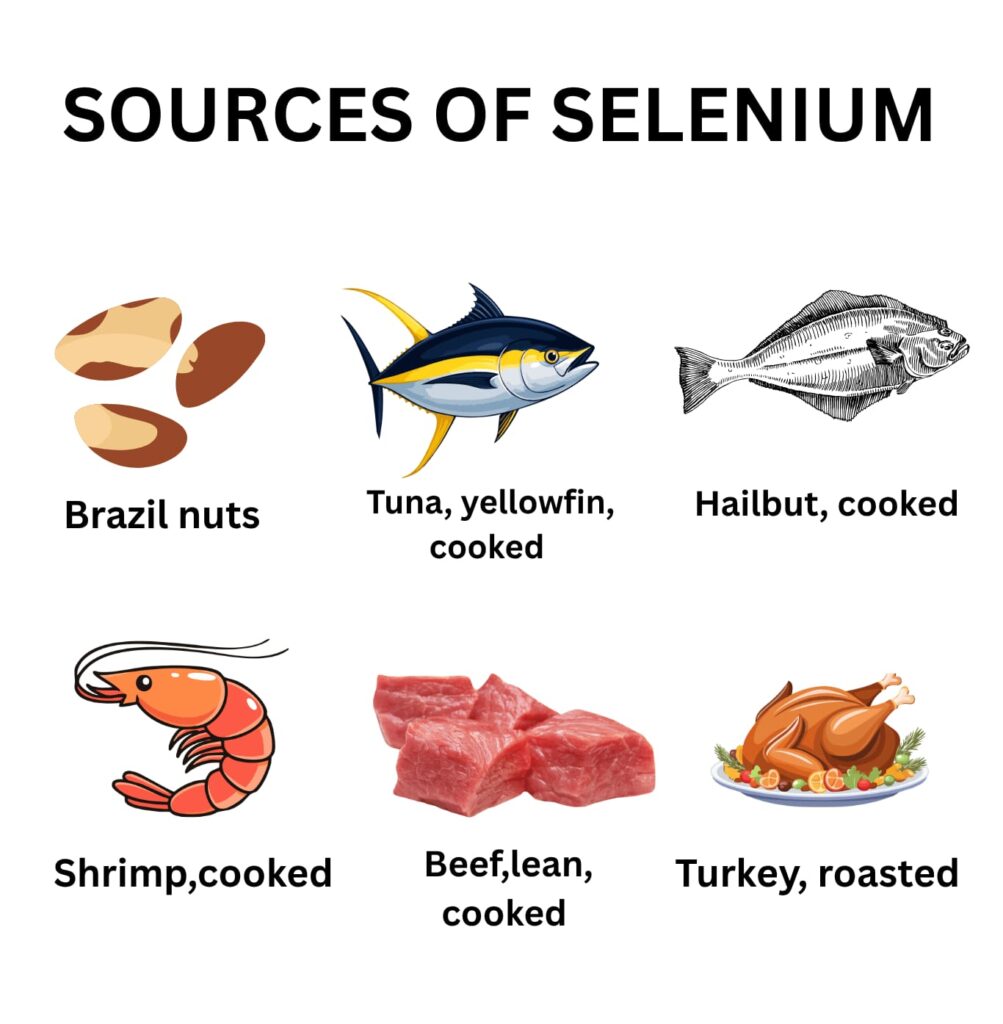
Food | Serving | Selenium (mcg) | Notes |
Brazil nuts | 2 nuts (14 g) | 96 to 544 mcg | Enormous variability by soil origin. Do not eat large quantities daily |
Tuna, yellowfin, cooked | 85 g | 92 mcg | Consistent and reliable source |
Halibut, cooked | 85 g | 47 mcg | Excellent lean protein and selenium source |
Shrimp, cooked | 85 g | 42 mcg | Good bioavailability |
Beef, lean, cooked | 85 g | 33 mcg | Consistent. Selenium from feed reflects in muscle |
Turkey, roasted | 85 g | 31 mcg | Good protein and selenium combination |
Chicken breast, cooked | 85 g | 22 mcg | Consistent everyday source |
Cottage cheese | 225 g | 20 mcg | Practical dairy source |
Egg, hard boiled | 1 large | 15 mcg | Reliable everyday source |
White bread (US commercial) | 2 slices | 14 mcg | Made from Great Plains high-selenium wheat |
Brown rice, cooked | 1 cup | 19 mcg | Varies by geographic origin |
Sunflower seeds | 28 g | 11 mcg | Good plant-based source |
Table 6. Top dietary sources of selenium. Source: NIH ODS; USDA FoodData Central. Adult RDA 55 mcg per day.
The Brazil Nut Warning:
Two Brazil nuts daily provide the full adult selenium requirement. This sounds simple. The problem is variability. Brazil nuts from high-selenium Amazonian soils can contain 500 mcg per nut — which means two nuts may provide 1,000 mcg, well above the 400 mcg upper limit. Brazil nuts from lower-selenium soils may provide only 10 to 50 mcg per nut.
This variability makes Brazil nuts an unreliable sole source of selenium for patients who need precise dosing. For clinical selenium supplementation in Hashimoto’s or confirmed deficiency, a standardised selenomethionine tablet is more reliable than Brazil nuts.
For healthy adults eating two to three Brazil nuts several times per week as part of a varied diet, the risk is low. Daily large consumption of Brazil nuts is the danger scenario.
Selenium Toxicity — Selenosis
Unlike most vitamins and minerals where the toxic dose is far above the therapeutic range, selenium has a relatively narrow therapeutic window.
The upper tolerable intake level is 400 mcg per day for adults from all sources combined.
Chronic intake above 400 mcg per day causes selenosis. The clinical features of selenosis are distinctive and diagnostic:
Hair loss
Diffuse alopecia — generalised thinning, similar to what is seen in zinc deficiency but from the opposite extreme of selenium intake. Hair becomes brittle and falls out.
Brittle nails
Nails become fragile, develop horizontal ridging, and may separate from the nail bed.
Garlic odour
Dimethylselenide, a volatile selenium metabolite, is exhaled through the lungs and skin. Patients with selenosis have a characteristic garlic-like odour even without eating garlic. This is pathognomonic.
Peripheral neuropathy
Tingling, numbness, and burning in the hands and feet. Similar in distribution to the peripheral neuropathy of Vitamin B12 deficiency.
Fatigue, irritability, joint pain
In severe cases
Respiratory distress, liver cirrhosis, and cardiac arrhythmias have been reported from acute selenium poisoning.
⚠️ Warning: Selenium toxicity most commonly occurs from overconsumption of Brazil nuts, taking selenium supplements on top of a selenium-sufficient diet, or taking selenium in doses intended for livestock rather than humans. The therapeutic dose for Hashimoto’s is 200 mcg daily. There is no clinical reason to exceed this. Never take selenium at doses above 400 mcg daily without specialist monitoring.
Frequently Asked Questions About Selenium Deficiency
Related Articles on MedBeaconHub.com
- Nutritional Deficiency Diseases: The Complete Doctor’s Guide
- Iodine Deficiency: Goitre, Hypothyroidism and Prevention
- Vitamin D Deficiency: The Immune Modulator
- Zinc Deficiency: Symptoms, Causes and Treatment
- Iron Deficiency Anaemia: Symptoms and Treatment
- Magnesium Deficiency: Symptoms, Causes and Treatment
- Vitamin B12 Deficiency: Nerve Damage and Pernicious Anaemia
- Vitamin C Deficiency: Scurvy and Immune Failure
- Calcium Deficiency: Hypocalcaemia and Bone Disease
References and Authoritative Sources
- NIH Office of Dietary Supplements — Selenium Fact Sheet for Health Professionals
- NCBI StatPearls — Selenium Deficiency (Updated 2025)
- PMC Nutrients — Selenium and Thyroid Disease: From Pathophysiology to Treatment (2024)
- European Journal of Endocrinology — Effect of Selenium on Thyroid Autoimmunity and Oxidative Stress Parameters in Euthyroid Subjects With Autoimmune Thyroiditis
- WHO — Selenium in Human Nutrition
- Cleveland Clinic — Selenium Deficiency
- Medscape — Selenium Deficiency Overview (Updated 2025)
- PMC — Selenium and Human Health: A Narrative Review of a Versatile and Controversial Element (PMC Nutrients Oct 2024)
- Journal of Trace Elements in Medicine and Biology — Selenium and Keshan Disease: A Historical and Mechanistic Review
- NIH ODS — Zinc and Selenium Interactions in Thyroid Function