
Vitamin B6 (Pyridoxine) Deficiency: Symptoms, Causes and Treatment
The vitamin your brain needs to make serotonin, dopamine, and GABA — and why the supplement that claims to treat your neuropathy can also cause it
✍️ Written and Reviewed by: Prof. Dr. Qazi Taqweemulhaq, FCPS Medicine. Professor of Medicine, Women Medical and Dental College, Abbottabad, Pakistan. Consultant Physician with 32 Years of Clinical Experience.📅 Last Updated: June 2026 | References: NIH ODS, NCBI StatPearls (2025), Merck Manual, Cleveland Clinic, American Journal of Clinical Nutrition, EFSA 2023
⚡ Quick Answer: Vitamin B6 (pyridoxine) deficiency symptoms include peripheral neuropathy, depression, seborrhoeic dermatitis, glossitis, and a sideroblastic anaemia that does not respond to iron treatment. It is required for over 100 enzymatic reactions including neurotransmitter synthesis (serotonin, dopamine, GABA) and homocysteine metabolism. In the United States, approximately 10 to 25% of the population has inadequate B6 intake. The oral contraceptive pill, isoniazid, and several other medications actively deplete B6. The RDA is 1.3 to 1.7 mg per day. Warning: high-dose B6 supplements above 100 mg per day taken chronically cause peripheral neuropathy — the exact symptom deficiency causes. The toxicity dose is not as high as most people assume.
✅ KEY TAKEAWAYS — Vitamin B6 Deficiency |
• Vitamin B6 (pyridoxine) is required for over 100 enzymatic reactions. It is central to amino acid metabolism, neurotransmitter synthesis, haemoglobin production, and immune function |
• The three B vitamins — B6, folate, and Vitamin B12 — work together to clear homocysteine from the blood. Deficiency in any one of the three raises homocysteine, increasing cardiovascular and neurological risk |
• Vitamin B6 deficiency causes a unique sideroblastic anaemia — ring sideroblasts visible on bone marrow examination — that does not respond to iron supplementation and is often missed |
• The oral contraceptive pill is one of the most common drug causes of B6 depletion in American and European women. Women on the OCP for more than 2 years warrant routine B6 assessment |
• Isoniazid (the primary anti-TB drug) is a direct B6 antagonist. Every patient on isoniazid must receive pyridoxine supplementation. Without it, isoniazid-induced peripheral neuropathy is preventable but develops rapidly |
Vitamin B6 toxicity from chronic high-dose supplements causes sensory neuropathy. Doses above 100 mg per day taken for months cause nerve damage that mimics the deficiency itself |
The Diagnosis Nobody Made
She was 31 years old. On the oral contraceptive pill for four years. She came to my clinic with a six-month history of persistent low mood, fatigue, irritability, and poor sleep. Her GP had started her on an antidepressant three months earlier. It had not helped.
She also mentioned, almost as an afterthought, that her hands and feet had been tingling for the past two months. And that her tongue felt sore and appeared red and swollen.
I looked at her medication list. Oral contraceptive pill. Four years. No B vitamin supplementation.
Her serum pyridoxal phosphate — the active form of Vitamin B6 — was critically low. Her folate was borderline. Her homocysteine was elevated at 18 µmol/L.
She had B6 deficiency driven by four years of OCP use. The depression was not psychiatric. The neuropathy was not idiopathic. The glossitis was not a dental problem. They were all one diagnosis with one cause.
She stopped the OCP, started pyridoxine 25 mg daily alongside folic acid and Vitamin B12. Within eight weeks her mood had lifted substantially. The tingling resolved over three months. Her antidepressant was tapered and stopped.
Four years of OCP use. No one had checked her B vitamins once.
🏥 From My Clinic: This pattern is more common than most physicians realise. The OCP is prescribed to millions of American and European women with no routine nutritional monitoring. B6 depletion accumulates silently. Mood changes, fatigue, and mild neuropathy get attributed to stress, lifestyle, or psychiatric causes before anyone considers the medication depleting the very vitamin the brain needs to make its own antidepressants. For the complete picture of nutritional deficiency diseases, read: Nutritional Deficiency Diseases: The Complete Doctor’s Guide.
What Vitamin B6 Does
Vitamin B6 is the collective name for three related compounds: pyridoxine, pyridoxal, and pyridoxamine. All three are converted in the body to pyridoxal phosphate (PLP) — the active, biologically functional form. PLP acts as a cofactor in over 100 enzymatic reactions, making Vitamin B6 one of the most widely used vitamins in human metabolism.
Like folate and Vitamin B12, it is water-soluble, not significantly stored in the body, and dependent on consistent daily dietary intake.
Neurotransmitter synthesis
PLP is the essential cofactor for the enzymes that produce serotonin (from tryptophan), dopamine (from DOPA), GABA (from glutamate), norepinephrine, and histamine. Without adequate B6, the brain’s production of these neurotransmitters is impaired. This is the biochemical explanation for the depression, anxiety, irritability, and sleep disturbance seen in B6 deficiency.
Amino acid metabolism
Over 100 amino acid reactions require PLP. Transamination, decarboxylation, racemisation — these are the core reactions of protein metabolism. B6 deficiency impairs the body’s ability to use dietary protein properly.
Homocysteine metabolism
PLP is required for the enzyme cystathionine beta-synthase, which converts homocysteine to cysteine. When B6 is deficient, homocysteine accumulates. Elevated homocysteine is an independent cardiovascular risk factor and is associated with cognitive decline. This connects B6 directly to folate and Vitamin B12 in the homocysteine clearance pathway — all three are required and deficiency in any one raises homocysteine.
Haemoglobin synthesis
PLP is required for the enzyme delta-aminolevulinate synthase, the first step in haem synthesis. B6 deficiency impairs haem production, causing a characteristic sideroblastic anaemia — iron accumulates in developing red blood cells but cannot be incorporated into haem. This anaemia does not respond to iron supplementation.
Glycogen metabolism
PLP is required for glycogen phosphorylase, the enzyme that releases glucose from glycogen stores. B6 deficiency impairs glucose homeostasis.
Immune function
PLP is required for lymphocyte proliferation and interleukin-2 production. B6 deficiency impairs both T-cell and B-cell responses. This overlaps with the immune roles of Vitamin D, zinc, and Vitamin C.
Niacin synthesis
PLP is required for converting tryptophan to niacin. B6 deficiency therefore contributes to secondary niacin insufficiency, creating an overlap with niacin-related symptoms in severe or prolonged cases.
How Much Vitamin B6 Do You Need Per Day
Requirements increase with age and during pregnancy.
Group | RDA (mg per day) | Upper Limit (mg per day) |
Infants 0 to 6 months | 0.1 mg | Not established |
Infants 7 to 12 months | 0.3 mg | Not established |
Children 1 to 3 years | 0.5 mg | 30 mg |
Children 4 to 8 years | 0.6 mg | 40 mg |
Children 9 to 13 years | 1.0 mg | 60 mg |
Adults 19 to 50 years | 1.3 mg | 100 mg |
Men 51 years and over | 1.7 mg | 100 mg |
Women 51 years and over | 1.5 mg | 100 mg |
Pregnant women | 1.9 mg | 100 mg |
Breastfeeding women | 2.0 mg | 100 mg |
Table 1. Vitamin B6 RDA and Tolerable Upper Intake Levels. Source: NIH ODS.
The upper limit of 100 mg per day is critically important. Many over-the-counter B6 supplements contain 50 to 200 mg per tablet — approaching or exceeding this limit in a single daily dose. The consequences of chronic excess are serious and are discussed fully in the toxicity section.
Vitamin B6 Status in the United States and Europe
In the United States
NHANES data shows that approximately 10 to 25% of Americans have inadequate Vitamin B6 intake depending on the age group. Older adults are most affected — the RDA rises with age (1.7 mg for men over 51, 1.5 mg for women over 51) while dietary variety and absorption efficiency often decline simultaneously.
The NIH Office of Dietary Supplements identifies the following US subgroups as highest risk: people with alcohol use disorder (alcohol markedly impairs B6 absorption and increases urinary excretion), women taking the oral contraceptive pill, people with kidney disease on dialysis (PLP is removed in dialysate), and people with autoimmune conditions including rheumatoid arthritis and inflammatory bowel disease.
Interestingly, the US dietary survey data consistently shows that B6 inadequacy is far more common than clinical deficiency with overt symptoms. This subclinical insufficiency — not enough for optimal neurotransmitter and homocysteine metabolism, but not low enough to produce obvious clinical signs — may be one contributor to the high rates of depression and elevated homocysteine in older American adults.
In Europe
EFSA dietary survey data from 2023 shows that B6 inadequacy affects a significant proportion of the European population, particularly elderly adults in Eastern Europe and Scandinavia. The European Food Safety Authority set the Adequate Intake for B6 at 1.6 mg per day for adults, which surveys suggest many Europeans do not consistently reach.
The UK National Diet and Nutrition Survey shows mean B6 intakes are generally adequate in younger adults but fall short in older adults, particularly in care home residents.
💡 Clinical Insight: The subclinical B6 insufficiency story is clinically important. A patient with persistent low mood, mild fatigue, and elevated homocysteine whose serum B6 is “borderline normal” on a laboratory scale is not fine by a clinical standard. Optimal B6 status for neurotransmitter synthesis and homocysteine clearance requires more than just avoiding frank deficiency. This distinction matters when managing patients who are symptomatic but whose lab results are technically within range.
Symptoms of Vitamin B6 Deficiency
The symptoms of B6 deficiency reflect its central roles in neurotransmitter synthesis, amino acid metabolism, and haem production. No single symptom is pathognomonic. The cluster of features together — mood changes, neuropathy, glossitis, skin changes, and an iron-resistant anaemia — points strongly toward B6 deficiency.
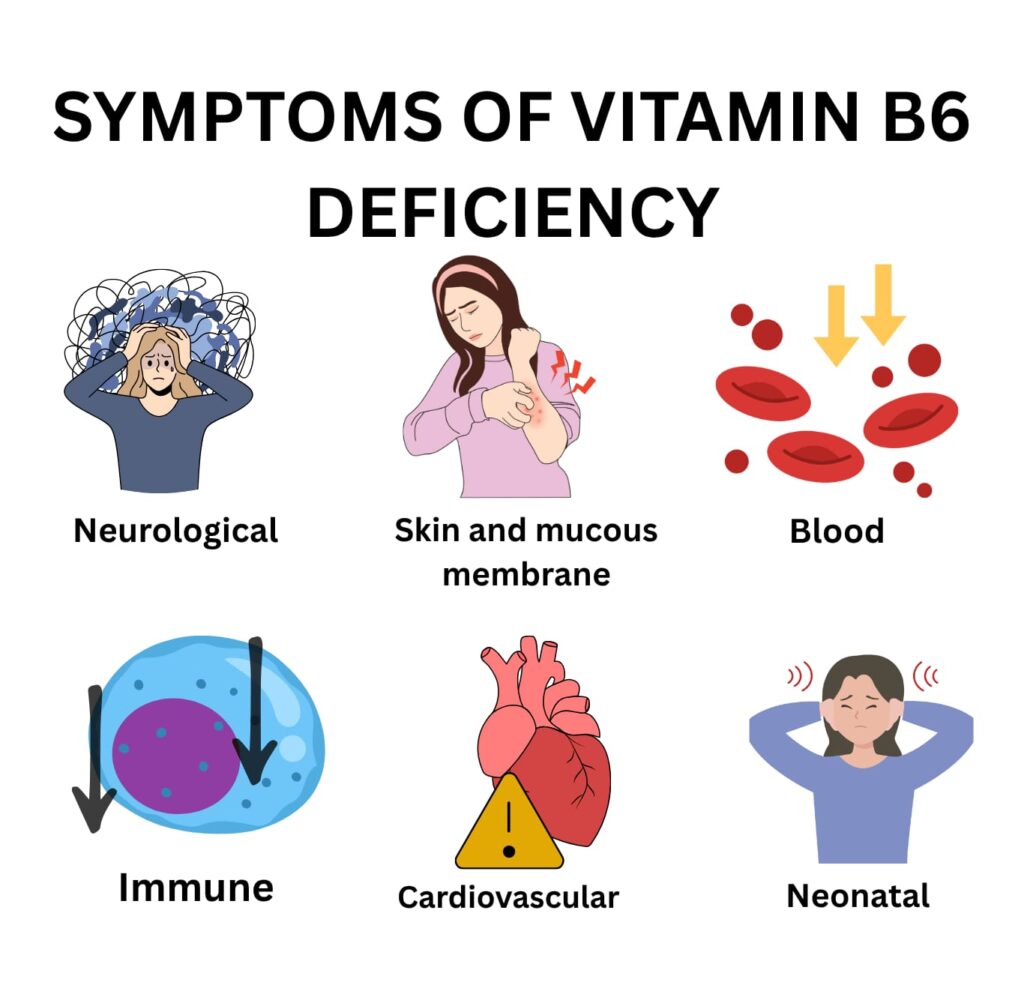
System | Mild–Moderate Deficiency | Severe / Prolonged Deficiency |
Neurological | Irritability, depression, anxiety, difficulty concentrating, insomnia | Peripheral neuropathy: tingling, numbness, burning pain in hands and feet. Confusion in severe cases |
Skin and mucous membranes | Seborrhoeic dermatitis around the mouth, nose, and eyes. Glossitis (inflamed tongue) | Cheilosis (cracked lips). Stomatitis (inflamed mouth lining) |
Blood | Mild normocytic anaemia | Pyridoxine-responsive sideroblastic anaemia. Ring sideroblasts on bone marrow examination. Does not respond to iron supplementation |
Immune | Reduced lymphocyte count. Impaired T-cell responses | Significant immunosuppression. Frequent infections |
Cardiovascular (indirect) | Elevated homocysteine — independent cardiovascular risk factor | Progressive homocysteine elevation with concurrent folate and B12 depletion |
Neonatal (severe maternal deficiency) | Irritability | Neonatal seizures from impaired GABA synthesis |
Table 2. Vitamin B6 deficiency symptoms by severity. Sources: NIH ODS; NCBI StatPearls (2025); Merck Manual.
💡 Clinical Insight: The combination of depression, peripheral neuropathy, and mouth inflammation in a patient with identified risk factors — OCP use, alcohol dependence, TB treatment with isoniazid, or inflammatory bowel disease — is B6 deficiency until proven otherwise. Many of these patients are on antidepressants treating the psychiatric symptom while the nutritional cause remains unaddressed. A serum pyridoxal phosphate level takes one blood test and one clinical thought to order.
The Neurotransmitter Connection — B6 and the Brain
This is the section most relevant to the millions of American and European adults experiencing depression, anxiety, and sleep disturbance with no clear psychiatric cause.
PLP is the essential cofactor for:
Aromatic amino acid decarboxylase — the enzyme that converts 5-hydroxytryptophan to serotonin and DOPA to dopamine. Without B6, this conversion step fails. Serotonin and dopamine production falls below optimal levels.
Glutamate decarboxylase — converts glutamate to GABA, the brain’s primary inhibitory neurotransmitter. GABA deficiency produces anxiety, hyperexcitability, and in neonates, seizures. B6 supplementation is an established treatment for pyridoxine-dependent epilepsy, a genetic condition affecting the GABA synthesis pathway.
Tryptophan pyrrolase pathway — shunts tryptophan away from serotonin synthesis toward kynurenine metabolites when B6 is deficient. This simultaneously reduces serotonin production and increases potentially neurotoxic kynurenine metabolites.
The clinical implication: a patient with B6 deficiency has biochemically reduced capacity to produce serotonin, dopamine, and GABA simultaneously. The resulting symptoms — low mood, anxiety, irritability, poor sleep, and difficulty concentrating — are indistinguishable clinically from primary depression and anxiety disorders. Standard antidepressants that target serotonin reuptake (SSRIs) cannot compensate for insufficient serotonin production caused by B6 deficiency. The substrate is the problem, not the reuptake mechanism.
This does not mean B6 deficiency causes all depression. It means that in patients with identified risk factors for B6 depletion, checking and correcting B6 before or alongside psychiatric treatment is rational clinical practice.
Magnesium shares this neuro-psychiatric role. Magnesium deficiency also impairs GABA receptor function and serotonin production. In clinical practice, B6 and magnesium deficiency frequently coexist and their mood effects are additive. Vitamin D completes this trio — all three influence serotonin biology and all three are commonly deficient in the same patients.
The Homocysteine Problem — B6, Folate, and B12
Homocysteine is an amino acid produced during methionine metabolism. It is not obtained from diet. It is generated internally and must be cleared by two pathways. Both pathways require B vitamins:
The remethylation pathway converts homocysteine back to methionine. This requires folate (as 5-MTHF) and Vitamin B12 (as methylcobalamin). When either is deficient, this pathway slows and homocysteine accumulates.
The transsulphuration pathway converts homocysteine to cysteine. This requires Vitamin B6 (PLP) as the cofactor for cystathionine beta-synthase. When B6 is deficient, this pathway slows and homocysteine accumulates.
The result: deficiency in B6, folate, or B12 — or any combination of the three — causes hyperhomocysteinaemia.
Elevated homocysteine is an independent risk factor for coronary artery disease, stroke, peripheral vascular disease, deep venous thrombosis, and cognitive decline. It damages vascular endothelium, promotes thrombosis, and impairs neurological function.
In American adults, elevated homocysteine (above 15 µmol/L) is present in approximately 5 to 7% of the general population and rises significantly with age. In the elderly, rates of 30% or more have been reported in some studies, driven primarily by combined B6, folate, and B12 inadequacy.
The practical clinical test: Any patient with elevated homocysteine deserves a simultaneous measurement of B6, folate, and B12. Treating one without checking the others produces incomplete results. All three must be optimised to fully normalise homocysteine.
What Causes Vitamin B6 Deficiency
Cause | Mechanism | Who Is Most Affected |
Oral contraceptive pill | Oestrogen increases the activity of tryptophan oxygenase, diverting tryptophan away from serotonin and increasing B6 demand simultaneously. OCP also increases hepatic B6 catabolism | Women on OCP for more than 1 to 2 years. Tens of millions of women in the US and EU |
Alcohol use disorder | Alcohol impairs intestinal absorption of B6. Acetaldehyde (alcohol metabolite) displaces PLP from its binding proteins, increasing urinary excretion | A major cause of combined B6, folate, and B12 deficiency in alcohol-dependent adults |
Isoniazid (anti-TB medication) | Isoniazid forms complexes with PLP, inactivating it and dramatically increasing urinary B6 excretion. Causes peripheral neuropathy within weeks without supplementation | All patients on isoniazid — a preventable drug-induced deficiency |
Inflammatory bowel disease | Active intestinal inflammation impairs B6 absorption. IBD also increases systemic inflammatory burden, raising B6 utilisation | Crohn’s disease and ulcerative colitis patients require routine B6 monitoring alongside iron, folate, zinc, and Vitamin D |
Chronic kidney disease | Dialysis removes PLP with every session. CKD also impairs renal conversion of pyridoxine to PLP | All dialysis patients require B6 supplementation as part of renal multivitamin protocol |
Older age | Both dietary intake and absorption efficiency decline with age. Older adults have higher B6 requirements (1.5 to 1.7 mg) but commonly consume less | Adults over 65 in the US and EU — a major underrecognised risk group |
Poor diet | Diets very low in animal protein, fish, and vegetables. Ultra-processed food diets provide minimal B6 | Low-income populations, people with food insecurity |
Rheumatoid arthritis | Chronic systemic inflammation increases B6 utilisation and reduces plasma PLP levels even when intake appears adequate | People with active inflammatory arthritis |
Other medications | Penicillamine (used in Wilson’s disease and rheumatoid arthritis), cycloserine (second-line TB drug), and theophylline (asthma) all impair B6 metabolism | Patients on these specific medications |
Table 3. Causes of Vitamin B6 deficiency. Sources: NIH ODS; NCBI StatPearls (2025); Merck Manual.
Drug-Induced B6 Deficiency — The Isoniazid Warning
Isoniazid (INH) is the cornerstone of tuberculosis treatment used worldwide including in US and European TB programmes. It is also one of the most potent B6 antagonists in clinical medicine.
Isoniazid forms hydrazone complexes with pyridoxal and pyridoxal phosphate, rendering them biologically inactive and dramatically increasing their urinary excretion. The result is profound, rapidly developing B6 deficiency.
The clinical consequence: isoniazid-induced peripheral neuropathy. This typically begins 2 to 4 months after starting isoniazid without pyridoxine supplementation. It begins with burning and tingling in the feet and progresses to more generalised sensorimotor neuropathy. In severe cases it causes significant disability.
The prevention is simple: pyridoxine 25 to 50 mg daily for every patient on isoniazid. This is standard practice in US and EU TB treatment guidelines. Patients at higher risk (malnourished adults, alcohol-dependent, elderly, pregnant, diabetic) should receive 50 mg daily rather than 25 mg.
The distinction from Vitamin B12 neuropathy: both cause peripheral neuropathy with sensory predominance. B12 neuropathy also involves the posterior columns of the spinal cord (subacute combined degeneration), producing both peripheral and central nervous system features. B6 deficiency neuropathy is predominantly peripheral. In a patient on isoniazid with neuropathy, check both B6 and Vitamin B12 — TB treatment and malnutrition often coexist.
💡 Clinical Insight: In my clinical experience, isoniazid-induced B6 deficiency is one of the most preventable drug-induced nutritional complications in medicine. The medication costs almost nothing. The pyridoxine supplement costs almost nothing. The neuropathy it prevents is significant and sometimes permanent. Every TB treatment programme must include pyridoxine co-prescription as a non-negotiable standard of care.
How Is Vitamin B6 Deficiency Diagnosed
Plasma pyridoxal phosphate (PLP): The gold standard. PLP is the active form of B6. Levels below 20 nmol/L indicate deficiency. Below 10 nmol/L indicates severe deficiency. Normal range: 20 to 125 nmol/L in most reference laboratories.
Urinary 4-pyridoxic acid: The primary urinary B6 metabolite. Reduced excretion below 3 µmol per day indicates deficiency. Reflects recent intake rather than chronic status.
Erythrocyte aminotransferase activity: Functional test. Measures the activity of PLP-dependent enzymes in red blood cells. More sensitive for chronic deficiency than plasma PLP.
Serum homocysteine: Not a direct B6 test but a functional marker of combined B-vitamin adequacy. Elevated homocysteine prompts investigation of B6, folate, and B12 simultaneously.
Full blood count: May show sideroblastic anaemia — microcytic hypochromic anaemia with elevated serum iron and transferrin saturation (the opposite of iron deficiency anaemia). Ring sideroblasts on bone marrow examination confirm pyridoxine-responsive sideroblastic anaemia.
Clinical assessment: Depression and mood changes in a patient with OCP use, alcohol dependence, or isoniazid therapy. Peripheral neuropathy in a patient on TB treatment. Glossitis alongside folate and B12 deficiency. All warrant B6 measurement.
Practical approach: In any patient with elevated homocysteine or suspected B-vitamin complex deficiency, I measure B6, folate, and B12 simultaneously. These three vitamins share the homocysteine clearance pathway. Treating one without the others produces incomplete correction.
Treatment Protocol
Clinical Scenario | Treatment | Duration and Notes |
Dietary B6 deficiency | Pyridoxine 25 to 50 mg daily. Dietary optimisation — increase poultry, fish, potatoes, fortified cereals | 4 to 8 weeks then reassess. Recheck plasma PLP at 3 months |
OCP-related B6 depletion | Pyridoxine 25 to 50 mg daily alongside folic acid and B12 | Continue while on OCP. The complete B-vitamin complex is depleted, not only B6 |
Isoniazid prophylaxis | Pyridoxine 25 mg daily (standard risk) or 50 mg daily (high risk: elderly, malnourished, diabetic, pregnant, alcohol-dependent) | For the entire duration of isoniazid therapy |
Isoniazid-induced neuropathy (established) | Pyridoxine 100 to 200 mg daily | Until neurological improvement. Neuropathy may partially persist if treatment was delayed |
Pyridoxine-responsive sideroblastic anaemia | Pyridoxine 100 to 500 mg daily | Continue until haematological response confirmed. Response takes 4 to 8 weeks |
B6 deficiency with elevated homocysteine | Pyridoxine 25 to 50 mg daily plus folic acid 400 to 800 mcg daily plus methylcobalamin 1,000 mcg daily | All three together for homocysteine normalisation |
Dialysis patients | Pyridoxine 10 to 25 mg daily as part of renal multivitamin | Lifelong. Standard component of renal multivitamin formulas |
Pyridoxine-dependent epilepsy (genetic) | Very high-dose pyridoxine 15 to 30 mg/kg/day or pyridoxal phosphate under specialist supervision | Lifelong. Seizures recur if discontinued |
Table 4. Vitamin B6 deficiency treatment protocol. Sources: NIH ODS; NCBI StatPearls (2025); Merck Manual.
Recovery Timeline:
What Improves | Timeline |
Plasma PLP normalises | 2 to 4 weeks |
Mood and neuropsychiatric symptoms | 4 to 8 weeks |
Skin changes and glossitis | 2 to 4 weeks |
Haematological recovery in sideroblastic anaemia | 4 to 8 weeks |
Peripheral neuropathy — early cases | 3 to 6 months |
Peripheral neuropathy — established cases | Slow, incomplete |
Homocysteine normalisation |
Table 5. Vitamin B6 recovery timeline. Source: Clinical experience; NCBI StatPearls (2025).
Best Food Sources of Vitamin B6
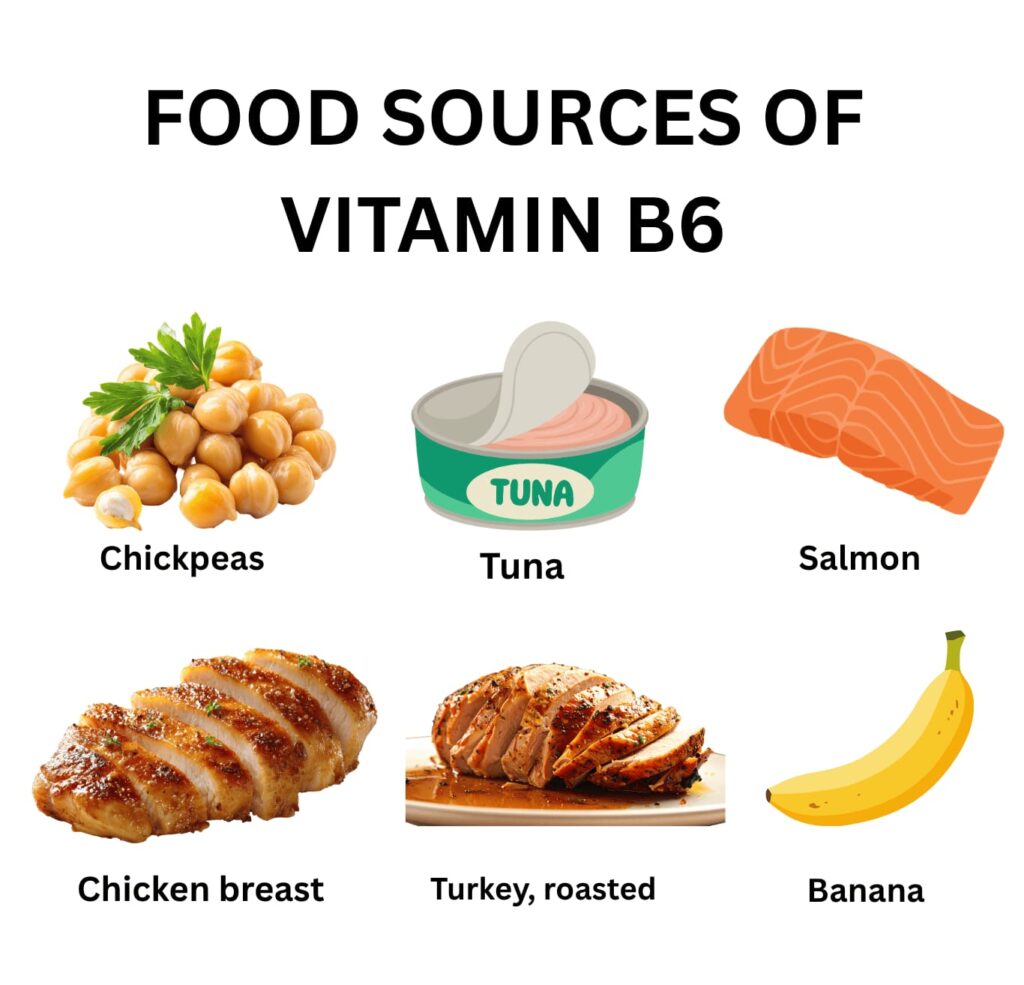
Food | Serving | Vitamin B6 (mg) | Notes |
Chickpeas, canned | 240 ml (1 cup) | 1.1 mg | Highest plant source per serving. Good for vegans alongside zinc and iron |
Tuna, light, canned in water | 85 g | 0.9 mg | Excellent everyday source |
Salmon, cooked | 85 g | 0.6 mg | Also provides selenium and Vitamin D |
Chicken breast, cooked | 85 g | 0.5 mg | Practical high-protein source |
Turkey, roasted | 85 g | 0.4 mg | Good everyday source |
Banana | 1 medium | 0.4 mg | Most accessible plant B6 source |
Potato, baked with skin | 1 medium | 0.4 mg | Common staple food |
Beef, lean, cooked | 85 g | 0.3 mg | |
Fortified breakfast cereal | 1 serving | Up to 1.0 mg | Check label. Most US and EU fortified cereals include B6 |
Winter squash, cooked | Half cup | 0.2 mg | Good vegetable source |
Spinach, cooked | Half cup | 0.2 mg | |
Peanut butter | 2 tablespoons | 0.1 mg | Modest but practical contribution |
Table 6. Top dietary sources of Vitamin B6. Source: NIH ODS; USDA FoodData Central. Adult RDA 1.3 to 1.7 mg per day.
[INSERT IMAGE 4 HERE — vitamin-b6-toxicity-high-dose-supplement.webp]
Vitamin B6 Toxicity — When Supplements Cause Neuropathy
This is the most important safety section in this article and one that is widely misunderstood.
Vitamin B6 toxicity from food is essentially impossible. Toxicity from supplements is real, well-documented, and occurring at doses far lower than most people assume.
The upper tolerable intake level for adults is 100 mg per day from supplements. This is approximately 60 to 75 times the RDA. Yet many commercially available B6 supplements and B-complex products contain 50 to 200 mg per tablet or capsule. When patients take these daily for months or years, toxicity develops.
The paradox: The primary symptom of chronic high-dose B6 toxicity is sensory peripheral neuropathy — tingling, numbness, burning, and balance difficulty. This is identical to the primary neurological symptom of B6 deficiency. A patient taking high-dose B6 supplements to treat their neuropathy may be causing the very symptom they are trying to treat.
The clinical picture of B6 toxicity neuropathy:
Symptoms begin insidiously after months of high-dose use. Tingling and burning in feet and hands, progressing to unsteady gait. Nerve conduction studies show sensory predominance with relative motor sparing. Unlike Vitamin B12 deficiency, there are no posterior column signs and no anaemia. Stopping the supplement produces slow improvement over months.
The threshold for toxicity: most documented cases involved doses above 500 mg per day for prolonged periods. However, cases of sensory neuropathy have been reported with chronic doses of 100 to 200 mg per day, particularly with pyridoxine (the synthetic form) rather than pyridoxal phosphate (the natural active form).
⚠️ Warning: Do not take Vitamin B6 supplements above 100 mg per day from any source without a specific medical indication and physician monitoring. For the general population with no deficiency, taking more than the RDA (1.3 to 1.7 mg) from supplements is unnecessary and potentially harmful. For patients with confirmed B6 deficiency, therapeutic doses of 25 to 100 mg are appropriate short-term under medical guidance. Doses above this are justified only for specific conditions (isoniazid-induced neuropathy, pyridoxine-responsive sideroblastic anaemia, pyridoxine-dependent epilepsy) and require monitoring.
Frequently Asked Questions About Vitamin B6 Deficiency
Related Articles on MedBeaconHub.com
- Nutritional Deficiency Diseases: The Complete Doctor’s Guide
- Folate Deficiency: The Pregnancy-Critical Vitamin and the B12 Trap
- Vitamin B12 Deficiency: Nerve Damage, Pernicious Anaemia and Treatment
- Iron Deficiency Anaemia: Symptoms, Causes and Treatment
- Magnesium Deficiency: The Mineral Behind Your Mood and Sleep
- Vitamin D Deficiency: Symptoms, Causes and Treatment
- Zinc Deficiency: Immunity, Taste, and Wound Healing
- Selenium Deficiency: The Thyroid Mineral and Hashimoto’s Connection
- Vitamin K Deficiency: Bleeding, Warfarin and Newborn Protection
- Vitamin C Deficiency: Scurvy, Immunity and Iron Absorption
- Calcium Deficiency: Hypocalcaemia and Bone Disease
- Iodine Deficiency: Goitre, Thyroid and Prevention
References and Authoritative Sources
- NIH Office of Dietary Supplements — Vitamin B6 Fact Sheet for Health Professionals
- NCBI StatPearls — Vitamin B6 Deficiency (Updated 2025)
- Merck Manual Professional Edition — Vitamin B6 Deficiency and Toxicity
- Cleveland Clinic — Vitamin B6 (Pyridoxine)
- EFSA — Dietary Reference Values for Vitamin B6 (2023 Update)
- American Journal of Clinical Nutrition — Vitamin B6 and Homocysteine in Older Adults (2024)
- PMC — Oral Contraceptives and Nutritional Depletion: A Review (2024)
- PMC — Isoniazid-Induced Peripheral Neuropathy: Prevention with Pyridoxine (2024)
- PMC — Vitamin B6 Toxicity: Sensory Neuropathy from High-Dose Supplementation (2023)
- Neurology — Sensory Neuropathy from Pyridoxine Abuse (2024)