
Vitamin B2 (Riboflavin) Deficiency: Symptoms, Causes and Treatment
The vitamin that colours urine bright yellow, protects your mitochondria, prevents migraines, and could lower your blood pressure — if you happen to carry one specific gene variant
✍️ Written and Reviewed by: Prof. Dr. Qazi Taqweemulhaq, FCPS Medicine. Professor of Medicine, Women Medical and Dental College, Abbottabad, Pakistan. Consultant Physician with 32 Years of Clinical Experience.📅 Last Updated: June 2026 | References: NIH ODS, NCBI StatPearls (2025), Journal of Nutrition 2026, EFSA 2017, Merck Manual, Cleveland Clinic, American Academy of Neurology, RIBOFEM Trial
⚡ Quick Answer: Riboflavin (Vitamin B2) deficiency, known as ariboflavinosis, causes the recognisable triad of angular stomatitis (cracked corners of the mouth), cheilosis (inflamed lips), and glossitis (magenta-coloured swollen tongue), alongside seborrhoeic dermatitis and corneal vascularisation. Critically, riboflavin deficiency causes a normocytic anaemia that does not respond to iron treatment because riboflavin is required to mobilise iron from ferritin stores. Despite adequate diets, a 2026 Journal of Nutrition study found that 48% of Irish women and 50% of British women are biochemically riboflavin deficient. The adult RDA is 1.1 to 1.3 mg per day. At 400 mg per day, riboflavin is an American Academy of Neurology Level B-rated migraine preventive. Riboflavin 1.6 mg per day specifically lowers blood pressure in people with the MTHFR 677TT gene variant.
✅ KEY TAKEAWAYS — Riboflavin Deficiency |
• Riboflavin deficiency is called ariboflavinosis. The hallmark signs are angular stomatitis, cheilosis, magenta glossitis, and seborrhoeic dermatitis around the nose, ears, and genitalia |
• Riboflavin is converted in the body to two coenzymes: FMN and FAD. These coenzymes participate in the electron transport chain, fatty acid oxidation, and the metabolism of Vitamin B6, folate, and thiamine |
• Riboflavin deficiency causes an anaemia that does not respond to iron supplementation. This is because FAD is required to mobilise iron from ferritin stores. Treating the iron without correcting the riboflavin produces no improvement |
• A landmark 2026 study published in the Journal of Nutrition found that 48% of Irish women and 50% of UK women aged 18 to 45 are biochemically riboflavin deficient — despite living in high-income countries with ostensibly adequate food supplies |
• Riboflavin 400 mg per day is rated Level B (“probably effective”) by the American Academy of Neurology for migraine prevention. It is one of the most evidence-supported nutraceutical interventions in headache medicine |
• Riboflavin 1.6 mg per day lowers systolic blood pressure by 6 to 13 mmHg specifically in people who are homozygous for the MTHFR C677T gene variant — a personalised nutrition application that is independent of antihypertensive drug therapy |
The Anaemia That Iron Would Never Fix
She was 26 years old. A junior doctor in her second year of residency. She had been tired for eight months. Pale. Struggling to concentrate during long shifts. Her haemoglobin was 9.8 g/dL.
Her GP had started her on ferrous sulphate three months earlier. She was taking it religiously, twice daily with orange juice. Her haemoglobin had risen to 10.1 g/dL — a minimal improvement that had not changed how she felt.
When I reviewed her, something in the picture did not fit. Her MCV was normal, not low as one would expect with simple iron deficiency anaemia. Her serum ferritin was 22 µg/L — borderline, but not the critically low level that produces a normocytic anaemia. And nobody had looked at her mouth.
When I did, the corners of her lips were cracked and slightly raw. Her tongue was smooth and tinged a deeper red than normal — the papillae flattened. She had early angular stomatitis and glossitis.
I asked about her diet. She had stopped eating meat three years earlier. She rarely ate dairy. She did not drink milk. Her diet was otherwise reasonable — plenty of vegetables, wholegrains, eggs occasionally.
Her erythrocyte glutathione reductase activation coefficient was 1.61, confirming significant riboflavin deficiency. Her folate was borderline. Her Vitamin B12 was normal.
I added riboflavin 5 mg daily alongside her iron. Six weeks later her haemoglobin was 12.4 g/dL. Her mouth had healed. Her energy had returned.
The iron had been the right treatment. But it could not work without riboflavin providing the FAD cofactor to mobilise iron from ferritin into haemoglobin synthesis. She had been treating half a problem for three months.
🏥 From My Clinic: Riboflavin deficiency is the silent accomplice of iron deficiency anaemia in women who limit dairy and meat. When a patient’s anaemia responds poorly to iron supplementation, always reconsider the full nutritional picture. Check riboflavin status alongside folate and B12. The iron may be adequate. The machinery to use it may not be. For the complete guide to nutritional deficiency diseases, read: Nutritional Deficiency Diseases: The Complete Doctor’s Guide.
What Riboflavin Does
Riboflavin is a water-soluble B vitamin. It is absorbed in the proximal small intestine by a specific active transport mechanism. The body cannot store significant amounts — excess is excreted in urine, producing the bright yellow-orange colour that is harmless but startling to patients taking high-dose supplements.
In the body, riboflavin is converted to two active coenzyme forms.
FMN and FAD — The Working Forms
Flavin mononucleotide (FMN) and flavin adenine dinucleotide (FAD) are the two biologically active coenzymes derived from riboflavin. They serve as electron carriers in oxidation-reduction reactions throughout the body.
Their roles include:
Electron transport chain. FAD is a component of Complex I and Complex II in mitochondria. These are two of the five protein complexes that generate ATP through oxidative phosphorylation. Without FAD, mitochondrial energy production is impaired. This is the link between riboflavin and the energy failure seen in migraine — a condition characterised by mitochondrial dysfunction in susceptible individuals.
Fatty acid oxidation. FAD is the cofactor for acyl-CoA dehydrogenase, the enzyme that initiates the breakdown of fatty acids for energy. Riboflavin deficiency impairs the body’s ability to use fat as a fuel source.
Iron mobilisation from ferritin. This is the clinically critical role that most physicians are unaware of. FAD is required by the enzyme NADH:FMN oxidoreductase to reduce ferritin-bound Fe³⁺ to Fe²⁺, releasing free iron that can enter circulation and be used for haemoglobin synthesis. Without FAD, iron is trapped in ferritin. This is why iron deficiency anaemia that fails to respond to iron supplementation should prompt a check for riboflavin status.
B vitamin metabolism. FAD is required to convert Vitamin B6 to its active form pyridoxal phosphate. FMN is required for the conversion of folate to its active tetrahydrofolate forms. FAD is the cofactor for methylenetetrahydrofolate reductase (MTHFR), the central enzyme in homocysteine metabolism. Riboflavin deficiency therefore creates secondary deficiencies in B6 and folate even when dietary intake of those vitamins is adequate.
Antioxidant defence. Glutathione reductase, the enzyme that recycles oxidised glutathione back to its active reduced form, is FAD-dependent. Riboflavin deficiency impairs this recycling, reducing the cell’s capacity to neutralise oxidative stress. This overlaps with the antioxidant roles of selenium and Vitamin C.
Vitamin K activation. The reduction of Vitamin K epoxide requires NADH, which depends on the FAD-containing electron transport chain. Riboflavin deficiency can therefore impair Vitamin K recycling at the cellular level.
How Much Riboflavin Do You Need Per Day
The requirement is modest. The challenge is that modern dietary patterns — particularly those low in dairy and animal products — make it surprisingly easy to fall short.
Group | RDA (mg per day) |
Men 19 years and over | 1.3 mg |
Women 19 years and over | 1.1 mg |
Pregnant women | 1.4 mg |
Breastfeeding women | 1.6 mg |
Children 1 to 3 years | 0.5 mg |
Children 4 to 8 years | 0.6 mg |
Adolescent girls 14 to 18 years | 1.0 mg |
Adults 51 years and over | 1.1 to 1.3 mg |
Table 1. Riboflavin RDA by life stage. Source: NIH ODS. EFSA Population Reference Intake (PRI): 1.6 mg/day adults, 1.9 mg/day pregnancy, 2.0 mg/day lactation. No upper tolerable intake level has been established. Riboflavin is not known to cause toxicity even at pharmacological doses of 400 mg per day.
Riboflavin Status in the United States and Europe
The data here contains a significant and underappreciated discrepancy that every clinician should know.
In the United States: NHANES data from 2017 to 2020 shows that approximately 5% of men and 3% of women fall below the Estimated Average Requirement for riboflavin. Mean daily intakes are around 4.2 mg in men and 3.5 mg in women — well above the RDA on paper. The US benefits from mandatory riboflavin fortification of enriched grain products since the 1940s, and from dairy products being a significant part of the American diet.
However, NHANES does not measure riboflavin biomarkers. Intake data from food diaries is an incomplete picture. The true prevalence of biochemical riboflavin deficiency in the US is unknown.
In Europe: The picture is markedly worse. The biochemical data is alarming.
A 2026 study published in the Journal of Nutrition, the most current large-scale riboflavin prevalence study, measured erythrocyte glutathione reductase activation coefficient (EGRac) across multiple countries. Among unsupplemented women aged 18 to 45, 48% of Irish women and 50% of British women were biochemically riboflavin deficient (EGRac above 1.40). Rates in lower-income countries were even higher — 72% in Malaysia, 82% in Cambodia, 90% in Uganda.
The same study found that riboflavin status declined with age in British children, worsening from adolescence onward. And the lowest dietary intake quintile of Irish women consumed less than 1.1 mg per day, substantially below even the RDA.
This is not a developing-world problem. Half the women of reproductive age in the United Kingdom are biochemically riboflavin deficient according to the latest evidence.
💡 Clinical Insight: The European data means that any female patient between 18 and 45 who presents with fatigue, mouth changes, or anaemia that is not fully explained by other deficiencies warrants riboflavin assessment. The likelihood of deficiency is not trivial. It is approaching one in two.
Symptoms of Riboflavin Deficiency
The clinical presentation of riboflavin deficiency is dominated by mucocutaneous signs — changes to the skin and mucous membranes — alongside a specific type of anaemia. The neurological manifestations are less prominent than in deficiencies of Vitamin B12 or thiamine, but they occur in prolonged or severe cases.
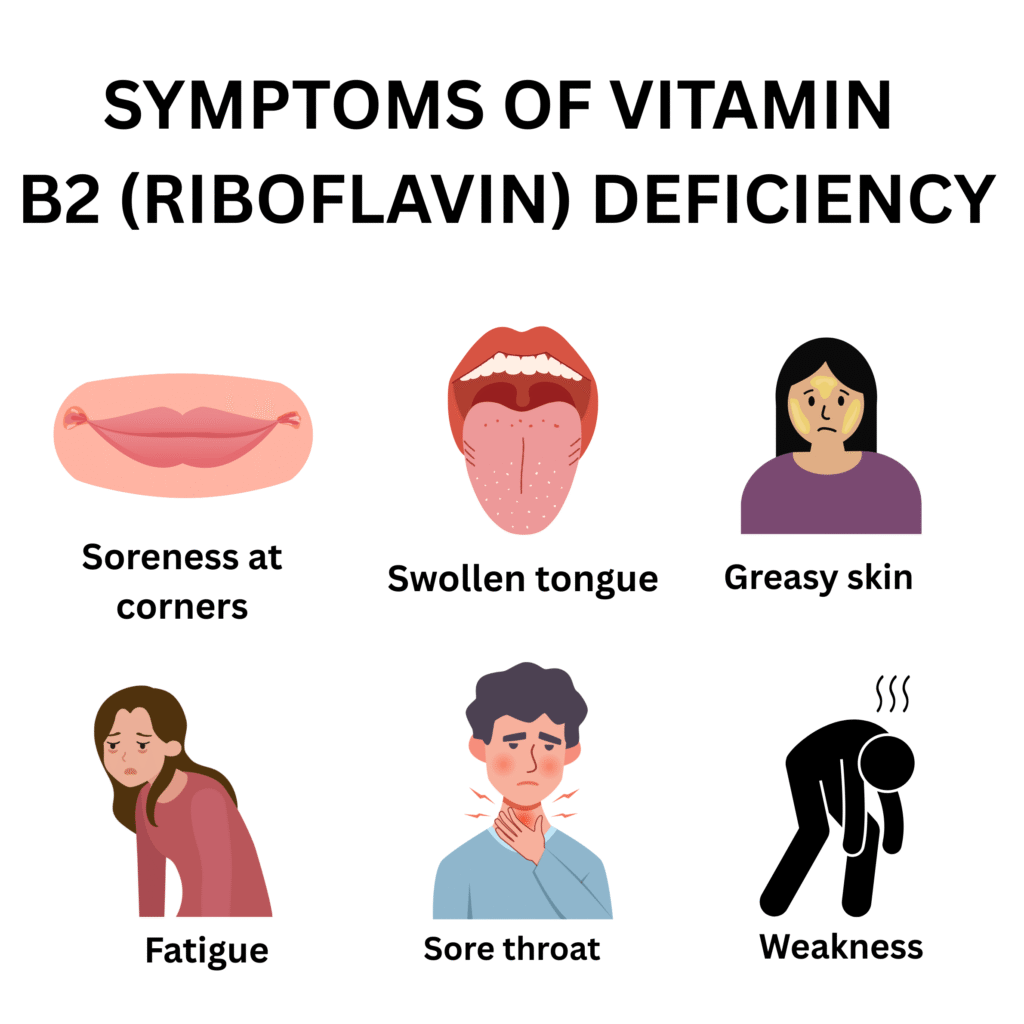
System | Signs and Symptoms |
Mouth and lips | Angular stomatitis: fissuring, maceration, and soreness at the corners of the mouth. Cheilosis: inflamed, swollen, cracked lips with involvement of the vermilion border. These are the earliest and most recognisable signs of ariboflavinosis |
Tongue | Magenta glossitis: the tongue becomes deep red-purple, smooth, swollen, and painful. The filiform papillae flatten and disappear. This magenta colour is distinctive — not the pale glossitis of iron deficiency or the beefy red of niacin deficiency |
Skin | Seborrhoeic dermatitis: scaly, greasy-appearing skin in the nasolabial folds (sides of the nose), around the ears, and on the scrotum or vulva in a characteristic periorificial distribution. This distribution overlaps with the rash of Vitamin B6 deficiency and biotin deficiency |
Eyes | Corneal vascularisation: blood vessel ingrowth into the cornea from the limbus. Photophobia. Watering and itching. This ocular sign was described in experimental riboflavin depletion as early as the 1940s and remains a specific marker of significant deficiency |
Blood | Normochromic normocytic anaemia that does not respond to iron supplementation alone. Iron is present but trapped in ferritin, unable to be mobilised without adequate FAD |
Neurological | Peripheral neuropathy in severe or prolonged cases. Fatigue and weakness from impaired mitochondrial energy production |
General | Fatigue, weakness, sore throat (pharyngitis is an early sign in experimental depletion) |
Table 2. Riboflavin deficiency symptoms. Sources: NIH ODS; NCBI StatPearls (2025); Merck Manual; Journal of Nutrition 2026.
The Mouth Signs in Detail
Angular stomatitis is the earliest and most consistently reported sign of riboflavin deficiency. It begins as pallor and softening at the corners of the mouth, progressing to fissuring and maceration. The corners crack horizontally. In chronic cases, secondary infection with Candida albicans (thrush) produces the clinical picture of angular cheilitis.
A critical clinical distinction: angular stomatitis has several causes. Riboflavin deficiency is one. Iron deficiency is another. Ill-fitting dentures creating a persistently moist angle of the mouth are a third. Zinc deficiency and B6 deficiency produce similar oral changes.
When a patient presents with angular stomatitis, the correct response is not to prescribe topical antifungal cream as a default. It is to assess nutritional status — riboflavin, iron, B6, and zinc simultaneously. Treating the secondary Candida without identifying the nutritional driver leads to recurrence.
The Iron-Riboflavin Anaemia — A Frequently Missed Diagnosis
The anaemia of riboflavin deficiency is normochromic and normocytic — normal red cell appearance, reduced haemoglobin. It does not respond to iron supplementation because the underlying problem is not lack of iron. It is inability to use the iron that is present.
FAD is required for the enzyme that reduces ferritin-bound iron (Fe³⁺) to the free iron (Fe²⁺) that enters circulation for haemoglobin synthesis. In riboflavin deficiency, ferritin may be normal or even elevated, but the iron cannot be released.
The RIBOFEM randomised controlled trial published by Powers and colleagues demonstrated this directly. Women with EGRac above 1.40 (confirmed biochemical riboflavin deficiency) were randomised to riboflavin supplementation at 2 mg or 4 mg per day versus placebo. Haemoglobin rose significantly in proportion to riboflavin repletion, with the greatest gains in the most severely deficient women. The haemoglobin improvement was equivalent to approximately 33 mg of additional circulating iron — achieved not by giving more iron but by restoring the ability to use the iron already present.
Clinical Implication: Any patient whose iron deficiency anaemia responds poorly or incompletely to iron supplementation should have riboflavin status assessed. This is particularly relevant for women on plant-based or low-dairy diets, for pregnant women, and for patients with magnesium and other concurrent nutritional deficiencies.
What Causes Riboflavin Deficiency
Cause | Mechanism | Who Is Most Affected |
Low dairy and animal product intake | Dairy products are the single most important riboflavin source in the US and EU dietary supply. Meat and eggs contribute substantially. A diet that removes dairy and reduces meat dramatically lowers riboflavin intake with no reliable plant-food replacement | Vegans and vegetarians in the US and EU. The 2026 Journal of Nutrition data showing 50% deficiency in UK women reflects this dietary shift across the population |
Alcohol use disorder | Ethanol blocks intestinal riboflavin absorption through specific transporter mechanisms and increases urinary riboflavin excretion. Alongside thiamine, folate, and B6, riboflavin is one of the B vitamins most consistently depleted by heavy alcohol use | People with alcohol use disorder — approximately 29 million Americans per SAMHSA 2023 |
Pregnancy and lactation | Riboflavin requirements increase to 1.4 to 1.6 mg per day (NIH) or 1.9 to 2.0 mg per day (EFSA). The OptiPREG observational study (n=2,236) found that 31% of pregnant Norwegian women had deficient riboflavin status despite 64% taking supplements — because most prenatal vitamins contain insufficient riboflavin | Pregnant and breastfeeding women. Deficiency is associated with gestational anaemia and hypertension in pregnancy |
Malabsorption syndromes | Active intestinal inflammation or surgical bypass reduces absorptive surface for riboflavin. Alongside iron, folate, and zinc, riboflavin is depleted in inflammatory bowel disease and post-bariatric surgery | Crohn’s disease, coeliac disease, and post-bariatric surgery patients |
Older age | Dietary variety reduces. Absorption efficiency declines. Higher proportion of dairy-poor diets. UK studies show supplementing healthy adults over 50 with 5 mg per day significantly improved EGRac | Adults over 65, particularly those in care homes or living alone on limited dietary variety |
Tricyclic antidepressants and phenothiazines | Chlorpromazine, imipramine, and amitriptyline share a structural similarity to riboflavin. They inhibit the flavokinase and FAD synthetase enzymes that convert riboflavin to FMN and FAD, increasing urinary riboflavin excretion. The clinical significance is greatest in patients with already-marginal intake | Patients on long-term antipsychotic or antidepressant medication, particularly those on poor diets |
Photodegradation | Riboflavin is uniquely sensitive to light. Milk stored in clear glass bottles on a sunny doorstep loses a significant portion of its riboflavin within two hours. Neonates receiving phototherapy for jaundice are at risk of riboflavin destruction | Hospitalised neonates under phototherapy lamps. A concern for home-delivered milk in clear packaging |
Dialysis | Riboflavin is water-soluble and removed in dialysate. Alongside B6, folate, and Vitamin C, riboflavin requires supplementation in all dialysis patients | Haemodialysis and peritoneal dialysis patients |
High physical activity | Exercise increases riboflavin-dependent metabolic pathways, raising requirements. Vegetarian and vegan athletes are particularly at risk | Athletes eating plant-based diets, as identified by the Academy of Nutrition and Dietetics and ACSM position statement |
Table 3. Causes of riboflavin deficiency. Sources: NIH ODS; NCBI StatPearls (2025); Journal of Nutrition 2026; SAMHSA 2023.
Riboflavin and Migraine Prevention
This is one of the most clinically useful and well-evidenced applications of riboflavin in clinical medicine, yet it remains widely unknown outside of neurology practice.
Migraine is associated with mitochondrial dysfunction in the brain. During a migraine, neuronal energy metabolism is impaired between attacks. Since FAD is an essential component of Complex I and Complex II in the mitochondrial electron transport chain, adequate riboflavin availability supports the ATP production that migraine-susceptible neurons need.
The landmark trial by Schoenen and colleagues, published in Neurology in 1998, randomised 55 adults with migraine to riboflavin 400 mg per day or placebo for three months. Riboflavin was superior to placebo for both attack frequency and headache days. The proportion of patients improving by 50% or more — the responder rate — was 59% with riboflavin versus 15% with placebo, giving a number-needed-to-treat of 2.3. This is a remarkable treatment response for a migraine preventive.
The American Academy of Neurology and American Headache Society rate riboflavin 400 mg per day as Level B evidence — “probably effective” for migraine prevention. The Canadian Headache Society recommends it at 400 mg per day as a first-line option. The American Headache Society’s 2023 nutraceutical guidance endorses riboflavin as one of three preferred supplement options alongside magnesium and CoQ10.
A 2026 dose-response meta-analysis published in the Journal of Research in Medical Sciences, covering 12 trials and 749 patients, confirmed a significant linear reduction in migraine frequency and duration up to 400 mg per day. The side effects are minimal — the primary effect is bright yellow-orange urine from riboflavin excretion, which is harmless but should be mentioned to patients to prevent unnecessary alarm.
💡 Clinical Insight: Riboflavin 400 mg daily is a low-cost, low-risk, evidence-supported migraine preventive. It works best when started alongside a comprehensive nutritional assessment — many migraine patients also have subclinical <a href=”https://medbeaconhub.com/magnesium-deficiency-symptoms/”>magnesium deficiency</a>, and correcting both together produces better outcomes than either alone. The combination of riboflavin 400 mg, magnesium 400 to 600 mg, and CoQ10 150 mg is the nutraceutical triad supported by the strongest headache medicine evidence.
Riboflavin and the MTHFR Gene — A Personalised Medicine Application
This is perhaps the most clinically underutilised finding in nutritional medicine of the past decade.
Methylenetetrahydrofolate reductase (MTHFR) is the enzyme that converts 5,10-methylenetetrahydrofolate to 5-methyltetrahydrofolate — the active form of folate used to remethylate homocysteine to methionine. MTHFR requires FAD as its cofactor.
The MTHFR C677T polymorphism is the most common functional gene variant in humans. The TT homozygous genotype produces a thermolabile enzyme with significantly reduced affinity for its FAD cofactor. This means that in TT individuals, adequate riboflavin status is particularly critical — their MTHFR enzyme needs more FAD to function at normal efficiency.
The TT genotype is present in more than 10% of UK and Irish populations and up to 32% of some Southern European and Hispanic populations. It is associated with raised homocysteine and a substantially higher risk of hypertension.
The Horigan trial (Journal of Hypertension 2010) randomised 181 premature cardiovascular disease patients prescreened by genotype to riboflavin 1.6 mg per day or placebo for 16 weeks. Riboflavin specifically lowered systolic blood pressure by 13.2 mmHg and diastolic by 7.5 mmHg in TT individuals. There was no blood pressure effect in CC or CT genotypes. Critically, 82% of these patients were already taking antihypertensive medications — riboflavin produced an additional blood pressure reduction on top of drug therapy.
The Wilson trial (American Journal of Clinical Nutrition 2023), a four-year follow-up crossover study, confirmed the finding: riboflavin lowered systolic blood pressure by 9.2 mmHg and diastolic by 6.0 mmHg specifically in TT individuals.
This is personalised nutrition in practice. A cheap, safe, widely available B vitamin supplement providing a clinically meaningful blood pressure reduction in one specific genotype at a dose barely above the dietary reference value.
💡 Clinical Insight: MTHFR C677T genotyping is inexpensive and widely available. In a TT patient with hypertension that is difficult to control despite medications, or in any TT patient with cardiovascular risk factors, riboflavin 1.6 mg daily is a low-risk adjunct worth discussing. Reassess blood pressure at 16 weeks. The magnitude of effect — 6 to 13 mmHg systolic — is comparable to many antihypertensive drug classes.
Diagnosis
Riboflavin deficiency is diagnosed primarily through functional biomarker testing rather than through measurement of riboflavin itself in blood.
Blood Tests
Erythrocyte glutathione reductase activation coefficient (EGRac): The gold standard. Glutathione reductase is a FAD-dependent enzyme in red blood cells. The EGRac measures the stimulation of glutathione reductase activity when FAD is added in vitro. A higher ratio indicates greater FAD deficiency. Reference ranges: EGRac below 1.2 indicates adequate status; 1.2 to 1.4 indicates marginal deficiency; above 1.4 indicates deficiency. Note: this test is unreliable in patients with glucose-6-phosphate dehydrogenase deficiency, which affects approximately 10% of African American patients.
Urinary riboflavin excretion: Below 40 mcg per day (or below 27 mcg per gram creatinine) indicates deficiency. Reflects recent intake more than chronic status.
Plasma riboflavin: Available but less reliable than EGRac. Reflects recent dietary intake rather than tissue stores.
Clinical Assessment
In clinical practice, the combination of characteristic mucocutaneous signs (angular stomatitis, glossitis, seborrhoeic dermatitis) in a patient with identified risk factors (low dairy intake, alcohol dependence, pregnancy, malabsorption) is sufficient grounds for a therapeutic trial of riboflavin.
A therapeutic trial is clinically valid: riboflavin 5 to 10 mg daily for 4 to 6 weeks. If the angular stomatitis and glossitis resolve, the diagnosis is confirmed by the response.
Always check riboflavin status alongside iron, folate, and B12 simultaneously. Riboflavin deficiency rarely presents in isolation. It almost always coexists with other B vitamin deficiencies, particularly in patients with alcohol use disorder, malabsorption, or very restricted diets.
Treatment
Clinical Scenario | Treatment | Duration and Notes |
Dietary riboflavin deficiency | Oral riboflavin 5 to 10 mg daily | 4 to 8 weeks until clinical resolution and EGRac normalises. Then dietary optimisation to prevent recurrence |
Riboflavin deficiency in alcohol use disorder | Oral riboflavin 10 mg daily as part of B-complex replacement alongside thiamine, folate, and B6 | Continued throughout treatment. The full B-complex is depleted in alcohol dependence |
Iron-resistant anaemia with riboflavin deficiency | Riboflavin 2 to 4 mg daily alongside continuing iron supplementation | 8 weeks. Recheck haemoglobin and EGRac at completion |
Pregnancy — confirmed deficiency | Riboflavin 2 to 4 mg daily. Check that prenatal vitamin contains adequate riboflavin | Most prenatal vitamins in the US contain 1.8 to 2 mg — check label. May require additional supplement |
Post-bariatric surgery | Riboflavin as part of standard B-complex micronutrient protocol | Lifelong. Annual EGRac monitoring |
Dialysis patients | Riboflavin 10 mg three times per week post-dialysis or as part of renal multivitamin | Standard component of dialysis nutritional support alongside B6, folate, and Vitamin C |
Migraine prevention | Riboflavin 400 mg daily | Minimum 3 months before assessing response. Warn patient about yellow-orange urine. Combine with magnesium 400 to 600 mg for best results |
MTHFR 677TT hypertension | Riboflavin 1.6 mg daily | 16 weeks then reassess blood pressure. Continue if beneficial response. Safe to maintain indefinitely |
Genetic riboflavin transporter deficiency (RTD) | High-dose riboflavin 10 to 50 mg/kg/day under specialist supervision | Lifelong. Potentially life-saving — early initiation prevents irreversible neurological damage |
Table 4. Riboflavin deficiency treatment protocol. Sources: NIH ODS; NCBI StatPearls (2025); Merck Manual; AAN/AHS Guidelines; RIBOFEM trial.
Recovery Timeline
What Improves | Timeline |
Angular stomatitis and cheilosis | 1 to 2 weeks |
Glossitis | 2 to 4 weeks |
Seborrhoeic dermatitis | 2 to 4 weeks |
EGRac normalises | 4 to 6 weeks |
Anaemia improves with combined iron and riboflavin | 4 to 8 weeks |
Corneal vascularisation | Weeks to months. May not fully reverse |
Migraine frequency reduction | 4 to 12 weeks at 400 mg daily |
Blood pressure response in MTHFR TT | 12 to 16 weeks at 1.6 mg daily |
Table 5. Riboflavin deficiency recovery timeline. Source: Clinical experience; NCBI StatPearls (2025); RIBOFEM trial.
Best Food Sources of Riboflavin
The top riboflavin sources in the US and EU diet are dominated by animal products, which explains why populations shifting toward plant-based diets show declining riboflavin status in biomarker surveys.
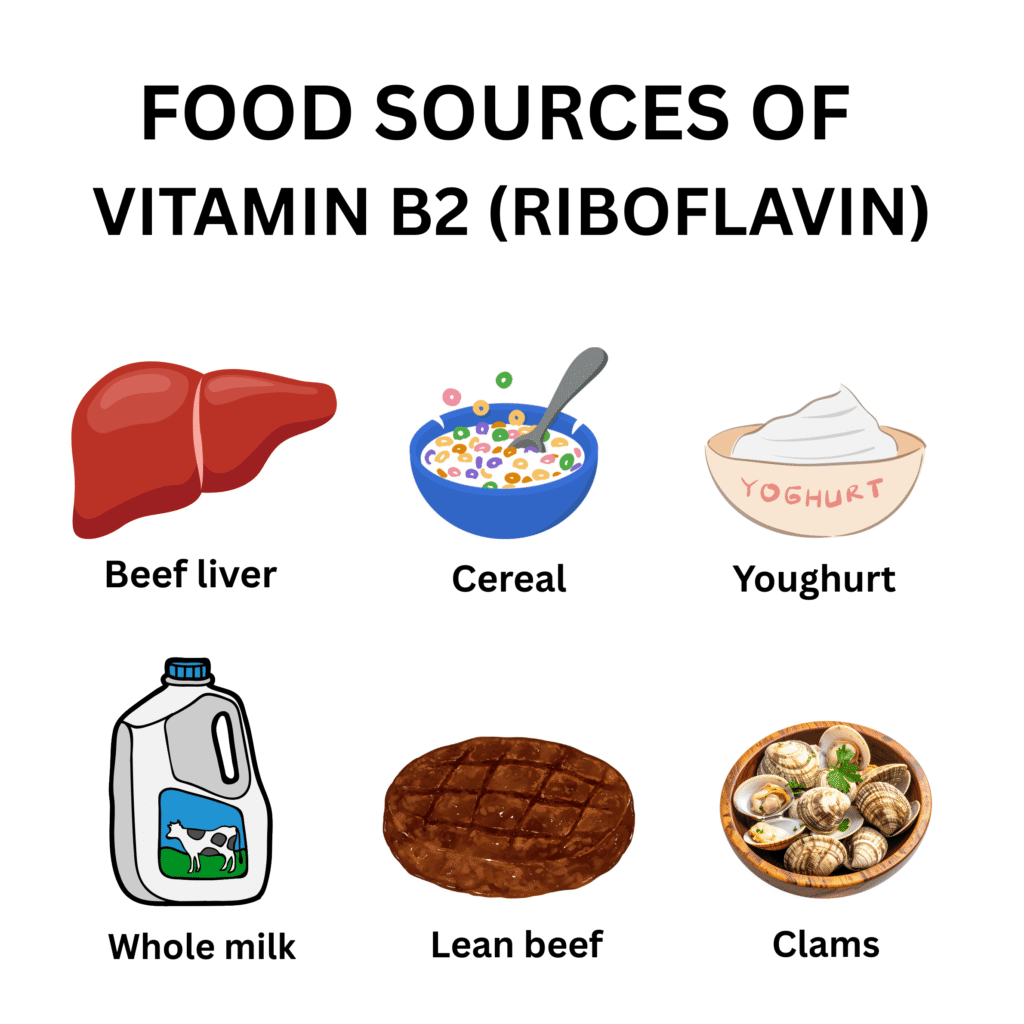
Food | Serving | Riboflavin (mg) | Notes |
Beef liver, cooked | 85 g | 2.9 mg | |
Fortified breakfast cereal | 1 serving | 1.3 mg | Check label. US mandatory fortification includes riboflavin |
Yoghurt, plain, whole | 245 g (1 cup) | 0.57 mg | Primary riboflavin vehicle in the UK dietary supply |
Milk, whole | 240 ml (1 cup) | 0.44 mg | Key reason US and EU dairy consumers maintain status |
Beef, lean, cooked | 85 g | 0.40 mg | Good everyday animal source |
Clams, cooked | 85 g | 0.36 mg | |
Salmon, cooked | 85 g | 0.35 mg | |
Almonds | 28 g | 0.32 mg | Best plant source per serving |
Egg, hard boiled | 1 large | 0.26 mg | Reliable everyday source |
Spinach, cooked | Half cup | 0.21 mg | Good vegetable source alongside folate, magnesium, and Vitamin K |
Mushrooms, cooked | Half cup | 0.23 mg | One of the few good plant riboflavin sources |
Fortified oat milk | 240 ml | 0.44 mg | Some brands fortified to match dairy. Check label |
Table 6. Top dietary sources of riboflavin. Source: NIH ODS; USDA FoodData Central. Adult RDA: men 1.3 mg, women 1.1 mg per day.
The plant milk question: This is clinically important for the growing number of Americans and Europeans using dairy alternatives. Cow’s milk provides 0.44 mg of riboflavin per cup. Almond, soy, oat, and rice milks contain almost no riboflavin naturally, though some brands fortify their products to equivalent levels. A patient who has switched from dairy to plant milks should check their brand’s nutrition label specifically for riboflavin content. If the plant milk is unfortified, riboflavin intake from that source is essentially zero.
Riboflavin and light: Riboflavin is uniquely photosensitive among vitamins. Milk stored in clear glass or translucent containers loses significant riboflavin within 2 hours of direct light exposure. This is why milk is now commonly sold in opaque cartons and plastic jugs in the US and EU. For patients using glass bottles for milk at home, this is worth mentioning.
Frequently Asked Questions About Riboflavin Deficiency
Related Articles on MedBeaconHub.com
- Nutritional Deficiency Diseases: The Complete Doctor’s Guide
- Iron Deficiency Anaemia: Symptoms and Treatment
- Folate Deficiency: The Pregnancy-Critical Vitamin
- Vitamin B12 Deficiency: Nerve Damage and Pernicious Anaemia
- Vitamin B6 Deficiency: Depression, Neuropathy and the OCP
- Vitamin B1 Thiamine Deficiency: Beriberi and Wernicke Encephalopathy
- Magnesium Deficiency: Sleep, Anxiety and Muscle Cramps
- Zinc Deficiency: Immunity, Taste and Wound Healing
- Selenium Deficiency: The Thyroid and Mitochondrial Mineral
- Vitamin D Deficiency: The Most Common US Deficiency
- Vitamin B7 Biotin Deficiency: Hair Loss and the FDA Warning
- Vitamin C Deficiency: Scurvy and Iron Absorption
- Vitamin K Deficiency: Bleeding and Warfarin
- Calcium Deficiency: Hypocalcaemia and Bone Disease
References and Authoritative Sources
- NIH Office of Dietary Supplements — Riboflavin Fact Sheet for Health Professionals
- NCBI StatPearls — Riboflavin Deficiency (Updated 2025)
- Journal of Nutrition — Riboflavin Deficiency Is Highly Prevalent in Females and Children across High and Low/Middle Income Countries Worldwide (McAnena et al., 2026)
- EFSA — Dietary Reference Values for Riboflavin (2017)
- Merck Manual Professional Edition — Riboflavin Deficiency
- Neurology — Effectiveness of High-Dose Riboflavin in Migraine Prophylaxis: A Randomised Controlled Trial (Schoenen et al., 1998)
- American Academy of Neurology/American Headache Society — Evidence-Based Guideline Update: NSAIDs and Complementary Treatments for Episodic Migraine Prevention
- PubMed — Riboflavin Lowers Blood Pressure in Cardiovascular Disease Patients Homozygous for the 677C→T Polymorphism in MTHFR (Horigan et al., 2010)
- American Journal of Clinical Nutrition — Correcting a Marginal Riboflavin Deficiency Improves Haematologic Status in Young Women in the UK: The RIBOFEM Trial
- PMC — Riboflavin on Migraine: A Systematic Review and Dose-Response Meta-Analysis of Clinical Trials (2026)