
Vitamin B12 Deficiency: Symptoms, Causes, Blood Test Levels, Injections, Treatment and Prevention – The Complete Doctor’s Guide
The silent epidemic that destroys nerves, causes anaemia, and mimics dementia: explained by a physician who diagnoses it often.
✍️ Written and reviewed by: Dr. Qazi Taqweemulhaq, FCPS Medicine. Professor of Medicine, Women Medical and Dental College, Abbottabad, Pakistan. Consultant Physician, 32 Years Clinical Experience
📅 Last Updated: May 2026 | References: NIH ODS, NCBI StatPearls, AAFP 2025, Cleveland Clinic, Mayo Clinic, Merck Manual
✅ KEY TAKEAWAYS — Vitamin B12 Deficiency |
• B12 deficiency affects 6% of adults under 60 and 20% of adults over 60. It is not rare. |
• Untreated, it causes irreversible spinal cord damage (subacute combined degeneration) The longer the delay, the less complete the recovery. |
• Every diabetic on metformin for more than 1 year should have their B12 checked annually. Most are never warned about this risk. |
B12 is found ONLY in animal products. Every vegan must supplement B12, without exception. |
• A normal blood count does NOT exclude B12 deficiency. Concurrent iron deficiency can mask the macrocytosis. |
• The route of treatment must match the cause. Oral tablets work for dietary deficiency; pernicious anaemia requires lifelong IM injections. |
⚡ Quick Answer: B12 deficiency (serum B12 < 180 pg/mL) affects 6% of adults under 60 and 20% of adults over 60. It’s symptoms include fatigue, peripheral neuropathy, megaloblastic anaemia, depression, and if untreated, irreversible spinal cord damage. Common causes: pernicious anaemia, vegan diet, metformin, PPIs. The route of treatment must match the cause: oral tablets for dietary deficiency; lifelong IM injections for pernicious anaemia. Energy and mood improve within 1–2 weeks; nerve recovery takes months.
Overview
It Destroys Your Nerves Silently. For Years. And Most People Never See It Coming.
I want to tell you about the most preventable tragedy I have witnessed in my career as a physician.
A 52-year-old accountant came to me accompanied by his wife. Her sharp, capable husband was no longer quite himself:
- he was forgetful
- he dropped things
- his walking had changed, unsteady, wide-based, as if he could not quite feel the ground.
A neurologist was considering multiple sclerosis. His GP had treated him for depression. He had been through two rounds of physiotherapy. His Vitamin B12 was 68 pg/mL. He had been a strict vegetarian for eleven years. In eleven years, not one doctor had checked his B12.
He had subacute combined degeneration of the spinal cord, one of the most serious and most preventable neurological conditions in medicine.
I treated him aggressively. He improved significantly but he never fully recovered. The proprioception in his feet remained permanently impaired because a simple, cheap blood test was never ordered.
How Common Is B12 Deficiency in the US and Europe ?
In the United States, approximately 6% of adults under 60 and nearly 20% of adults over 60 have Vitamin B12 deficiency according to NHANES data. The condition is increasingly recognized among vegans and vegetarians in the US and Western Europe, where plant-based diets are growing rapidly. The American Academy of Neurology confirms that B12 deficiency is a leading reversible cause of cognitive decline in older American adults. In the UK, NHS data shows B12 deficiency affects approximately 1 in 10 people over the age of 75.
Are any of these true for you?
- Vegetarian or on vegan diet
- Diabetic and on metformin
- Over 60 years old
- Taking omeprazole or a similar acid-suppressing medication.
- Tingling or numbness in your hands or feet.
- More forgetful than usual, or a strange flatness in mood that antidepressants have not corrected.
Any one of these should prompt a B12 test. All of them together make it urgent.
🏥 From My Clinic The Metformin Connection: A 61-year-old man with type 2 diabetes on metformin for 9 years came to me with fatigue and numbness in both feet. His HbA1c was excellent, diabetes perfectly controlled. What was not controlled was his B12, quietly depleted by metformin for nine years. Level: 112 pg/mL. He started B12 supplementation; numbness slowly improved over six months. He had been told nothing about this risk when metformin was first prescribed.
What Is Vitamin B12 (Cobalamin) and Why Is It Irreplaceable?
Vitamin B12 also called cobalamin is the largest and most structurally complex of all vitamins. It uniquely contains a metal ion cobalt at its centre. Key facts:
- The liver stores B12 sufficient for 3 to 5 years. This explains why deficiency develops slowly and insidiously and why diagnosis is often delayed by years.
- B12 is found exclusively in animal products, meat, fish, dairy, and eggs. Plants contain none.
- This single fact makes B12 the most critical nutritional consideration for any person following a plant-based diet
The Seven Critical Functions of Vitamin B12
- DNA synthesis: essential cofactor for thymidylate synthase required for DNA replication in every dividing cell. Most visible defect in rapidly dividing cells: red blood cells and gut epithelium.
- Myelin synthesis and maintenance: indispensable for the myelin sheath insulating nerve fibres. Deficiency causes progressive demyelination, first peripheral nerves, then spinal cord, then brain.
- Red blood cell formation: deficiency causes megaloblastic anaemia, large, dysfunctional red cells unable to carry oxygen efficiently.
- Homocysteine metabolism: converts homocysteine to methionine. Deficiency causes hyperhomocysteinaemia. It is independently associated with cardiovascular disease, stroke, and dementia.
- SAMe production: via methionine synthesis, SAMe is the body’s universal methyl donor, required for neurotransmitter synthesis, gene expression, and myelin maintenance.
- Fatty acid metabolism: required for methylmalonyl-CoA → succinyl-CoA conversion. Deficiency causes MMA accumulation, measurable in blood and potentially neurotoxic.
- Neurotransmitter regulation: via SAMe production, influences serotonin, dopamine, and norepinephrine synthesis explaining depression, irritability, and psychosis in severe deficiency.
The Intrinsic Factor Story. Why B12 Absorption Is Uniquely Complex?
No other vitamin has an absorption mechanism as elaborate as Vitamin B12. Understanding it explains why deficiency occurs even in people who eat plenty of meat and dairy.
The five-step absorption pathway:
- Step 1 Gastric acid releases B12: dietary B12 is bound to food proteins. Gastric acid denatures these proteins. Any condition reducing stomach acid, atrophic gastritis, PPIs impairs this step.
- Step 2 R-protein binding: released B12 binds to haptocorrin (R-protein), which protects it from acid degradation in the stomach.
- Step 3 Intrinsic factor production: gastric parietal cells produce intrinsic factor (IF) absolutely essential for B12 absorption. Destruction of parietal cells (pernicious anaemia) eliminates IF and makes dietary B12 absorption impossible regardless of intake.
- Step 4 Pancreatic enzyme transfer: in the duodenum, pancreatic proteases release B12 from haptocorrin to bind with intrinsic factor.
- Step 5 Absorption in the terminal ileum: the B12-IF complex binds to cubam receptors exclusively in the terminal ileum. Disease or surgery affecting this area, Crohn’s, resection l, eliminates B12 absorption entirely.
💡 Clinical Insight: This five-step pathway explains why the cause of deficiency determines the treatment. Dietary deficiency responds to oral B12 tablets. Pernicious anaemia does not respond to oral supplementation. The intrinsic factor is permanently absent and injections are required for life.
💡 Clinical Insight: The passive absorption loophole: at very high doses (1,000+ mcg), approximately 1% of oral B12 is absorbed by passive diffusion independent of intrinsic factor. This is why high-dose oral B12 can work even in pernicious anaemia, though IM injections remain the gold standard for severe cases.
Numbers & Dosage
Vitamin B12 Blood Test: How to Interpret Your Results
The primary test is serum total Vitamin B12. However, it can miss functional B12 deficiency in up to 50% of borderline cases. When serum B12 is equivocal, confirmatory tests are essential.
Serum B12 Level | Status | Clinical Implication |
> 300 pg/mL | Normal | Deficiency unlikely as sole cause of symptoms |
180–300 pg/mL | Borderline | Metabolically deficient in up to 30% of cases. Order MMA + homocysteine to confirm |
< 180 pg/mL | Deficient | Diagnostic per AAFP 2025. Treatment indicated. Do not wait for neurological symptoms to develop |
< 100 pg/mL | Severely Deficient | High risk of irreversible neurological damage. Urgent treatment. IM injections preferred |
Table 1. Vitamin B12 blood level interpretation. Sources: AAFP 2025; NCBI StatPearls; Cleveland Clinic.
Confirmatory Tests When Serum B12 Is Borderline (180–350 pg/mL)
- Methylmalonic acid (MMA): elevated in B12 deficiency (> 0.4 µmol/L). More sensitive and specific than serum B12 alone. Normal MMA rules out B12 deficiency as the cause. This is the key differentiating test from folate deficiency.
- Plasma homocysteine: elevated in both B12 and folate deficiency (> 15 µmol/L) useful supportive marker but not specific to B12
- Anti-intrinsic factor antibodies: positive in 50–70% of pernicious anaemia, high specificity; a positive result confirms the diagnosis.
- Full blood count: macrocytosis (MCV > 100 fL), hypersegmented neutrophils.
⚠️ Warning: A patient with BOTH iron deficiency and B12 deficiency can have a NORMAL MCV. Iron deficiency microcytosis masks the B12-related macrocytosis. The blood count looks normal and the anaemia is missed. Always check B12 AND iron studies together in unexplained anaemia.
How Much Vitamin B12 Do You Need Per Day?
The daily requirement is tiny, just 2.4 micrograms per day for most adults. One microgram is one millionth of a gram. Yet this infinitesimal amount is responsible for the integrity of your entire nervous system.
Life Stage / Group | RDA (mcg/day) | Notes |
Infants 0–6 months | 0.4 mcg (AI) | From breast milk or formula |
Children 1–3 years | 0.9 mcg | Bleeding stops; gum colour begins to normalise |
Children 4–8 years | 1.2 mcg | Petechiae and ecchymoses fade; hair structure normalises |
Adults ≥19 years | 2.4 mcg | Tiny daily requirement but absorption is uniquely complex |
Pregnant women | 2.6 mcg | Deficiency harms foetal nervous system development |
Lactating women | 2.8 mcg | Breast milk B12 directly reflects maternal status |
Adults > 50 years | 2.4 mcg + supplement | NIH recommends crystalline B12 (supplements/fortified food) — absorbed independently of intrinsic factor |
Table 2. Vitamin B12 RDA by life stage. Source: NIH Office of Dietary Supplements.
Symptoms & Causes
Vitamin B12 Deficiency Symptoms: From Subtle to Catastrophic
What makes B12 deficiency so dangerous: the liver stores 3–5 years of B12. Deficiency is biochemically present long before the patient or their doctor notices anything wrong. By the time symptoms are obvious, significant tissue damage may already have occurred.
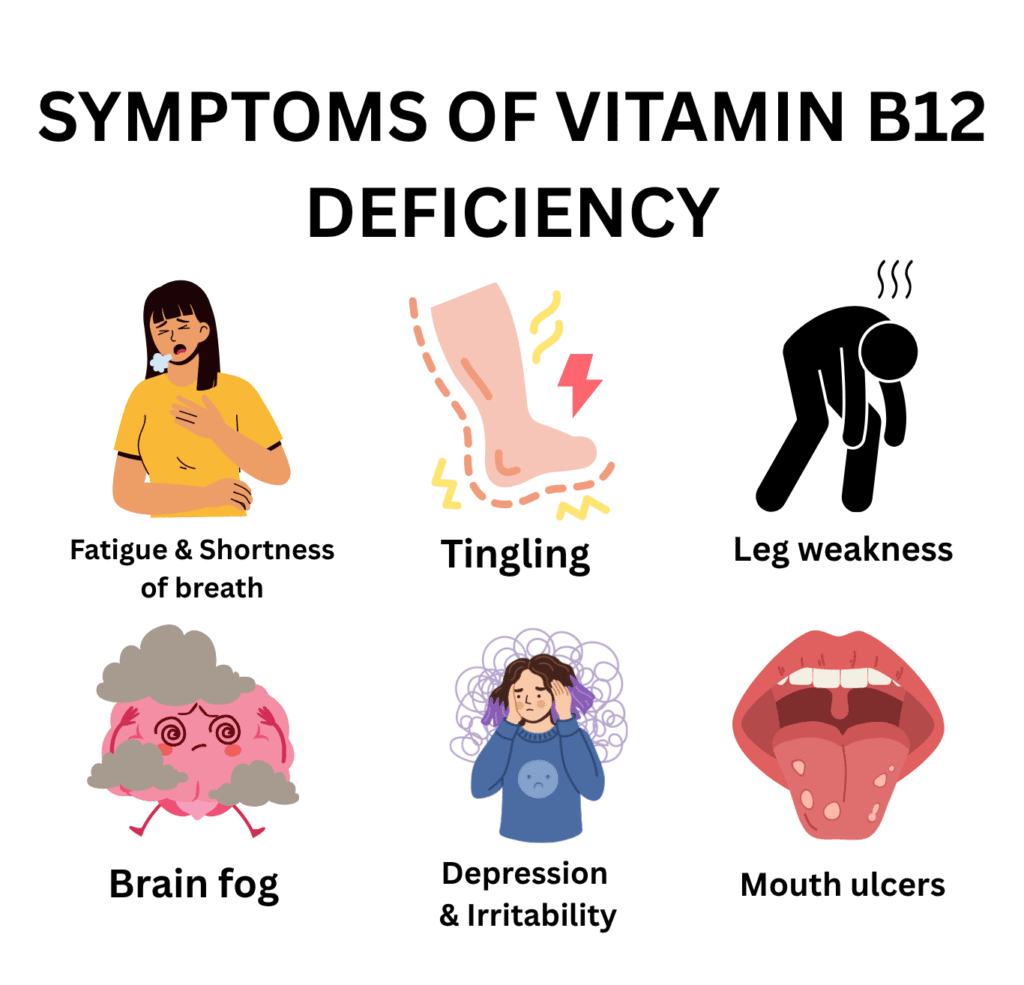
System | Mild–Moderate Deficiency | Severe / Prolonged Deficiency |
Blood | Fatigue, pallor, shortness of breath on exertion | Megaloblastic anaemia; pancytopenia in severe cases |
Peripheral Nerves | Tingling and numbness in hands and feet | Symmetrical progressive neuropathy; loss of vibration and proprioception |
Spinal Cord | Unsteady gait, leg weakness | Subacute combined degeneration (SCD) demyelination of dorsal and lateral columns; spasticity, paraplegia |
Brain / Cognition | Brain fog, poor concentration, memory lapses | Dementia-like picture; ‘megaloblastic madness’ psychosis that resolves with B12 treatment |
Mental Health | Depression, irritability, mood swings | Severe depression, personality changes, psychosis |
Mouth & Tongue | Mouth ulcers, sore tongue | Hunter’s glossitis smooth, beefy-red, shiny, painful tongue |
Skin & Hair | Hair loss, premature greying, pale skin | Hyperpigmentation of knuckles and skin folds especially in dark-skinned individuals |
Cardiovascular | Palpitations from anaemia | Elevated homocysteine → increased cardiovascular and stroke risk |
Table 3. Vitamin B12 deficiency symptoms by severity and organ system. Sources: NCBI StatPearls; Cleveland Clinic; AAFP 2025.
1. Peripheral Neuropathy – The Earliest Neurological Sign
Tingling, numbness, or ‘pins and needles’ symmetrical, beginning in the feet and hands, is the hallmark early neurological symptom. It reflects demyelination of peripheral sensory nerves.
What distinguishes B12 neuropathy from diabetic neuropathy:
- B12 neuropathy: disproportionately affects vibration sense and proprioception (position sense)
- Diabetic neuropathy: tends to affect pain and temperature first
💡 Clinical Insight: A patient who cannot feel a tuning fork on their ankle, or who cannot feel which direction their toes are being moved that is a B12 neuropathy pattern until proven otherwise.
2. Subacute Combined Degeneration, The Most Feared Complication
SCD occurs when B12 deficiency demyelinates both the dorsal and lateral columns of the spinal cord simultaneously. The clinical picture:
- Leg weakness and spasticity
- Wide-based unsteady gait (ataxia)
- Positive Babinski sign
- Loss of vibration and position sense
- MRI: characteristic signal changes in the posterior cervical and thoracic spinal cord
⚠️ Warning: SCD is almost entirely preventable with a simple blood test. Once established, neurological recovery is incomplete even with aggressive treatment. This is why early diagnosis is medically and morally urgent.
3. Megaloblastic Anaemia
Without B12, red blood cell precursors cannot divide properly. They grow abnormally large but fail to mature. Patients present with:
- Profound fatigue and weakness
- Shortness of breath on minimal exertion
- Pallor of skin, conjunctivae, and nail beds
- Elevated LDH, a sign of massive ineffective erythropoiesis in the bone marrow
4. Cognitive Impairment and Mood Changes
Brain fog, poor concentration, memory lapses, and slowed thinking are among the most common complaints. In the elderly, B12 deficiency is a treatable cause of dementia-like symptoms that is reversible only if caught early.
💡 Clinical Insight: I have seen patients on three different antidepressants who recovered completely once their B12 was normalised.
Always check B12 before escalating antidepressant therapy especially in patients with dietary risk factors.
5. Hunter’s Glossitis – A Diagnostic Gem
The tongue becomes smooth, beefy-red, and exquisitely painful; normal papillae disappear, giving a shiny, glazed appearance. In the right clinical context, this sign should prompt immediate B12 testing.
6. Hyperpigmentation, Often Missed in Dark-Skinned Patients
B12 deficiency can cause generalised skin hyperpigmentation particularly affecting the knuckles, palmar creases, and skin folds. Frequently misattributed to sun exposure. In a dark-skinned patient with unexplained hyperpigmentation, B12 deficiency belongs in the differential.
What Causes Vitamin B12 Deficiency? Every Cause Explained
Unlike most nutritional deficiencies, B12 deficiency is more often caused by absorption failure than by dietary inadequacy particularly in elderly patients and those on certain medications. Understanding the cause dictates the treatment.
Cause | Specific Cause | Key Mechanism |
Absorption failure | Pernicious anaemia | Autoimmune destruction of parietal cells → no intrinsic factor → B12 absorption impossible |
Absorption failure | Atrophic gastritis / H. pylori | Reduced gastric acid impairs food-bound B12 release; destroys parietal cells over time |
Dietary | Vegan / strict vegetarian diet | B12 found exclusively in animal products. Vegans have near-zero intake without supplementation |
Drug-induced | Metformin | Reduces ileal B12 absorption, affects up to 30% of long-term users; risk increases with dose and duration |
Drug-induced | Proton pump inhibitors | Reduced gastric acid impairs food-bound B12 release; significant risk with > 2 years use |
Surgical | Gastric bypass / sleeve gastrectomy | Reduced parietal cell mass → less intrinsic factor; bypassed stomach reduces B12 release |
Surgical | Terminal ileum resection (Crohn’s) | Terminal ileum is the sole absorptive site for B12-intrinsic factor complex — resection eliminates absorption |
Toxin | Nitrous oxide (anaesthesia / recreational) | Irreversibly oxidises and inactivates B12. Even a single exposure can precipitate SCD in borderline-deficient patients |
Ageing | Adults over 50–60 years | Increasing atrophic gastritis; reduced gastric acid and intrinsic factor, affects 20% of adults > 60. |
Table 4. Complete causes of Vitamin B12 deficiency. Sources: NIH ODS; NCBI StatPearls; AAFP 2025; Cleveland Clinic.
The Metformin-B12 Relationship – Every Diabetic Must Know This
- Metformin reduces B12 absorption in the terminal ileum
- Affects up to 30% of long-term users
- Risk increases with dose and duration of use
- Most patients are never warned about this risk when metformin is first prescribed
💡 Clinical Insight: Every patient on metformin for more than 1 year should have their B12 checked annually. This is simple, cheap medicine that prevents irreversible neurological damage.
The Nitrous Oxide Danger
- Nitrous oxide (N₂O) irreversibly inactivates Vitamin B12 by oxidising its cobalt centre
- A single surgical anaesthetic exposure can precipitate SCD in borderline-deficient patients
- Recreational use (‘laughing gas’, ‘whippits’) is causing an alarming increase in B12-related neurological presentations in emergency departments
⚠️ Warning: If you use nitrous oxide recreationally and develop tingling, numbness, weakness, or unsteady walking, seek medical attention immediately and request a B12 level. Neurological damage can be swift and severe.
Treatment & Food Sources
Vitamin B12 Treatment: Injections, Oral Supplements, and What to Choose
The single most important principle: the route of treatment must match the cause. Giving oral tablets to a patient with pernicious anaemia cannot work. Intrinsic factor is permanently absent and the gut cannot absorb B12 regardless of dose.
Clinical Scenario | First-Line Treatment | Duration & Follow-up |
Dietary deficiency (vegans) | Oral cyanocobalamin 1,000–2,000 mcg/day | Continue until diet corrected; monitor B12 at 3 months |
Pernicious anaemia | IM hydroxocobalamin 1,000 mcg on alternate days × 2 weeks, then every 3 months FOR LIFE | Lifelong. Intrinsic factor never recovers. Annual blood count and B12 level. Never stop. |
SCD / neurological involvement | IM hydroxocobalamin 1,000 mcg daily × 1 week, then alternate days × 2 weeks, then every 2 months | Continue until neurological improvement plateaus. Early treatment is critical. Delay causes permanent damage |
Metformin-induced | Oral B12 1,000 mcg/day. Consider sublingual if compliance is an issue | Continue throughout metformin therapy. Monitor B12 annually. Do NOT stop metformin |
PPI-induced | Oral B12 1,000 mcg/day OR review PPI necessity | Monitor at 6 months. Review PPI indication. Stop or reduce dose if possible |
Post-bariatric surgery | Oral B12 350–500 mcg/day OR sublingual; IM if oral not absorbed | Lifelong supplementation. Annual B12 monitoring mandatory |
Table 5. Vitamin B12 treatment protocol by clinical scenario. Sources: AAFP 2025; NCBI StatPearls; Cleveland Clinic; NHS UK.
Oral vs Intramuscular B12 – How to Choose?
Feature | Oral B12 (High-Dose) | Intramuscular (IM) Injection |
Mechanism | 1% passive absorption at high doses independent of intrinsic factor | Bypasses GI tract entirely |
Use for | Dietary deficiency; mild deficiency without neurological features; metformin-induced | Pernicious anaemia; neurological involvement; malabsorption; patient preference |
NOT suitable for | Pernicious anaemia, passive absorption insufficient for long-term maintenance | Patients on anticoagulants (relative caution) |
Speed | Slower rise in serum B12 | Faster, more reliable rise |
Convenience | Daily tablet. No clinic visit needed | Quarterly injection requires clinic visit |
Table 6. Oral vs intramuscular Vitamin B12 — clinical decision guide. Sources: AAFP 2025; NCBI StatPearls.
Forms of Vitamin B12 Supplements
- Cyanocobalamin: most common in oral supplements. Synthetic, stable, effective. First choice for oral supplementation.
- Hydroxocobalamin: preferred form for IM injection (NHS UK). Longer half-life allows quarterly rather than monthly injections.
- Methylcobalamin: active form. Popular in ‘superior’ supplements. No proven clinical advantage over cyanocobalamin for treating deficiency. More expensive.
Bottom line: Cyanocobalamin (oral) and hydroxocobalamin (IM) are the evidence-based, cost-effective standard choices.
Recovery Timeline
What Improves | Timeline After Starting Treatment |
Reticulocyte count rises (bone marrow responding) | 3–5 days |
Energy and mood ‘a fog lifting’ | 1–2 weeks |
Haemoglobin normalises | 6–8 weeks |
Peripheral neuropathy | 3–6 months improvement is variable |
Spinal cord (SCD) damage | Months to a year. incomplete recovery if treatment was delayed |
Cognitive function | Months to a year long-standing damage may not fully reverse |
Table 7. Recovery timeline after Vitamin B12 treatment. Source: NCBI StatPearls; Cleveland Clinic.
✅ The Key Message: B12 deficiency is treatable and largely reversible IF caught early. The longer it goes undiagnosed, the more permanent the neurological damage. Test early, treat promptly, and monitor.
Best Food Sources of Vitamin B12
Vitamin B12 occurs naturally only in animal-derived foods. This is biochemistry not a dietary preference. No plant produces B12. Fermented plant foods and most algae do not provide meaningful amounts.
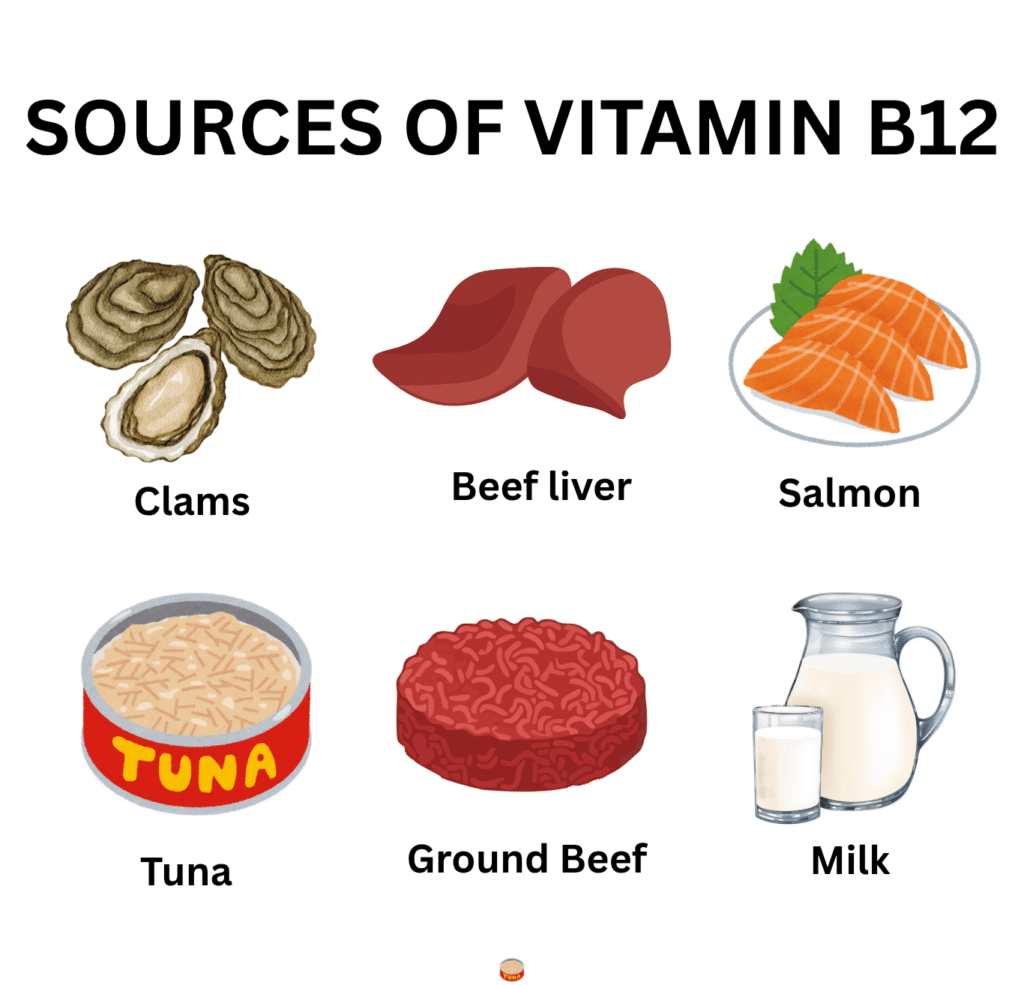
Food Source | Serving Size | Vitamin B12 (mcg) |
Clams (cooked) | 85 g (3 oz) | 84.1 mcg ✦ Highest |
Beef liver (cooked) | 85 g (3 oz) | 70.7 mcg |
Salmon (cooked) | 85 g (3 oz) | 4.9 mcg |
Tuna (canned in water) | 85 g (3 oz) | 2.5 mcg |
Beef (ground, cooked) | 85 g (3 oz) | 2.4 mcg |
Milk (whole) | 1 cup (240 ml) | 1.2 mcg |
Yoghurt (plain) | ¾ cup (170 g) | 1.0 mcg |
Egg (hard-boiled) | 1 large | 0.6 mcg |
Fortified breakfast cereal | 1 serving (varies) | Up to 6.0 mcg — check label |
Nutritional yeast (fortified) | 2 tablespoons | 2.4–8.0 mcg (fortified brands only) |
Table 8. Top food sources of Vitamin B12. Source: NIH ODS / USDA FoodData Central. Adult RDA = 2.4 mcg/day.
For Vegans and Vegetarians, Non-Negotiable Guidance
- B12 supplementation is not optional. It is medically essential for every vegan.
- Daily option: cyanocobalamin 25–100 mcg/day
- Weekly option: cyanocobalamin 2,000 mcg twice weekly
- Fortified foods: nutritional yeast, plant milks, breakfast cereals. Check labels carefully; not all brands are fortified
- Annual blood test: every vegan should have serum B12 checked annually
Prevention & Resources
How to Prevent Vitamin B12 Deficiency
For the General Population
- Eat a varied diet including meat, fish, dairy, and eggs. Even modest amounts provide adequate B12
- Adults over 50: the NIH recommends crystalline B12 supplements or fortified foods. Gastric acid production declines with age.
- Vegetarians and vegans: supplement without exception
For High-Risk Groups
- Metformin users: annual B12 testing; supplement if levels decline below 300 pg/mL
- Long-term PPI users (> 2 years): periodic B12 monitoring; supplement if deficient; review PPI indication
- Post-bariatric surgery: lifelong B12 supplementation mandatory, not optional
- Pernicious anaemia: lifelong IM injections no exceptions, no drug holidays
- Crohn’s with terminal ileal involvement: IM injections may be required oral absorption impaired
- Pregnant vegans: B12 supplementation is critical foetal nervous system development depends on maternal B12
- Recreational nitrous oxide users: stop and check your B12 level now
Vitamin B12 vs Folate vs Iron Deficiency – How to Tell Them Apart
These three deficiencies are frequently confused and commonly occur together. The B12-folate distinction is especially critical:
Feature | Vitamin B12 Deficiency | Folate Deficiency | Iron Deficiency |
Anaemia type | Megaloblastic (macrocytic) | Megaloblastic (macrocytic) — identical | Microcytic, hypochromic |
Neurological damage? | Yes, SCD, irreversible if delayed | Rare. No spinal cord damage | No |
Key differentiating test | MMA elevated | MMA NORMAL | Serum ferritin low |
Primary cause | Pernicious anaemia, veganism, metformin | Poor diet, alcohol, anticonvulsants, pregnancy | Blood loss, poor diet, malabsorption |
Critical warning | Always exclude B12 before treating folate. Folic acid corrects anaemia but masks ongoing nerve damage | Treating with folic acid alone masks concurrent B12 deficiency | Always find the source of blood loss |
Table 9. Comparative guide — B12 vs Folate vs Iron deficiency. Source: Clinical experience + NCBI StatPearls; NIH ODS.
⚠️ Warning: Never treat presumed folate deficiency with folic acid before checking Vitamin B12. Folic acid corrects megaloblastic anaemia masking B12 deficiency while B12 continues destroying the spinal cord in silence. This is one of the most dangerous diagnostic errors in haematology.
Frequently Asked Questions About Vitamin B12 Deficiency
Related Articles on MedBeaconHub.com
- Nutritional Deficiency Diseases: A Doctor’s Complete Guide (Pillar Article)
- Folate (Vitamin B9) Deficiency: Why You Must Check B12 Before Treating Folate
- Iron Deficiency Anaemia: Why Iron and B12 Often Fall Together
- Vitamin D Deficiency: Another Great Masquerader
- Magnesium Deficiency: The Mineral That Controls 300 Body Processes
References and Authoritative Sources
- NIH Office of Dietary Supplements — Vitamin B12 Fact Sheet for Health Professionals
- American Family Physician 2025 — Vitamin B12 Deficiency: Common Questions and Answers
- NCBI StatPearls — Vitamin B12 Deficiency
- NCBI StatPearls — Subacute Combined Degeneration of the Spinal Cord
- Cleveland Clinic — Vitamin B12 Deficiency
- Mayo Clinic — Vitamin Deficiency Anaemia
- Merck Manual Professional Edition — Vitamin B12 Deficiency
- Frontiers in Nutrition 2026 — Vitamin B12 Deficiency and Its Impact on Healthcare
- WHO — Micronutrients and Nutritional Deficiencies
- Linus Pauling Institute — Vitamin B12