
Vitamin C Deficiency (Scurvy): Symptoms, Causes, Diagnosis, Treatment and Prevention – The Complete Doctor’s Guide
Everything you need to know about ascorbic acid deficiency — written by a physician who has seen what textbooks cannot fully describe
✍️ Written and reviewed by: Dr. Qazi Taqweemulhaq, FCPS Medicine — Professor of Medicine, Women Medical and Dental College, Abbottabad, Pakistan. Consultant Physician, 32 Years Clinical Experience
📅 Last Updated: May 2026 | References: WHO, NIH ODS, NCBI StatPearls, Merck Manual, Cleveland Clinic, Medscape
⚡ Quick Answer: Vitamin C deficiency occurs when dietary ascorbic acid falls below 10 mg/day for several weeks. Early symptoms: fatigue, bleeding gums, easy bruising. Advanced: Scurvy adds corkscrew hairs, perifollicular haemorrhages, gums changes and joint bleeding. Confirmed by serum Vitamin C < 11.4 µmol/L. Treatment: 1,000 mg/day orally for adults, fatigue improves within 24–48 hours. Prevention: 5 portions of fruits and vegetables daily.
✅ KEY TAKEAWAYS — Vitamin C Deficiency |
• Vitamin C deficiency (scurvy) is NOT extinct. It affects up to 27.7% of hospitalised adults in high-income countries |
• Early signs: fatigue, bleeding gums, easy bruising appearing after 4–6 weeks of severely inadequate intake |
• The classic diagnostic triad: corkscrew hairs + perifollicular haemorrhages + bleeding gums +joint pain |
• Treatment is remarkably fast. Fatigue and mood improve within 24–48 hours of starting supplementation |
• Vitamin C also enhances iron absorption. Deficiency commonly causes concurrent iron-deficiency anaemia |
• Prevention: 5 portions of varied fruits and vegetables daily. One orange provides the entire adult daily requirement |
Overview
Vitamin C Deficiency Is Not Ancient History – I See It Every Year
In my thirty-two years as a consultant physician, I have diagnosed vitamin C deficiency more times than I can count. Not only in malnourished patients from remote areas but also in patients sitting right in front of me in my clinic.
- A retired schoolteacher
- A young man with schizophrenia whose antipsychotic medication suppressed his appetite
- A widow in her seventies living on biscuits and tea
Most doctors trained in the last three decades were taught that scurvy, the clinical name for severe vitamin C deficiency is a historical disease. Something that happened to 17th-century sailors on months-long ocean voyages.
They are wrong.
A 2025 study published in Nutrients found Vitamin C deficiency in a significant proportion of hospitalised adults in Australia. A 2024 systematic review found a 27.7% cumulative prevalence in hospitalised patients across high-income countries. These are not numbers from a famine zone. Scurvy hides in plain sight, disguised as
- depression,
- dental disease, or
- simply ‘getting old’.
If you have bleeding gums that your dentist cannot explain, or you bruise easily without reason, this article may hold your answer.
🏥 From My Clinic: A 68-year-old retired farmer was referred with ‘depression and generalised weakness not responding to antidepressants.’ On examination: purple spongy gums bleeding at the lightest touch, perifollicular haemorrhages across both forearms, corkscrew hairs. Serum Vitamin C was undetectable. He had been living alone since his wife’s death, surviving on bread and milky tea for six months. Two weeks of Vitamin C supplement transformed him completely. He walked out of my follow-up appointment holding a bag of oranges.
What Is Vitamin C (Ascorbic Acid) and Why Is It Essential?
Vitamin C, scientifically named ascorbic acid, is a water-soluble essential micronutrient. The body cannot synthesise it due to a mutation in the gene encoding the enzyme L-gulonolactone oxidase. We are entirely dependent on food.
In the United States, Vitamin C deficiency affects approximately 7% of the adult population according to NHANES data, with smokers, older adults, and people with low incomes at highest risk. The CDC confirms that scurvy, once considered a historical disease, still occurs in the United States, with cases documented in low-income adults eating highly processed diets.
In the UK, NHS data shows Vitamin C deficiency is re-emerging, particularly among elderly adults living alone and those dependent on food banks. The European Journal of Clinical Nutrition has documented Vitamin C deficiency rates of 10 to 15% in institutionalised elderly Europeans.
Key body store facts:
- Total body Vitamin C pool: approximately 1,500 mg
- Clinical deficiency begins when stores fall below 350 mg
- On a completely zero-intake diet: scurvy develops within 1 to 3 months
- At just 10 mg/day (half a small tomato): enough to prevent scurvy
- RDA of 75–90 mg/day: maintains optimal tissue saturation
The Seven Critical Roles of Vitamin C in the Human Body
- Collagen synthesis: cofactor for prolyl and lysyl hydroxylase, enzymes that stabilise the collagen triple-helix. Without it, blood vessel walls are fragile, wounds fail to heal, and gums bleed.
- Antioxidant defence: scavenges reactive oxygen and nitrogen species; regenerates Vitamin E after oxidation
- Immune activation: accumulates in immune cells at concentrations 100× higher than plasma; enhances neutrophil, T-cell, and NK-cell activity
- Non-haem iron absorption: reduces dietary Fe³⁺ to absorbable Fe²⁺, deficiency commonly causes concurrent iron-deficiency anaemia
- Norepinephrine synthesis: cofactor for dopamine-beta-hydroxylase, deficiency directly causes depression and fatigue before any skin signs appear
- Carnitine biosynthesis: supports fatty acid transport into mitochondria for energy, depletion causes profound fatigue before visible signs develop
- Wound healing, all four phases: haemostasis, inflammation, fibroblast proliferation, and collagen remodelling all require Vitamin C
Dosage & Numbers
How Much Vitamin C Do You Need Per Day?
Recommended Daily Allowances established by the NIH Food and Nutrition Board. Smokers require an additional 35 mg/day due to accelerated ascorbate turnover from oxidative stress.
Life Stage / Group | RDA (mg/day) | Upper Limit (mg/day) |
Men ≥19 years | 90 mg | 2,000 mg |
Women ≥19 years | 75 mg | 2,000 mg |
Pregnant women | 85 mg | 2,000 mg |
Lactating women | 120 mg | 2,000 mg |
Smokers (additional need) | +35 mg above RDA | 2,000 mg |
Children 1–3 years | 15 mg | 400 mg |
Children 4–8 years | 25 mg | 650 mg |
Teens 14–18 years (boys) | 75 mg | 1,800 mg |
Teens 14–18 years (girls) | 65 mg | 1,800 mg |
Table 1. Vitamin C RDA and Tolerable Upper Intake Levels. Source: NIH ODS, 2025. UL applies to supplemental intake only.
Symptoms & Progression
Vitamin C Deficiency Symptoms: From First Warning Signs to Advanced Scurvy
Symptoms develop after 4 to 12 weeks of severely inadequate intake. The classic diagnostic triad is: corkscrew hairs + perifollicular haemorrhages + bleeding gums. All three together confirm the diagnosis clinically. No blood result needed before starting treatment.
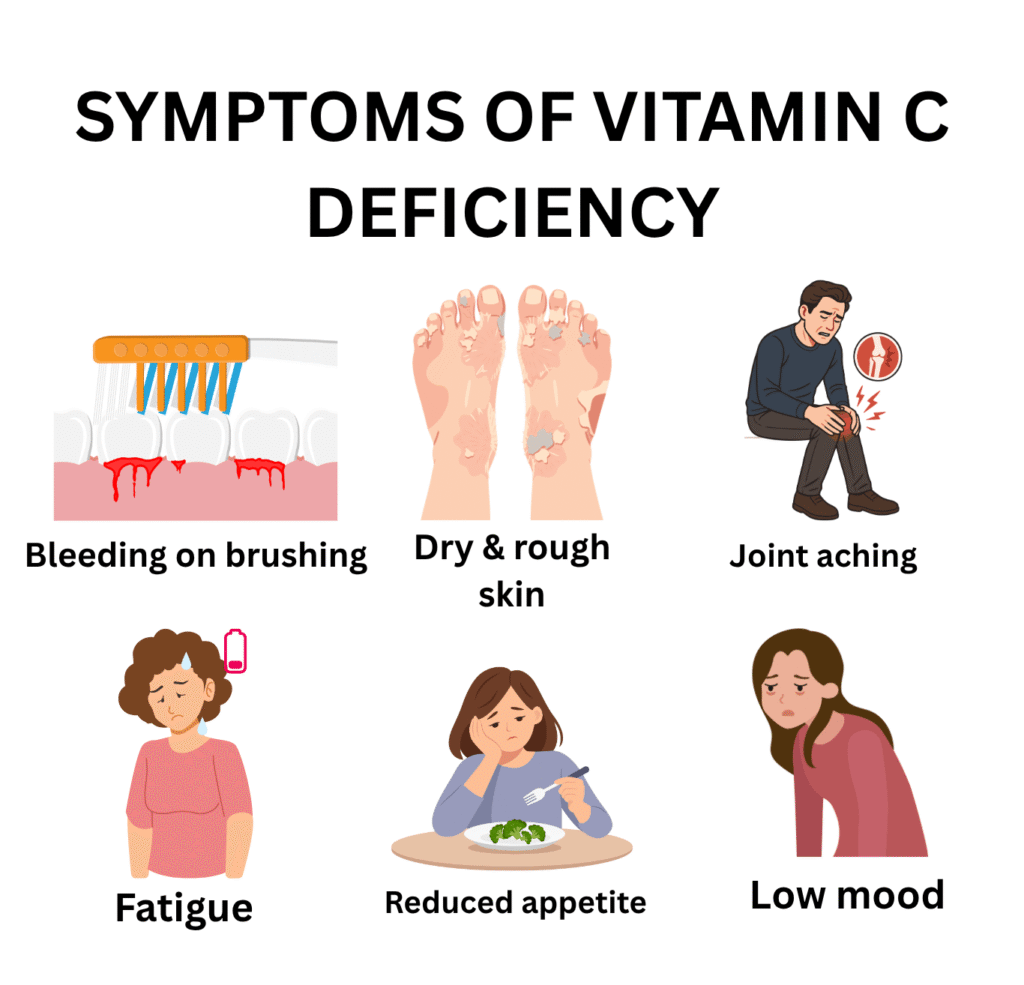
System | Early Signs (Weeks 1–4) | Advanced Scurvy (Month 1–3+) |
Gums & Mouth | Bleeding on brushing, swollen gingiva, bad breath | Spongy purple gums, spontaneous bleeding, loose teeth, tooth loss |
Skin & Hair | Dry rough skin, easy bruising, slow-healing cuts | Corkscrew hairs, perifollicular haemorrhage, petechiae, old scars re-open |
Joints & Bones | Joint aching, myalgia | Haemarthrosis, subperiosteal haemorrhage, bone pain |
General / Systemic | Fatigue, weakness, irritability, reduced appetite | Profound anaemia, oedema, high fever |
Psychology | Low mood, irritability — direct effect on norepinephrine | Depression, cognitive blunting |
Wound Healing | Slower than normal | Wound failure; old healed scars re-open without injury |
Children (Paediatric) | Irritability, refusal to walk, crying on movement | Frog-leg posture, growth arrest, Trümmerfeld zone on X-ray |
Immunity | Frequent infections, slow recovery | Overwhelming sepsis; impaired neutrophil function |
Table 2. Vitamin C deficiency symptoms — early signs to advanced scurvy. Source: NCBI StatPearls; Medscape; Cleveland Clinic.
1. Fatigue – The Symptom That Arrives First
Before any visible sign appears, the patient feels bone-deep exhaustion that does not resolve with rest. Two biochemical causes:
- Depleted carnitine biosynthesis: mitochondria are starved of fuel
- Impaired norepinephrine production, a direct biochemical depression
💡 Clinical Insight: This fatigue is almost universally misattributed to stress, anaemia, or depression. It is the most common reason Vitamin C deficiency goes undiagnosed for months.
2. Bleeding Gums – The Most Recognisable Early Sign
- Gums become swollen, spongy, and violaceous in colour
- Bleeding spontaneously or at the lightest touch, not only on vigorous brushing
- In advanced scurvy: periodontal ligaments deteriorate. Teeth loosen and fall out
💡 Clinical Insight: Bleeding gums in a patient with a poor diet should always prompt a Vitamin C level, not just a dental referral.
3. Corkscrew Hairs + Perifollicular Haemorrhages – Pathognomonic Signs
These two signs together are pathognomonic for scurvy. No other condition produces this specific combination:
- Perifollicular haemorrhages: tiny bleeding spots around hair follicles, first on the shins, thighs, and buttocks
- Corkscrew hairs: coiled, irregular spirals due to defective disulphide bond formation in keratin
💡 Clinical Insight: A patient who shows me all these two signs (corkscrew hairs, perifollicular haemorrhages) gets Vitamin C treatment the same day before any blood result returns.
4. Wound Failure and Re-opening of Old Scars
- Previously healed scars re-open without any new injury , the collagen scaffold disintegrates
- New wounds refuse to close
- Surgical patients with unrecognised deficiency have higher complication and dehiscence rates
5. Frog-Leg Posture in Children – Paediatric Scurvy
- Subperiosteal haemorrhages cause excruciating limb pain
- Children adopt hips abducted, knees flexed to minimise pressure on tender bones
- X-ray shows Trümmerfeld zone, Pelkan spurs, and Frankel line at the metaphyses
- Increasingly reported in children with autism spectrum disorder and food aversion
6. Depression and Cognitive Blunting — A Direct Biochemical Effect
The depression of Vitamin C deficiency is not the sadness of being unwell. It is a direct biochemical consequence of impaired norepinephrine synthesis. Patients describe a grey flatness – inability to feel motivated or emotionally engaged.
This symptom precedes the physical signs and frequently leads to a psychiatric misdiagnosis.
7. Anaemia – Two Distinct Mechanisms
- Iron-deficiency anaemia: reduced gut conversion of non-haem iron to its absorbable form
- Haemolytic anaemia: direct oxidative damage to red cell membranes
Causes & Diagnosis
What Causes Vitamin C Deficiency?
Vitamin C deficiency is always nutritional in origin. The body cannot manufacture it. But the causes extend far beyond simply ‘not eating enough fruit.’
Risk Factor | Who Is Affected | Why Risk Is High |
Low fruit & vegetable intake | General population; food-insecure individuals | Primary cause Vitamin C is only available from food |
Smoking | Active and passive smokers | Oxidative stress consumes Vitamin C rapidly; +35 mg/day needed |
Alcohol use disorder | Heavy drinkers | Poor diet + alcohol antagonises Vitamin C metabolism |
Malabsorption conditions | IBD, coeliac, chronic pancreatitis | Gut inflammation reduces absorption |
Bariatric / GI surgery | Post-gastric bypass patients | Bypassed absorptive surface; reduced intake post-op |
Chronic kidney disease | CKD and haemodialysis patients | Vitamin C lost in dialysate with every session |
Restricted diets / food selectivity | ASD, eating disorders, food phobias | Severe dietary narrowing excludes Vitamin C sources |
Drug interactions | OCP, aspirin, corticosteroids, antipsychotics | These drugs deplete Vitamin C. Rarely communicated to patients |
Table 3. Causes and risk factors for Vitamin C deficiency. Source: NCBI StatPearls; Medscape; NIH ODS.
Does Cooking Destroy Vitamin C?
Yes. Ascorbic acid is one of the most fragile nutrients in the food supply. Here is exactly how much each method destroys:
Cooking Method | Effect on Vitamin C Content |
Raw / uncooked | 100% preserved, always best |
Steaming or microwaving | 10–20% loss. Recommended when cooking is needed |
Stir-frying | 15–25% los, short cooking time helps |
Boiling (brief) | 25–35% loss |
Boiling (prolonged) | 40–60% loss, avoid where possible |
Air exposure after cutting | Progressive oxidation. Eat cut produce promptly |
Table 4. Effect of cooking method on Vitamin C content. The practical implication: how food is prepared matters as much as what food is chosen.
💡 Clinical Insight: A patient who eats vegetables daily but always boils them may still have inadequate Vitamin C intake. This is a frequently overlooked dietary cause, even in patients who appear to eat reasonably well.
How Is Vitamin C Deficiency Diagnosed?
Diagnosis is, above all, a clinical diagnosis. A physician who takes a thorough dietary and medication history and performs a careful physical examination will make the diagnosis before blood results return.
Key Questions in the History
- Fresh fruits and vegetables, how often? How are the vegetables cooked?
- Medications: Oral contraceptive pills, aspirin, steroids, antipsychotics?
- Alcohol use: daily intake and pattern
- Social history: living situation, cooking ability, food access
- Medical history: IBD, coeliac, bariatric surgery, Chronic Kidney Disease, cancer treatment
Physical Examination – What to Look For
- Gums: spongy, purple, bleeding spontaneously or on light touch
- Skin / hair: perifollicular haemorrhages on shins, thighs, buttocks; corkscrew or swan-neck hair deformity
- Wounds: any old scars showing breakdown? Any poorly healing wounds?
- Joints: swelling, tenderness, restricted movement
- Conjunctivae: pallor (anaemia), haemorrhage (advanced scurvy)
Laboratory Tests
- Serum ascorbic acid: Gold standard. Deficiency: < 11.4 µmol/L. Normal: 23–85 µmol/L.
- Leukocyte Vitamin C: Reflects tissue stores more accurately. Deficiency: < 57 nmol/10⁸ cells.
- Full blood count: Normocytic or microcytic anaemia (iron-deficiency pattern)
- Serum ferritin and iron: Iron deficiency commonly coexists
- Coagulation screen: Usually normal. Differentiates from bleeding disorders
- X-rays (children): Ground-glass osteopenia, Trümmerfeld zone, Pelkan spurs, Wimberger ring sign
💡 Clinical Insight: Serum Vitamin C reflects recent dietary intake. A patient who ate one orange three days ago may have a borderline-normal result despite clinical scurvy. When the clinical picture is convincing, treat. The response to treatment is itself diagnostic.
Treatment & Food Sources
Vitamin C Deficiency Treatment: Doses and Recovery Timeline
Scurvy is one of medicine’s most satisfying diagnoses. The treatment is cheap, safe, effective, and remarkably fast. The disease that took months to develop begins reversing within 24 to 48 hours of starting treatment.
Patient Group | Acute Treatment | Maintenance & Follow-up |
Adults | 1,000 mg/day orally in divided doses × 1 week | 300–500 mg/day × 1 further week, then RDA via diet |
Children | 100 mg three times daily × ≥1 week (AAP) | 100 mg/day until all symptoms resolved; dietary correction |
Pregnant / Lactating | 85–120 mg/day under medical supervision | Optimise diet; avoid megadoses above 2,000 mg/day |
Haemodialysis patients | Per nephrologist guidance | Routine monitoring of serum ascorbate levels |
Severe malabsorption | Higher oral doses; IV Vitamin C in refractory cases | Treat underlying condition; long-term supplementation may be required |
Table 5. Vitamin C replacement protocol by patient group. AAP = American Academy of Paediatrics. Sources: DermNet NZ; Merck Manual; NCBI StatPearls.
Recovery Timeline – What Heals and When
Timeframe | What Improves | What to Expect |
24–48 hours | Fatigue, irritability, mood | Often dramatic. Patients describe ‘waking up.’ Fastest response of any symptom. |
3–5 days | Gingival bleeding | Bleeding stops; gum colour begins to normalise |
1–2 weeks | Skin haemorrhages, bruising, corkscrew hairs | Petechiae and ecchymoses fade; hair structure normalises |
2–4 weeks | Joint pain, muscle weakness, wound healing | Mobility returns; new wounds heal normally |
Several weeks–months | Gum hypertrophy, bone healing (children) | Soft tissue and bone take longer to fully remodel |
Vitamin C Toxicity – Can You Take Too Much?
Vitamin C is water-soluble, excess is excreted in urine. However, exceeding 2,000 mg/day chronically carries real risks:
- Osmotic diarrhoea and GI cramping: most common, dose-dependent and reversible
- Nephrolithiasis (kidney stones): increased urinary oxalate, especially in those with a personal or family history
- Warfarin interference: may reduce anticoagulant effect, inform your anticoagulation team
- False laboratory results: can interfere with blood glucose and stool occult blood tests
⚠️ Warning: The therapeutic dose for scurvy is 1,000 mg/day for one week. Online megadosing protocols (5,000–10,000 mg/day) have no evidence base and carry genuine risk of kidney stones and GI harm.
Best Food Sources of Vitamin C
The safest, most effective strategy is a diet naturally rich in fresh fruits and vegetables. Whole foods deliver Vitamin C alongside thousands of phytonutrients that isolated supplements cannot replicate.
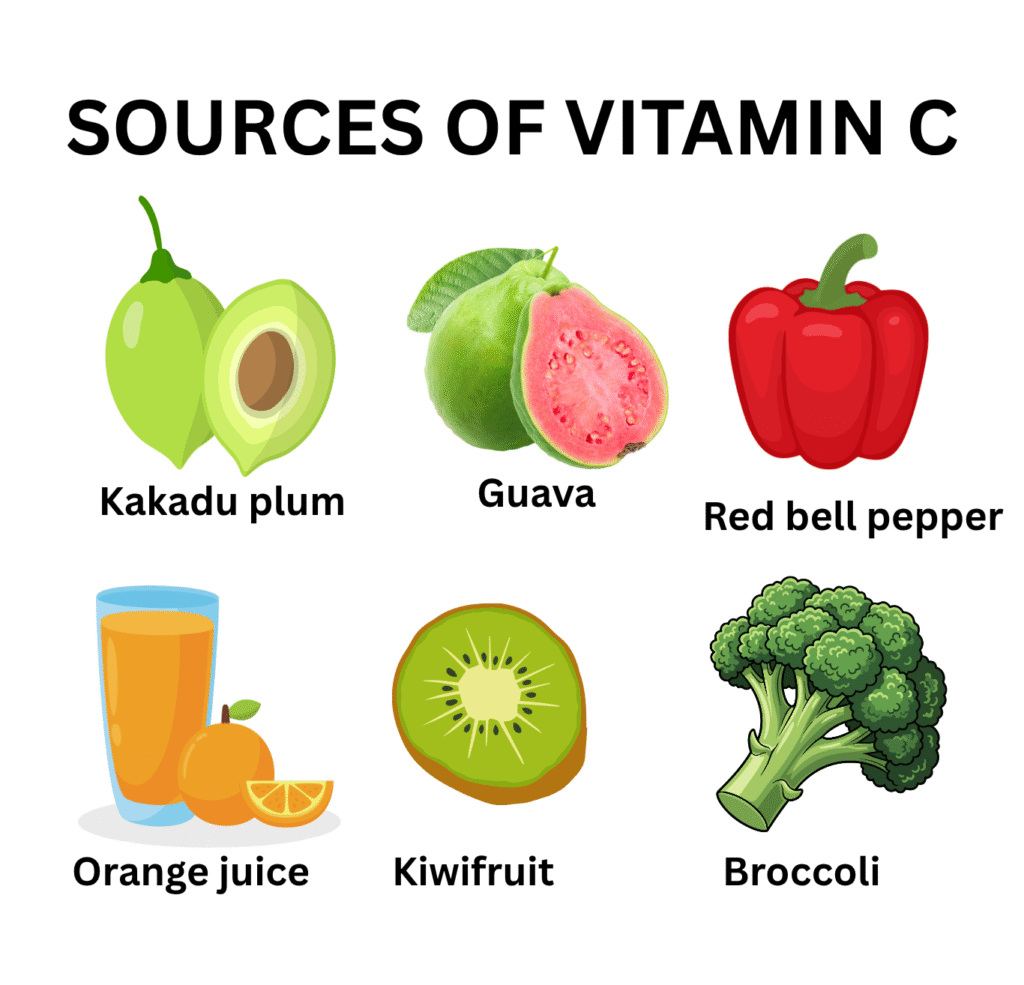
Food Source | Serving Size | Vitamin C (mg) |
Kakadu plum (Australian) | ~10 g | Up to 530 mg ✦ World’s richest |
Guava (raw) | 1 medium (~100 g) | 228 mg |
Red bell pepper (raw) | 1 medium (~120 g) | 152 mg |
Orange juice (fresh) | ¾ cup (180 ml) | 93 mg |
Kiwifruit | 1 medium (~76 g) | 64 mg |
Broccoli (lightly steamed) | ½ cup (~78 g) | 51 mg |
Strawberries | ½ cup (~76 g) | 49 mg |
Papaya | ½ cup (~140 g) | 47 mg |
Tomato (raw) | 1 medium (~123 g) | 17 mg |
Spinach (raw) | 1 cup (~30 g) | 8 mg |
🍊 Practical Tip: One medium orange, one kiwifruit, or half a red bell pepper provides your entire adult daily Vitamin C requirement. A varied diet with 5 portions of fruits and vegetables daily virtually eliminates deficiency risk in healthy individuals.
Prevention & Resources
How to Prevent Vitamin C Deficiency
For the General Population
- Eat at least 5 portions of varied fruits and vegetables daily
- Prioritise citrus fruits, guava, kiwi, berries, and peppers
- Choose lightly cooked or raw vegetables over boiled alternatives
- Smokers: add at least 35 mg/day above the standard RDA. This is a medical recommendation
For High-Risk Groups
- Elderly living alone: a daily multivitamin containing 75–90 mg Vitamin C is a reasonable, low-cost safety net
- Haemodialysis patients: routine supplementation under nephrology guidance, Vitamin C is lost with every dialysis session
- Post-bariatric surgery: lifelong nutritional supplementation; do not skip monitoring appointments
- Patients on Oral contraceptives pills, aspirin, or steroids: deliberately increase dietary Vitamin C intake
- Children with ASD or food selectivity: a Vitamin C supplement is medically prudent if diet excludes all fruits and vegetables. Discuss with your paediatrician
- Cancer patients on chemotherapy: nutritional assessment and supplementation under physician guidance
Vitamin C vs Iron vs Vitamin D Deficiency – How to Tell Them Apart
These three deficiencies are the most frequently confused in clinical practice, and they commonly occur together. Here is how to differentiate them:
Feature | Vitamin C Deficiency | Iron Deficiency | Vitamin D Deficiency |
Classic name | Scurvy | Iron deficiency anaemia | Rickets / Osteomalacia |
Hallmark symptom | Bleeding gums + corkscrew hairs | Fatigue + pallor + pica | Bone pain + muscle weakness |
Anemia? | Yes (haemolytic + iron-related) | Yes, microcytic, hypochromic | No direct cause |
Neurological damage? | Rare | No | Muscle weakness only |
Key diagnostic test | Serum ascorbic acid | Serum ferritin | Serum 25(OH)D |
Deficiency onset | 4–12 weeks | Months to years | Months to years |
Treatment response | 24–48 hours, fastest in medicine | 6–8 weeks for Hb; 3–6 months for stores | 8–12 weeks for blood levels |
Table 8. Comparative guide — Vitamin C vs Iron vs Vitamin D deficiency. Source: Clinical experience + NCBI StatPearls; NIH ODS; Cleveland Clinic.
Frequently Asked Questions About Vitamin C Deficiency
Related Articles on MedBeaconHub.com
- Nutritional Deficiency Diseases: A Doctor’s Complete Guide (Pillar Article)
- Iron Deficiency Anaemia: Why Vitamin C Is Your Best Ally for Iron Absorption
- Vitamin D Deficiency: The Billion-Person Problem
- Vitamin B12 Deficiency: The Silent Epidemic
- Magnesium Deficiency: The Mineral That Controls 300 Body Processes
References and Authoritative Sources
- NIH Office of Dietary Supplements — Vitamin C Fact Sheet for Health Professionals
- NCBI StatPearls — Vitamin C Deficiency (Scurvy)
- Medscape — Scurvy: Practice Essentials, Pathophysiology, Etiology
- Merck Manual Professional Edition — Vitamin C Deficiency
- Cleveland Clinic — Scurvy: Symptoms, Causes and Treatment
- PMC / Nutrients 2025 — Prevalence of Vitamin C Deficiency in Hospitalised Patients
- PMC — Vitamin C and Immune Function (Carr & Maggini, 2017)
- Linus Pauling Institute — Vitamin C and Skin Health
- WHO — Micronutrients and Nutritional Deficiencies
- MedlinePlus (NIH/NLM) — Scurvy