
Vitamin B7 (Biotin) Deficiency: Symptoms, Hair Loss, Causes and Treatment
The vitamin behind your hair, skin, and metabolism — and why the supplement billions of Americans buy for hair growth rarely fixes the problem they think they have
✍️ Written and Reviewed by: Prof. Dr. Qazi Taqweemulhaq, FCPS Medicine. Professor of Medicine, Women Medical and Dental College, Abbottabad, Pakistan. Consultant Physician with 32 Years of Clinical Experience.📅 Last Updated: June 2026 | References: NIH ODS, NCBI StatPearls (2025), FDA Safety Communication 2017, Merck Manual, Cleveland Clinic, EFSA, Genetics in Medicine (2023)
⚡ Quick Answer: Biotin (Vitamin B7) deficiency symptoms include the classic triad of diffuse alopecia, periorificial dermatitis (rash around the mouth, nose, and eyes), and neurological symptoms including depression, lethargy, and peripheral neuropathy. True dietary biotin deficiency is rare in the United States and Europe. It almost always requires a specific cause: consuming raw egg whites (which contain avidin, a biotin-binding protein), biotinidase deficiency (a genetic condition identified on newborn screening in all 50 US states), long-term total parenteral nutrition without biotin, or prolonged antibiotic use. The RDA is 30 mcg per day. Warning: high-dose biotin supplements interfere with many laboratory immunoassays including thyroid function tests and troponin. The FDA issued a safety warning about this in 2017 after documented patient harm.
✅ KEY TAKEAWAYS — Biotin Deficiency |
• Biotin is required for four carboxylase enzymes central to carbohydrate, fat, and amino acid metabolism. Without it, these metabolic pathways fail simultaneously |
• The classic presentation of biotin deficiency is the triad of diffuse hair loss, periorificial dermatitis, and neurological symptoms. All three together strongly suggest biotin deficiency or biotinidase deficiency |
• Raw egg whites cause biotin deficiency. Egg white contains avidin — a protein that binds biotin with extraordinary affinity and prevents its intestinal absorption. Cooking denatures avidin completely. Cooked eggs are an excellent biotin source |
• Biotinidase deficiency is a genetic disorder causing severe biotin deficiency from birth. All 50 US states screen for it on the newborn heel prick. Early detection and treatment prevents permanent disability |
• The FDA issued a safety communication in 2017 warning that biotin supplements interfere with laboratory immunoassays. Falsely low troponin results in patients taking biotin have led to missed myocardial infarction diagnoses. Falsely abnormal thyroid results have caused unnecessary treatment changes. |
• Most people buying biotin supplements for hair growth are not biotin deficient. Hair loss from iron deficiency, zinc deficiency, Vitamin D deficiency, or thyroid disease will not respond to biotin supplementation |
The Lab Result That Almost Cost a Patient Her Heart
She was 58 years old. Chest pain. Shortness of breath. Her emergency physician ordered troponin to assess for a heart attack.
The result came back low. Normal. The team was reassured. She was moved to a monitored ward for observation rather than straight to the cardiac catheterisation laboratory.
The next morning her repeat ECG showed changes. Emergency angiography confirmed a significant coronary blockage. She had been having a myocardial infarction the entire time. The initial troponin had been falsely low.
When the team reviewed her medication list, they found one item nobody had thought to ask about: a high-dose biotin supplement. 10,000 mcg daily, purchased online for hair thinning.
She had biotin-induced troponin assay interference. The excess biotin in her blood had saturated the biotin-streptavidin capture system that most modern troponin immunoassays use. The test had reported a falsely reassuring normal.
The US Food and Drug Administration had warned about exactly this in 2017. The warning had not reached her. Nobody had asked about supplements on triage.
This is what I want physicians and patients to know about biotin before anything else. The supplement most Americans buy casually as a beauty product can interfere with some of the most critical laboratory tests in emergency medicine.
🏥 From My Clinic: I now ask about biotin supplements in every patient whose thyroid results look inconsistent with their clinical picture. I ask about biotin in every chest pain patient before interpreting their cardiac biomarkers. This one question takes five seconds. It can prevent a catastrophic clinical error. For the complete picture of nutritional deficiency diseases, read: Nutritional Deficiency Diseases: The Complete Doctor’s Guide.
What Biotin Does
Biotin is a water-soluble B vitamin. It functions as a cofactor for four critical carboxylase enzymes in the body.
These four enzymes are:
Pyruvate carboxylase. Converts pyruvate to oxaloacetate in the first step of gluconeogenesis. This is how the body makes glucose from non-carbohydrate sources. Without it, fasting hypoglycaemia can develop in severe biotin deficiency.
Acetyl-CoA carboxylase. The rate-limiting enzyme in fatty acid synthesis. Required for producing new fatty acids and for regulating fat metabolism.
Propionyl-CoA carboxylase. Converts propionyl-CoA to methylmalonyl-CoA. Required for the metabolism of odd-chain fatty acids and certain amino acids. Deficiency produces a pattern similar to Vitamin B12 deficiency because B12 is also required in this metabolic pathway, just at a later step.
3-Methylcrotonyl-CoA carboxylase (MCC). Required for the catabolism of leucine, one of the essential branched-chain amino acids.
When biotin is absent, all four enzymes fail. Intermediary metabolites accumulate. The clinical consequences reflect disrupted carbohydrate, fat, and amino acid metabolism simultaneously.
Biotin also plays a direct role in gene expression, regulating the transcription of certain genes involved in cell signalling and inflammatory responses. This is the basis for its role in immune function, which overlaps with Vitamin D, zinc, and selenium.
How Much Biotin Do You Need Per Day
Biotin has an Adequate Intake (AI) rather than a full RDA because the evidence base for a precise requirement is still developing.
Group | Adequate Intake (mcg per day) | Upper Limit |
Infants 0 to 6 months | 5 mcg | Not established |
Infants 7 to 12 months | 6 mcg | Not established |
Children 1 to 3 years | 8 mcg | Not established |
Children 4 to 8 years | 12 mcg | Not established |
Children 9 to 13 years | 20 mcg | Not established |
Adults 14 to 18 years | 25 mcg | Not established |
Adults 19 years and over | 30 mcg | Not established |
Pregnant women | 30 mcg | Not established |
Breastfeeding women | 35 mcg | Not established |
Table 1. Biotin Adequate Intake by life stage. Source: NIH ODS. No formal upper limit has been established because toxicity from dietary or supplemental biotin has not been documented. The safety concern is lab interference, not toxicity in the classical sense.
Biotin Status in the United States and Europe
True dietary biotin deficiency is rare in both the US and EU in otherwise healthy people eating a varied diet.
NHANES data does not report widespread biotin deficiency in the American general population. The US dietary supply of biotin from eggs, meat, fish, seeds, and nuts is generally adequate.
However, subclinical marginal biotin status is documented in specific populations. A notable finding from the NIH: up to one third of pregnant women in the US have marginal biotin status despite dietary adequacy, because placental biotin transport creates a high demand during pregnancy. Animal studies consistently show that marginal biotin deficiency in pregnancy causes cleft palate and limb defects, though human data is less definitive.
The European Food Safety Authority (EFSA) sets the AI for biotin at 40 mcg per day for adults, slightly above the US figure. European dietary surveys suggest that average biotin intakes are generally adequate in Western Europe.
Symptoms of Biotin Deficiency
The symptoms of biotin deficiency are highly recognisable once you know what to look for. They follow from the failure of the four carboxylase enzymes and from the role of biotin in maintaining epithelial and neurological tissue integrity.
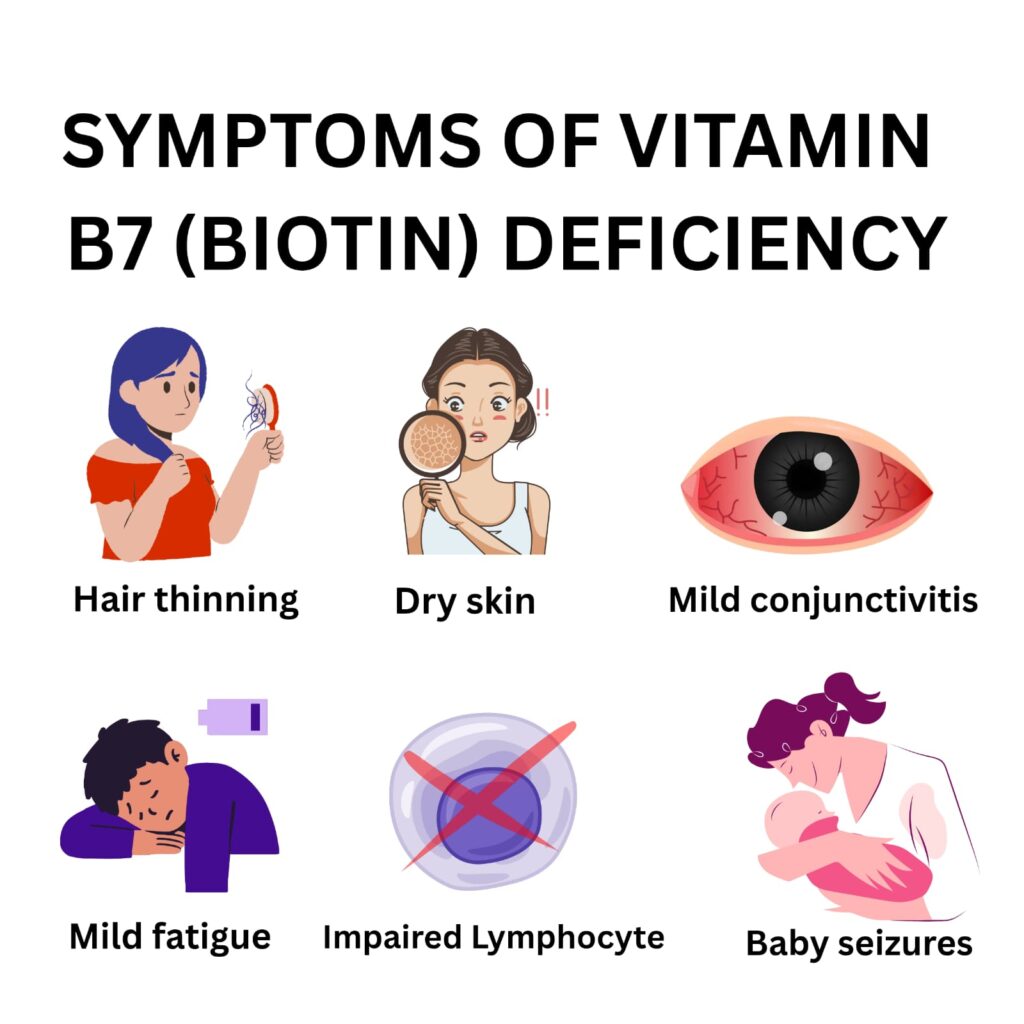
System | Early Deficiency | Severe or Prolonged Deficiency |
Hair | Thinning and increased shedding. Brittle, dull hair texture | Diffuse alopecia — significant hair loss across the entire scalp. In children: loss of eyebrows and eyelashes |
Skin | Dry skin. Early seborrhoeic-like changes | Periorificial dermatitis: scaly, red rash specifically around the mouth, nose, eyes, and genitalia. Highly characteristic distribution |
Eyes | Mild conjunctivitis | Significant conjunctivitis. Periorbital skin involvement |
Neurological | Mild fatigue, difficulty concentrating | Depression, lethargy, hallucinations, peripheral neuropathy (tingling and numbness in hands and feet) |
Metabolic | Mild metabolic disturbance | Lactic acidosis (pyruvate carboxylase failure), organic aciduria, hypoglycaemia |
Immune | Mildly impaired lymphocyte function | Significant immunosuppression in severe genetic forms |
In infants with biotinidase deficiency | Seizures within the first few months of life, hypotonia | Developmental delay, hearing loss, vision problems, optic atrophy if untreated |
Table 2. Biotin deficiency symptoms by severity. Sources: NIH ODS; NCBI StatPearls (2025); Merck Manual; Genetics in Medicine (2023).
The Periorificial Dermatitis — The Diagnostic Clue
The skin rash of biotin deficiency has a characteristic distribution that distinguishes it from other skin conditions.
It appears around the orifices of the face: the corners of the mouth, the wings of the nose, the periorbital area, and around the genitalia. This periorificial pattern is nearly identical to the rash seen in zinc deficiency (acrodermatitis enteropathica) and in severe Vitamin B6 deficiency.
When a patient presents with this specific rash distribution alongside hair loss and any neurological complaint, biotin deficiency moves to the top of the differential. The distribution is too specific to be coincidental.
Hair Loss and the Biotin Supplement Myth
This deserves its own section because it is where most clinical confusion occurs.
Biotin deficiency does cause hair loss. This is well established. The supplement industry has used this fact to build a multi-billion dollar market selling high-dose biotin supplements for hair thinning to people who are not biotin deficient.
The evidence for biotin supplementation improving hair in people with normal biotin levels is essentially non-existent. A 2017 systematic review in Skin Appendage Disorders found that all published reports of biotin improving hair growth involved patients with either confirmed biotin deficiency or specific conditions causing biotin depletion. No robust randomised controlled trial has shown benefit in biotin-sufficient individuals.
When a patient comes to me with hair loss, I check ferritin and iron status, serum zinc, serum 25(OH)D, thyroid function, and selenium. These are the nutritional causes of hair loss that evidence actually supports. Biotin comes last, only if the others are normal and there is a specific reason to suspect biotin depletion.
What Causes Biotin Deficiency
Cause | Mechanism | Who Is Affected |
Raw egg white consumption | Egg white contains avidin, a glycoprotein that binds biotin with extraordinary affinity. Avidin-biotin complexes cannot be absorbed. Each raw egg white contains enough avidin to bind the biotin from several eggs. Cooking denatures avidin completely — cooked eggs are safe and are a good biotin source | Bodybuilders and athletes consuming raw egg white protein shakes. People eating raw eggs habitually |
Biotinidase deficiency (genetic) | Biotinidase is the enzyme that releases free biotin from biocytin (biotin attached to protein from food digestion) and from intracellular turnover. Without it, biotin cannot be recycled or absorbed from food. Severe deficiency affects approximately 1 in 137,000 live births. Partial deficiency affects 1 in 110 live births and produces milder symptoms | Identified on newborn screening in all 50 US states. Not currently on the UK newborn screening programme |
Holocarboxylase synthetase (HCS) deficiency | Genetic disorder impairing the attachment of biotin to the four carboxylase enzymes. Biotin is present but cannot be functionally incorporated | Presents in the neonatal period. Rarer than biotinidase deficiency |
Total parenteral nutrition without biotin | Biotin was not recognised as an essential TPN component until cases of deficiency were reported. Historical cause — now standard practice includes biotin in TPN formulations | Any patient on long-term TPN without adequate micronutrient supplementation |
Prolonged antibiotic use | Gut bacteria synthesise a significant proportion of the body’s biotin. Broad-spectrum antibiotics reduce this microbial biotin production | Patients on multiple or prolonged antibiotic courses. Overlaps with the gut flora disruption that also affects Vitamin K synthesis |
Anticonvulsant medications | Certain anticonvulsants (particularly carbamazepine and primidone) impair biotin absorption and accelerate its catabolism. The same drugs also deplete folate and Vitamin D. | Patients on long-term anticonvulsant therapy |
Pregnancy | Placental biotin transfer and foetal requirements create significant demand. Marginal biotin status affects up to one third of pregnant American women despite apparently adequate dietary intake | All pregnant women warrant adequate biotin intake. Animal data suggests deficiency causes birth defects |
Inflammatory bowel disease | Intestinal inflammation impairs biotin absorption. Reduced gut bacterial colonisation further reduces microbial biotin production | Crohn’s disease and ulcerative colitis patients alongside iron, zinc, folate, and Vitamin D deficiency |
Alcohol use disorder | Alcohol impairs biotin absorption and increases renal biotin excretion | Alongside folate, B6, and magnesium depletion in alcohol-dependent adults |
Table 3. Causes of biotin deficiency. Sources: NIH ODS; NCBI StatPearls (2025); Merck Manual.
The Raw Egg White Problem
This is worth a dedicated clinical explanation because it is still causing biotin deficiency in American gyms and fitness communities.
The protein shake culture has popularised raw egg consumption following decades of bodybuilding tradition. One or two raw eggs per day are generally not sufficient to cause biotin deficiency. But some individuals consume six, eight, or even twelve raw egg whites daily in protein shakes, believing they are optimising their nutrition.
Each raw egg white binds all the biotin in that egg and potentially more. A person consuming eight raw egg whites daily is effectively creating a biotin-free diet while simultaneously eating what appears to be a nutritious, high-protein meal.
The deficiency develops over weeks to months. Hair loss is usually the first sign that something is wrong. It is consistently attributed to overtraining, stress, or protein powder quality rather than to the raw eggs until someone specifically asks the right question.
Cooking eggs takes minutes. It denatures avidin completely. Cooked eggs become one of the most biotin-rich everyday foods available.
💡 Clinical Insight: In any patient presenting with hair loss, skin changes around the mouth or nose, and a history of gym-based raw egg consumption, biotin deficiency is the diagnosis until proven otherwise. The fix is simple: cook the eggs.
The FDA Laboratory Interference Warning
In November 2017 the US Food and Drug Administration issued a safety communication specifically about biotin interference with laboratory tests. This warning was issued after the FDA received reports of patient harm from incorrect test results.
Most modern immunoassay-based laboratory tests use a biotin-streptavidin capture system as part of their detection technology. This technology is highly sensitive — and highly susceptible to interference from elevated biotin concentrations in patient blood samples.
When a patient has taken high-dose biotin supplements, the excess biotin in their blood saturates the capture system. The result: the test may read falsely high, falsely low, or completely inaccurate depending on the assay design.
The affected tests include thyroid function tests (TSH, free T4, free T3), troponin (cardiac injury marker), parathyroid hormone (PTH), 25-hydroxyvitamin D , ferritin, folate, and many hormonal assays.
The clinical consequences documented in the FDA report include:
Falsely suppressed TSH leading to an erroneous diagnosis of hyperthyroidism and unnecessary treatment changes. Falsely elevated free T4 consistent with Graves disease in a euthyroid patient on biotin. Falsely low troponin in a patient actively having a myocardial infarction. Falsely elevated troponin causing unnecessary hospitalisation.
The biotin doses causing interference are not exotic. Standard commercially available hair supplements of 5,000 to 10,000 mcg (5 to 10 mg) are sufficient to produce clinically significant assay interference, particularly if blood is drawn within a few hours of the dose.
⚠️ Warning: Before any thyroid test, cardiac enzyme measurement, hormonal panel, or Vitamin D level, patients should stop biotin supplements for at least 72 hours. Most laboratories recommend stopping for 48 to 72 hours before testing. This instruction is almost never given in practice because clinicians rarely ask about supplement use. Ask every patient before ordering these tests: are you taking biotin supplements?
Biotinidase Deficiency — The Genetic Form
Biotinidase deficiency is the most common cause of biotin-responsive neurological disease in childhood in the United States and Europe.
Biotinidase is the enzyme that recycles biotin from food digestion and from intracellular protein turnover. Without it, dietary biotin passes through the gut bound to protein and cannot be released for absorption. The body’s internal biotin recycling also fails.
Severe biotinidase deficiency (enzyme activity below 10% of normal) presents within the first few months of life with seizures, hypotonia (low muscle tone), alopecia, skin rash, and hearing loss. Without treatment, it progresses to developmental delay, vision loss, and severe neurological disability.
Partial biotinidase deficiency (enzyme activity 10 to 30% of normal) presents more subtly, often with hair loss, skin rash, and mild neurological symptoms, sometimes not until school age.
US Newborn Screening: All 50 US states include biotinidase deficiency in the newborn heel-prick screening panel. A positive screen triggers a confirmatory enzyme assay. Confirmed cases are started immediately on oral biotin 5 to 10 mg daily — a dose that completely prevents all clinical manifestations when started before symptoms develop.
UK Newborn Screening: Biotinidase deficiency is not currently on the UK newborn screening programme, unlike the US. This means UK cases are diagnosed only when symptoms appear, often after irreversible damage has begun. This is an important transatlantic clinical difference. UK physicians should have a lower threshold for testing biotinidase activity in any infant with unexplained seizures, hypotonia, or the characteristic rash-hair loss combination.
Treatment with oral biotin prevents all symptoms in biotinidase deficiency. It is one of the most complete treatment responses in all of genetic medicine. The enzyme does not work, but providing free biotin at pharmacological doses bypasses the need for the enzyme entirely.
Diagnosis
The diagnostic approach depends on whether you are investigating dietary biotin deficiency or the genetic form.
Blood Tests
Plasma biotin (free biotin): The most direct measure. Low levels confirm deficiency. Reference range: 133 to 329 pmol/L. Values below 100 pmol/L suggest deficiency. Values below 50 pmol/L indicate significant depletion.
Urinary 3-hydroxyisovaleric acid (3-HIA): A functional biomarker. 3-HIA is a metabolite of leucine catabolism that accumulates when MCC carboxylase (biotin-dependent) fails. Elevated urinary 3-HIA is a sensitive early marker of biotin insufficiency, detectable before plasma biotin falls to deficiency levels. More sensitive than plasma biotin for early or subclinical deficiency.
Urinary 3-methylcrotonylglycine: Accumulates when MCC carboxylase is impaired. Elevated in biotin deficiency and in MCC deficiency.
Biotinidase enzyme assay: The definitive test for biotinidase deficiency. Measured in dried blood spots (for screening) or fresh blood. Reports enzyme activity as a percentage of normal. Below 10% is severe deficiency; 10 to 30% is partial deficiency.
Organic acid profile (urine): In suspected genetic forms, a urine organic acid panel shows accumulation of 3-hydroxyisovalerate, 3-methylcrotonylglycine, methylcitrate, and other characteristic metabolites.
Clinical Assessment
The clinical triad of diffuse alopecia, periorificial dermatitis, and neurological symptoms in a patient with a recognised risk factor (raw egg consumption, anticonvulsants, TPN, IBD) is sufficient to start empirical biotin supplementation without waiting for laboratory confirmation.
In any patient presenting with unexplained hair loss alongside any skin or neurological symptom, rule out the far more common causes first: check ferritin, zinc, 25(OH)D, thyroid function, and selenium. Biotin deficiency as a cause of isolated hair loss in otherwise healthy American adults without a specific depletion cause is uncommon.
Treatment
Clinical Scenario | Treatment | Notes |
Dietary biotin deficiency (raw egg white) | Stop all raw egg consumption. Oral biotin 10 to 30 mcg daily (dietary replacement dose) | Symptoms resolve within weeks of stopping avidin exposure and repleting biotin |
Dietary deficiency from other causes | Oral biotin 5 to 10 mg daily for 1 to 3 months then dietary correction | Higher pharmacological doses accelerate recovery. Monitor plasma biotin at 3 months |
Biotinidase deficiency — severe | Oral biotin 5 to 10 mg daily — lifelong | Started as early as possible after newborn screening diagnosis. Prevents all clinical manifestations when started presymptomatically |
Biotinidase deficiency — partial | Oral biotin 1 to 5 mg daily — lifelong | Dose may be adjusted based on enzyme activity and clinical response |
Holocarboxylase synthetase deficiency | Oral biotin 10 to 80 mg daily — lifelong under specialist guidance | Higher doses needed than biotinidase deficiency. Specialist metabolic team management |
Anticonvulsant-related depletion | Oral biotin 10 to 40 mcg daily alongside folic acid and Vitamin D | All three are depleted by anticonvulsants. Address together |
TPN patients | Biotin 60 mcg per day as part of standard TPN micronutrient formulation | Standard inclusion in modern TPN protocols |
Pregnancy — marginal status | Ensure dietary adequacy. Standard prenatal vitamin containing 30 mcg biotin | Pharmacological supplementation not routinely recommended unless deficiency is confirmed |
Table 4. Biotin deficiency treatment protocol. Sources: NIH ODS; NCBI StatPearls (2025); Genetics in Medicine (2023); Merck Manual.
Recovery Timeline
What Improves | Timeline |
Skin rash resolves | 2 to 4 weeks |
Hair loss stabilises | 4 to 8 weeks |
Hair regrowth begins | 3 to 6 months |
Neurological symptoms improve | 4 to 12 weeks |
Seizures in biotinidase deficiency | Days to weeks |
Metabolic acidosis corrects | Days with adequate biotin |
Biotin levels normalise | 2 to 4 weeks |
Table 5. Biotin deficiency recovery timeline. Source: Clinical experience; NCBI StatPearls (2025).
Best Food Sources of Biotin
Biotin is found in a wide variety of foods. The biotin content of foods varies more than most other B vitamins because much of dietary biotin is bound to protein (as biocytin) and its bioavailability depends on digestive proteolysis.
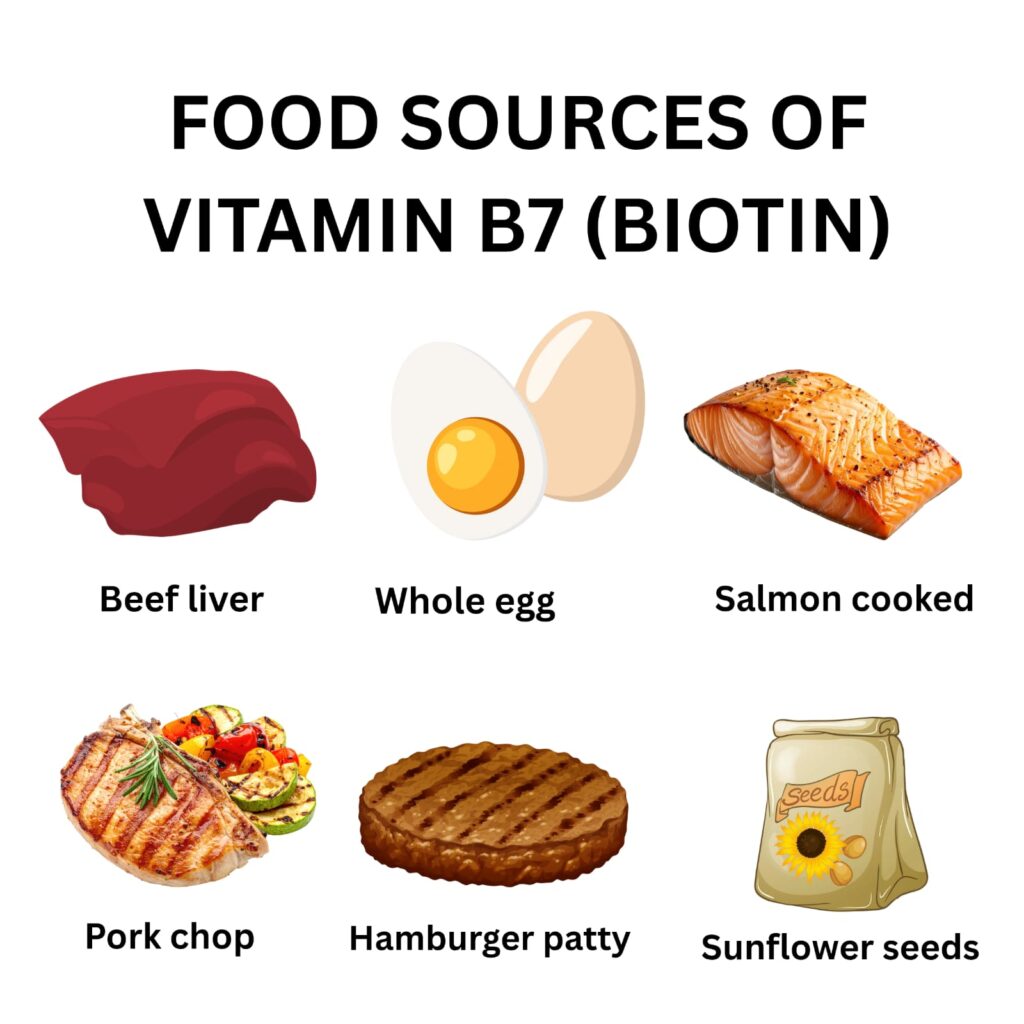
Food | Serving | Biotin (mcg) | Notes |
Beef liver, cooked | 85 g | 30.8 mcg | |
Egg, whole, cooked | 1 large | 10 mcg | Must be cooked. Raw whites bind and neutralise the biotin |
Salmon, cooked | 85 g | 5 mcg | |
Pork chop, cooked | 85 g | 3.8 mcg | Good everyday source |
Hamburger patty, cooked | 85 g | 3.8 mcg | Accessible protein and biotin source |
Sunflower seeds | 28 g | 2.6 mcg | Good plant source alongside Vitamin E |
Sweet potato, cooked | Half cup | 2.4 mcg | Good vegetable source |
Almonds | 28 g | 1.5 mcg | |
Tuna, canned in water | 85 g | 0.6 mcg | Modest contribution |
Spinach, cooked | Half cup | 0.5 mcg | |
Milk, whole | 240 ml | 0.3 mcg | Small contribution from dairy |
Oatmeal, cooked | 240 ml (1 cup) | 0.2 mcg | Useful base for breakfast |
Table 6. Top dietary sources of biotin. Source: NIH ODS; USDA FoodData Central. Adult AI: 30 mcg per day.
A varied diet containing eggs (cooked), meat, fish, nuts, and seeds easily meets the 30 mcg daily adequate intake. Dietary biotin deficiency without a specific depletion cause is genuinely uncommon in the US and Europe. The food supply is diverse enough to provide adequate biotin for most people eating a normal mixed diet.
Frequently Asked Questions About Biotin Deficiency
Related Articles on MedBeaconHub.com
- Nutritional Deficiency Diseases: The Complete Doctor’s Guide
- Iron Deficiency Anaemia: The Most Common Cause of Hair Loss
- Zinc Deficiency: Taste, Immunity and Hair
- Vitamin D Deficiency: Symptoms, Causes and Treatment
- Selenium Deficiency: The Thyroid and Hair Connection
- Folate Deficiency: The Pregnancy-Critical Vitamin
- Vitamin B6 Deficiency: Depression, Neuropathy and the OCP
- Vitamin B12 Deficiency: Nerve Damage and Pernicious Anaemia
- Magnesium Deficiency: Sleep, Anxiety and Muscle Cramps
- Vitamin K Deficiency: Bleeding and Newborn Protection
- Calcium Deficiency: Hypocalcaemia and Bone Disease
- Vitamin A Deficiency: Night Blindness and Immunity
- Vitamin C Deficiency: Scurvy and Iron Absorption
- Iodine Deficiency: Goitre and Thyroid Health
References and Authoritative Sources
- NIH Office of Dietary Supplements — Biotin Fact Sheet for Health Professionals
- NCBI StatPearls — Biotin Deficiency (Updated 2025)
- FDA Safety Communication — The FDA Warns That Biotin May Interfere With Lab Tests (November 2017)
- Genetics in Medicine — Diagnosis and Management of Biotinidase Deficiency (2023 Update)
- Merck Manual Professional Edition — Biotin Deficiency
- Cleveland Clinic — Biotin (Vitamin B7)
- EFSA — Dietary Reference Values for Biotin (2023)
- Skin Appendage Disorders — A Review of the Use of Biotin for Hair Loss (2017)
- PMC — Biotin Interference with Clinical Immunoassays: A Practical Guide (2024)
- American College of Medical Genetics — Biotinidase Deficiency: Newborn Screening and Beyond (2023)