
Vitamin B3 (Niacin) Deficiency: Pellagra Symptoms, Causes and Treatment
The disease that killed 100,000 Americans in the early twentieth century, was solved by a government physician that nobody believed, and still appears in US emergency departments today
✍️ Written and Reviewed by: Prof. Dr. Qazi Taqweemulhaq, FCPS Medicine. Professor of Medicine, Women Medical and Dental College, Abbottabad, Pakistan. Consultant Physician with 32 Years of Clinical Experience.📅 Last Updated: June 2026 | References: NIH ODS, NCBI StatPearls (2025), Merck Manual, Cleveland Clinic, CDC, WHO, Journal of Nutrition History, American Journal of Clinical Nutrition
⚡ Quick Answer: Niacin (Vitamin B3) deficiency symptoms include pellagra, characterised by the four Ds: Dermatitis (a sun-sensitive rash producing the pathognomonic Casal necklace), Diarrhoea, Dementia, and Death if untreated. Pellagra was eliminated in the United States by the 1940s through niacin fortification of grain products. It still occurs today in people with alcohol use disorder, patients on isoniazid for tuberculosis, those with carcinoid syndrome, people with Hartnup disease, and patients with severe eating disorders. The body can synthesise niacin from the amino acid tryptophan at a ratio of 60 mg tryptophan to 1 mg niacin equivalents. Treatment is oral nicotinamide (not nicotinic acid) 100 to 300 mg daily. High-dose nicotinic acid at 1 to 3 grams per day is used for dyslipidaemia but causes a distinctive flush reaction and carries hepatotoxicity risk.
✅ KEY TAKEAWAYS — Niacin Deficiency |
• Niacin (Vitamin B3) exists as two related compounds: nicotinic acid and nicotinamide. Both convert in the body to NAD (nicotinamide adenine dinucleotide) and NADP, which participate in over 400 enzymatic reactions |
• Pellagra is caused by both low dietary niacin AND low tryptophan, because the body converts tryptophan to niacin. A diet adequate in high-quality protein can partially compensate for low niacin intake |
• The Casal necklace — a symmetric, hyperpigmented, scaling rash encircling the lower neck — is pathognomonic for pellagra. No other condition produces this specific ring pattern |
• Isoniazid, the primary anti-tuberculosis drug, causes pellagra by blocking the enzyme that converts tryptophan to niacin. Every patient on isoniazid should receive pyridoxine supplementation, and niacin should be added at the first sign of pellagra |
• The discovery that corn-based diets cause pellagra only when corn is not treated with lime water (nixtamalisation) is one of the most important lessons in nutritional epidemiology. The niacin in untreated corn is chemically bound and cannot be absorbed |
• For pellagra treatment, use nicotinamide — not nicotinic acid. Both correct deficiency, but nicotinic acid at therapeutic doses causes an uncomfortable prostaglandin-mediated flushing reaction. Nicotinamide produces no flush |
The Disease That Killed 100,000 Americans
In 1906, Joseph Goldberger was a US Public Health Service physician assigned to investigate a mysterious epidemic devastating the American South. The disease was pellagra. By then it had already killed tens of thousands. Asylum patients were dying from it. Orphans were dying from it. Prison inmates were dying from it.
The medical establishment was certain pellagra was an infectious disease. It spread through populations living in close quarters. It appeared in institutions. It moved through communities. The germ theory of disease, triumphant after decades of success, seemed to explain everything.
Goldberger was not convinced.
He noticed something nobody else had: the doctors, nurses, and staff working in the same institutions never developed pellagra. If it were contagious, they would be among the first affected.
He studied the diets of the affected populations and the unaffected staff. The pattern was unmistakeable. The people who developed pellagra were eating diets based almost entirely on corn, molasses, and fatback pork — cheap, shelf-stable foods with almost no protein from animal sources. The staff ate differently.
Goldberger proved his case through a series of experiments that were considered scandalous at the time. He induced pellagra in Mississippi prison volunteers by feeding them a corn-dominated diet. He cured pellagra in orphans by adding fresh meat, eggs, and dairy to their meals.
The germ theorists attacked him. Politicians denied that poverty and poor diet were causing the epidemic. One Louisiana health official suggested the disease was caused by drinking from public water fountains. Goldberger spent the rest of his career fighting an establishment that refused to accept a nutritional explanation.
He died in 1929 without seeing his vindication. In 1937, Conrad Elvehjem identified nicotinic acid as the pellagra-preventing factor. In 1943, mandatory fortification of flour with niacin began in the United States. Within a decade, pellagra was virtually eliminated.
The lesson of the pellagra epidemic is not merely historical. It is a lesson in how nutritional diseases hide inside social and economic problems, how they are misattributed to infection, and how they can be eliminated by a food policy change that costs almost nothing.
🏥 From My Clinic: I have seen pellagra twice in my career. Both cases were in patients with alcohol dependence who had stopped eating properly. Both were initially referred for psychiatric assessment because of confusion and mood disturbance. Both had the rash. Both responded to nicotinamide within days. The clinical key is thinking of it. For the complete guide to nutritional deficiency diseases, read: Nutritional Deficiency Diseases: The Complete Doctor’s Guide.
What Niacin Does
Niacin is the collective name for two chemically related compounds: nicotinic acid and nicotinamide (also called niacinamide). Both are converted in the body to two critical coenzymes.
NAD and NADP — The Working Forms
Nicotinamide adenine dinucleotide (NAD) and nicotinamide adenine dinucleotide phosphate (NADP) are the active coenzyme forms of niacin. Together they participate in more than 400 enzymatic reactions, making niacin one of the most widely used cofactors in human biochemistry.
Their primary functions include:
Energy metabolism. NAD is the central electron carrier in the electron transport chain. It shuttles electrons from the Krebs cycle to Complex I of the mitochondria, where ATP is generated. Without NAD, aerobic energy production fails. The brain, gut mucosa, and skin — the tissues most affected in pellagra — are among the highest consumers of NAD-dependent energy.
DNA repair. PARP (poly-ADP-ribose polymerase) enzymes use NAD to repair single and double strand DNA breaks. Niacin deficiency impairs DNA repair capacity, increasing genomic instability. This is one reason chronic niacin deficiency has been linked to increased cancer risk in experimental models.
Antioxidant defence. NADPH, generated from NADP, is the primary reducing agent that regenerates glutathione, the cell’s main antioxidant. This role overlaps with selenium, which also participates in glutathione recycling, and with Vitamin C, which is regenerated from its oxidised form by NADPH.
Fatty acid synthesis. NADPH provides the reducing equivalents for fatty acid and cholesterol synthesis. This is the basis for niacin’s lipid-lowering effect at pharmacological doses.
Gene expression. NAD is a substrate for sirtuins, a family of NAD-dependent deacetylases involved in regulating gene expression, cellular ageing, and metabolic adaptation. The emerging field of NAD+ biology — with implications for ageing, cancer, and metabolic disease — is built on understanding this role.
The Tryptophan Connection
Niacin is unusual among vitamins because the body can synthesise it from the essential amino acid tryptophan. The conversion ratio is approximately 60 mg of dietary tryptophan to 1 mg of niacin equivalents (NE).
This means that dietary requirements for niacin are expressed not just in mg of niacin but in niacin equivalents (NE): 1 NE equals 1 mg niacin or 60 mg tryptophan from food.
A diet adequate in high-quality protein — and therefore in tryptophan — can partially compensate for low dietary niacin. Conversely, any condition that reduces tryptophan availability or blocks the tryptophan-to-niacin conversion increases the risk of pellagra even when dietary niacin is adequate.
This explains why pellagra occurred in corn-eating populations but not in other grain-eating populations. Corn (maize) is not only low in niacin — its niacin is bound in an unavailable form called niacytin — but is also low in tryptophan compared to other staple grains. The combination of low niacin and low tryptophan makes corn uniquely pellagragenic without lime treatment.
How Much Niacin Do You Need Per Day
Requirements are expressed in Niacin Equivalents (NE).
Group | RDA (mg NE per day) | Upper Limit from Supplements (mg NE) |
Men 19 years and over | 16 mg NE | 35 mg |
Women 19 years and over | 14 mg NE | 35 mg |
Pregnant women | 18 mg NE | 35 mg |
Breastfeeding women | 17 mg NE | 35 mg |
Children 1 to 3 years | 6 mg NE | 10 mg |
Children 9 to 13 years | 12 mg NE | 20 mg |
Table 1. Niacin RDA and Tolerable Upper Intake Levels. Source: NIH ODS. The upper limit applies to supplemental nicotinic acid. No upper limit has been established for nicotinamide from food. Pharmacological doses of nicotinic acid for lipid management (1 to 3 g per day) substantially exceed the UL and require medical supervision.
Niacin Status in the United States and Europe
In the United States, frank pellagra from dietary deficiency is rare. Mandatory enrichment of refined grain products with niacin since 1943 has created a dietary safety net for the general population. NHANES data shows that mean niacin intake in American adults — approximately 26 to 34 mg NE per day — is well above the RDA.
However, niacin deficiency still occurs in specific clinical populations within the US and EU, as detailed in the Causes section below.
In Europe, the situation is similar. EFSA dietary surveys show that niacin intakes across Western Europe are generally adequate. The exceptions mirror those in the US: alcohol use disorder, specific drug interactions, and rare genetic conditions.
Symptoms of Niacin Deficiency — The Four Ds
Pellagra produces a constellation of signs that follow a characteristic progression. The four Ds are taught in every medical school. The challenge in clinical practice is recognising them early, when the picture is incomplete.
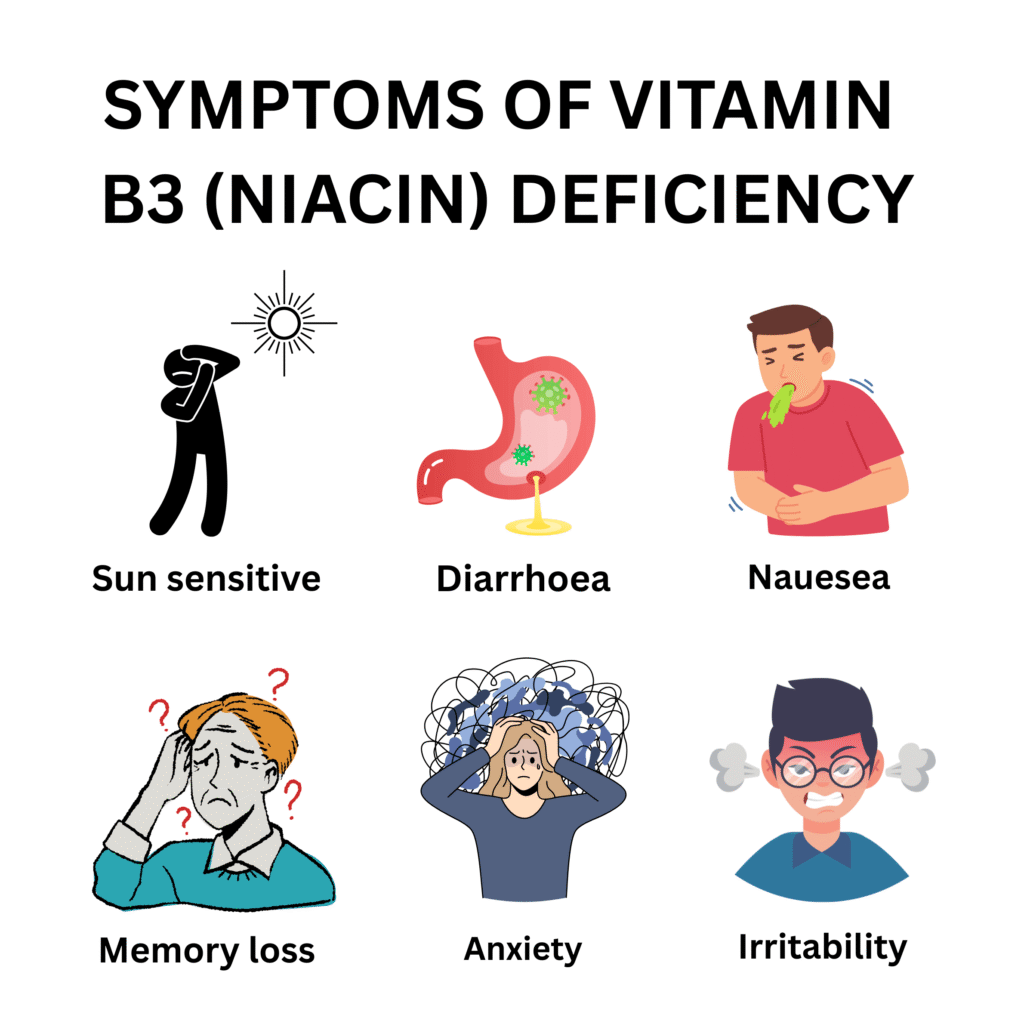
The Four Ds
D | Features | Timing |
Dermatitis | Bilateral, symmetric, sun-sensitive rash on sun-exposed skin. Begins as erythema resembling severe sunburn. Progresses to hyperpigmentation, thickening, scaling, and eventually cracking. The Casal necklace around the neck is pathognomonic. Also affects the dorsal hands, forearms, feet, and face | First to appear. Triggered or worsened by sunlight exposure |
Diarrhoea | Watery diarrhoea. Nausea, vomiting, and abdominal pain. Glossitis (inflamed tongue) and stomatitis (mouth inflammation) develop from the same mucosal atrophy affecting the gut. The glossitis of pellagra produces a bright red, painful tongue | Concurrent with or shortly after the rash |
Dementia | Confusion, memory loss, disorientation, irritability, depression, anxiety, halluci nations, and psychosis. The psychiatric features often present before the full neurological picture is clear | Later feature. Partially reversible with treatment if caught before severe damage |
Death | Untreated severe pellagra is fatal from a combination of diarrhoeal dehydration, infection secondary to skin breakdown, and neurological deterioration | End stage of untreated deficiency |
Table 2. The four Ds of pellagra. Sources: NIH ODS; NCBI StatPearls (2025); Merck Manual; Cleveland Clinic.
The Casal Necklace — The Pathognomonic Sign
The Casal necklace is the single most diagnostically specific physical finding in clinical nutrition. It is a symmetric, hyperpigmented, scaling, thickened rash that encircles the lower neck in the distribution of a broad necklace — corresponding precisely to the skin exposed above a shirt or blouse collar.
Named after the 18th century Spanish physician Gaspar Casal who first described it, the Casal necklace develops because ultraviolet light activates the pellagra rash preferentially on exposed skin while sparing covered areas. The sharp geometric boundary between affected and unaffected skin, following the neckline of the patient’s clothing, makes the diagnosis essentially certain.
The same rash affects the dorsal hands and forearms (in a “glove” distribution), the feet and lower legs (a “boot” distribution), and the face. The pattern maps directly to sun exposure.
Clinical Insight: When a patient presents with a bilateral, symmetric, hyperpigmented rash affecting the neck, dorsal hands, and face, with a sharp boundary at the collar and cuff lines — pellagra is the diagnosis. No other dermatological condition produces this precise sun-exposed distribution. Look at the neck first. The Casal necklace, when present, makes the clinical diagnosis before any blood test result returns.
The Gastrointestinal Features
The diarrhoea of pellagra results from NAD depletion in the rapidly dividing enterocytes of the gut mucosa. When NAD falls below the threshold needed for cellular energy production and DNA repair, mucosal cells undergo apoptosis faster than they can be replaced. The gut lining breaks down.
Glossitis in pellagra is intense and characteristic. The tongue becomes bright scarlet, smooth, and painful as the papillae atrophy. It resembles but is distinguishable from the magenta glossitis of riboflavin deficiency (which tends toward purple-red rather than bright red) and the pale, beefy glossitis of B12 deficiency. Stomatitis and angular cheilitis can accompany it.
The Neuropsychiatric Features
The mental changes of pellagra are the most commonly missed feature in contemporary clinical medicine. They present as a non-specific psychiatric syndrome: apathy, depression, anxiety, and irritability in early deficiency, progressing to confusion, paranoia, hallucinations, and psychosis in severe cases.
These features are indistinguishable from primary psychiatric disorders by clinical examination alone. The key is the clinical context. A patient with alcohol dependence, or a patient on isoniazid, or a patient with a very restricted diet who presents with new-onset psychiatric symptoms should always have a nutritional screen before a primary psychiatric diagnosis is accepted.
The overlap with other B-vitamin deficiencies is important. Vitamin B12 deficiency causes cognitive decline and psychiatric symptoms from a different mechanism. Vitamin B6 deficiency causes depression through impaired neurotransmitter synthesis. Thiamine deficiency causes Wernicke encephalopathy with confusion and ataxia. In practice, these deficiencies coexist — particularly in alcohol dependence — and a comprehensive B-vitamin assessment is always appropriate when any one of them is suspected.
What Causes Niacin Deficiency
Cause | Mechanism | Who Is Affected |
Corn-based diet without nixtamalisation | Corn contains niacin bound as niacytin — chemically attached to polysaccharides and proteins, making it unavailable for absorption. Corn is also low in tryptophan. Lime-water treatment (nixtamalisation) breaks the chemical bonds and releases free absorbable niacin. Untreated corn provides essentially no usable niacin or tryptophan | Communities relying on untreated corn as a dietary staple. Historically relevant in the American South. Currently relevant in some immigrant communities in the US and EU where traditional corn preparations are used without nixtamalisation |
Alcohol use disorder | Alcohol impairs absorption of niacin and tryptophan, displaces nutritious food from the diet, and increases metabolic demand for NAD in detoxification reactions. Pellagra from alcohol dependence is the most common cause in contemporary US and EU practice | Approximately 29 million Americans with alcohol use disorder per SAMHSA 2023. Pellagra occurs alongside thiamine, riboflavin, folate, and B6 deficiency in this population |
Isoniazid (anti-TB medication) | Isoniazid inhibits pyridoxal kinase, the enzyme that produces the active form of Vitamin B6. Since B6 is required for the conversion of tryptophan to niacin, isoniazid effectively blocks endogenous niacin synthesis. This is a double deficiency: both B6 and niacin are functionally depleted simultaneously | All patients on isoniazid for tuberculosis treatment or prophylaxis. Pyridoxine supplementation is mandatory for all isoniazid recipients. Niacin should be added if pellagra features develop |
Carcinoid syndrome | Carcinoid tumours produce excess serotonin from tryptophan. When a significant proportion of dietary tryptophan is diverted to serotonin synthesis, the supply available for niacin synthesis is depleted. This creates functional niacin deficiency even on an adequate diet | Patients with carcinoid tumours — gastric, bronchial, or midgut carcinoids capable of secreting serotonin. Pellagra may be the presenting feature of an undiagnosed carcinoid |
Hartnup disease | Autosomal recessive disorder impairing intestinal and renal transport of neutral amino acids, including tryptophan. Without adequate tryptophan absorption, niacin synthesis fails | Rare genetic condition. Characteristically presents with photosensitive pellagra-like rash, cerebellar ataxia, and aminoaciduria in childhood. Responds to nicotinamide supplementation |
Anorexia nervosa and severe malnutrition | Severe overall protein-calorie restriction reduces both dietary niacin and tryptophan intake simultaneously | Eating disorder patients, particularly in severe cases requiring hospital admission. Pellagra is documented in case series from eating disorder treatment units in the US and UK |
Prolonged total parenteral nutrition without niacin | TPN formulations not adequately supplemented with B vitamins. Modern TPN includes niacin as standard, but home TPN or modified formulations may be inadequate | Patients on home TPN. A preventable iatrogenic cause |
Inflammatory bowel disease and malabsorption | Inflamed intestinal mucosa impairs niacin and tryptophan absorption. Active Crohn’s disease with extensive small bowel involvement is the most relevant malabsorptive cause | Patients with extensive Crohn’s disease, particularly those with significant small bowel involvement |
Table 3. Causes of niacin deficiency in the US and EU context. Sources: NIH ODS; NCBI StatPearls (2025); Merck Manual; SAMHSA 2023.
The Corn and Nixtamalisation Story — A Lesson That Still Matters
The pellagra epidemic in the American South between 1906 and 1940 killed approximately 100,000 people and left hundreds of thousands permanently disabled. The epidemic followed the adoption of de-germed, milled corn as the dietary staple of low-income sharecroppers and tenant farmers across the Southeast.
What baffled researchers was why corn caused pellagra in the American South but not in Mexico and Central America, where corn had been a dietary staple for thousands of years without producing pellagra.
The answer was nixtamalisation. Mesoamerican civilisations soaked their corn in an alkaline solution of calcium hydroxide (lime water) before grinding it. This process, known as nixtamalisation, breaks the covalent bonds linking niacin to the polysaccharide and protein matrix of corn (forming niacytin). Free, absorbable niacin is released. The calcium hydroxide also improves the amino acid profile of the corn protein, increasing the tryptophan content.
When Europeans adopted corn as a crop but not the traditional lime-water preparation method, they created a food with dramatically inferior nutritional value. The nixtamalised tortilla protects against pellagra. The milled corn flour does not.
This is one of nutritional epidemiology’s most instructive examples of how food preparation determines nutritional value. The same raw ingredient, prepared in two different ways, produces opposite nutritional outcomes.
In contemporary US practice, this matters for communities eating non-nixtamalised corn products — certain traditional preparations from immigrant communities, home-ground masa from untreated corn, and in specific dietary situations where commercial fortified corn products are unavailable.
Why Isoniazid Causes Pellagra — And What to Do About It
Isoniazid is the cornerstone of tuberculosis treatment used in US and EU TB programmes. Its connection to pellagra is mechanistically elegant and clinically important.
The conversion of tryptophan to niacin requires a series of enzymatic steps. Two of these steps require pyridoxal phosphate (the active form of Vitamin B6) as a cofactor. Isoniazid inhibits pyridoxal kinase, preventing the phosphorylation of pyridoxine to pyridoxal phosphate. Without pyridoxal phosphate, the tryptophan-to-niacin conversion stalls.
The clinical result: a patient on isoniazid who is not receiving pyridoxine supplementation develops both B6 deficiency and functional niacin deficiency simultaneously. The skin rash, diarrhoea, and psychiatric features of pellagra develop on top of the peripheral neuropathy of B6 deficiency.
Prevention is straightforward: pyridoxine 25 to 50 mg daily is standard co-prescription with isoniazid. If pellagra features develop despite pyridoxine, add nicotinamide 100 mg three times daily.
Carcinoid Syndrome and Pellagra — The Rare but Important Connection
Carcinoid tumours divert tryptophan toward serotonin synthesis. In normal physiology, approximately 1% of dietary tryptophan is used for serotonin production. In carcinoid syndrome, this proportion can rise to 60% or more.
When the majority of available tryptophan is being consumed by serotonin synthesis, the supply available for niacin production is critically reduced. Niacin deficiency develops despite adequate dietary intake of both niacin and tryptophan.
The clinical implication: pellagra in a patient without obvious dietary cause, alcohol dependence, or drug exposure should trigger investigation for carcinoid syndrome. A 24-hour urine 5-HIAA (the primary serotonin metabolite) and chromogranin A levels are the initial investigations.
Treating the carcinoid reduces tryptophan diversion and resolves the pellagra. Nicotinamide supplementation provides symptom relief while the underlying tumour is being treated.
Diagnosis
Pellagra is primarily a clinical diagnosis. The combination of the characteristic rash distribution, gastrointestinal symptoms, and neuropsychiatric features in a patient with a recognised cause is sufficient for diagnosis and treatment. Laboratory confirmation supports but should not delay treatment.
Clinical Assessment
The physical examination findings that confirm pellagra are:
The Casal necklace: bilateral, symmetric, hyperpigmented, scaling rash encircling the neck at the collar line. This finding alone, in the right clinical context, confirms the diagnosis.
Glove and boot distribution: dorsal hand and foot involvement with a sharp demarcation at the wrist and ankle.
Glossitis: bright red, smooth, painful tongue with papillary atrophy.
Psychiatric assessment: confusion, depression, irritability, or more severe psychiatric features in the context of a recognised pellagra cause.
Blood Tests
Plasma niacin and metabolites: Urinary N-methylnicotinamide (NMN) and 2-pyridone are the primary urinary metabolites of niacin. Urinary NMN below 0.8 mg per day indicates deficiency. Plasma tryptophan and niacin levels can be measured in specialist laboratories but are less clinically available.
Concurrent B-vitamin screen: Always check Vitamin B6, riboflavin, thiamine, and folate simultaneously. In alcohol dependence and malnutrition, these deficiencies coexist in the majority of cases. Treating niacin while missing concurrent thiamine, for example, leaves the patient at risk of Wernicke encephalopathy.
Full blood count and metabolic panel: Iron, zinc, and magnesium levels matter particularly in alcohol dependence, where multiple mineral deficiencies coexist.
Urine 5-HIAA and chromogranin A: If pellagra is present without obvious cause (no alcohol dependence, no isoniazid, no corn-restricted diet), investigate for carcinoid syndrome.
Amino acid profile: Useful in suspected Hartnup disease — shows generalised neutral aminoaciduria, confirming the transport defect.
Treatment
Pellagra Treatment
Clinical Scenario | Treatment | Notes |
Pellagra — dietary or alcohol-related | Nicotinamide (niacinamide) 100 mg three times daily for 3 to 4 weeks | Use nicotinamide, not nicotinic acid. No flush. Skin and gut symptoms improve within days. Psychiatric features improve more slowly over weeks |
Severe pellagra with psychiatric features | Nicotinamide 100 to 300 mg three times daily. IV or IM nicotinamide if oral route unavailable | Higher doses justified by severity. Concurrent treatment of all nutritional deficiencies |
Isoniazid-related pellagra | Pyridoxine 25 to 50 mg daily (mandatory for all isoniazid users) plus nicotinamide 100 mg three times daily if pellagra features present | Continue isoniazid for tuberculosis treatment. Add B-vitamins, not discontinue the antibiotic |
Pellagra in alcohol use disorder | Nicotinamide 100 mg three times daily plus full B-complex: thiamine first, then riboflavin, B6, and folate | All B vitamins are depleted simultaneously. Thiamine must come first to prevent Wernicke encephalopathy if IV fluids are being given |
Hartnup disease | Nicotinamide 50 to 200 mg daily lifelong, high-protein diet to maximise tryptophan availability | Lifelong supplementation required because the transport defect cannot be corrected |
Carcinoid-related pellagra | Nicotinamide alongside treatment of the primary carcinoid tumour (octreotide, surgery, or ablation) | Nicotinamide treats the deficiency while definitive carcinoid treatment reduces tryptophan diversion |
Table 4. Niacin deficiency treatment protocol. Sources: NIH ODS; NCBI StatPearls (2025); Merck Manual.
Nicotinamide vs Nicotinic Acid — A Critical Distinction
Both compounds correct niacin deficiency with equal effectiveness. They are NOT interchangeable in terms of side effects.
Nicotinamide (niacinamide): The preferred form for deficiency treatment. Does not cause the flush reaction. Safe at therapeutic doses. No hepatotoxicity at doses used for deficiency treatment (100 to 300 mg three times daily).
Nicotinic acid (niacin): Causes a characteristic prostaglandin-mediated flush — redness, warmth, and itching of the face, neck, and upper chest — within 15 to 30 minutes of a dose. At the pharmacological doses used for lipid management (1 to 3 grams per day), nicotinic acid also carries risks of hepatotoxicity, hyperglycaemia, and hyperuricaemia. Aspirin 325 mg taken 30 minutes before a nicotinic acid dose substantially reduces the flush.
For deficiency treatment, always prescribe nicotinamide.
Recovery Timeline
What Improves | Timeline |
Skin rash begins improving | 2 to 4 days |
Diarrhoea resolves | 3 to 7 days |
Glossitis heals | 1 to 2 weeks |
Neuropsychiatric symptoms improve | 2 to 4 weeks — longer in severe or prolonged cases |
Skin hyperpigmentation fades | Weeks to months — may not fully resolve |
Cognitive features in chronic disease | Months — partial recovery only in longstanding dementia |
Table 5. Recovery timeline for niacin deficiency. Source: Clinical experience; NCBI StatPearls (2025).
High-Dose Niacin for Dyslipidaemia
This is a separate clinical application of niacin at pharmacological doses, distinct from deficiency treatment.
Nicotinic acid at 1 to 3 grams per day has well-established lipid effects: it raises HDL cholesterol, lowers triglycerides, lowers LDL cholesterol, and reduces Lp(a). It was widely used for dyslipidaemia before the statin era and continues to be used in specific clinical situations.
However, high-dose nicotinic acid carries significant risks at pharmacological doses:
Hepatotoxicity: Particularly with sustained-release formulations. Liver enzymes must be monitored at baseline and regularly during therapy. Acute liver failure has been reported.
Hyperglycaemia: Nicotinic acid worsens insulin resistance and raises blood glucose. Use with caution in pre-diabetic patients and requires monitoring in diabetic patients on <a href=”https://medbeaconhub.com/vitamin-b12-deficiency-symptoms/”>metformin</a> or other antidiabetics.
Hyperuricaemia: Niacin reduces renal uric acid excretion. Can precipitate gout in susceptible individuals.
Flush: The prostaglandin-mediated flush is managed with aspirin pretreatment and dose titration.
The AIM-HIGH and HPS2-THRIVE trials (2011 and 2013) failed to show cardiovascular outcome benefit from adding high-dose niacin to statin therapy. As a result, high-dose niacin is no longer recommended as routine add-on lipid therapy in US or European cardiovascular guidelines. It retains a role in specific situations: severe hypertriglyceridaemia, statin intolerance, and elevated Lp(a) when other options are exhausted.
This pharmacological use of niacin is entirely separate from, and should not be confused with, the treatment of niacin deficiency.
Best Food Sources of Niacin
The most reliable niacin sources in the American and European diet are animal proteins — meat, poultry, and fish — because they provide both preformed niacin and the tryptophan that can be converted to niacin equivalents. Plant foods contribute variable amounts depending on processing.
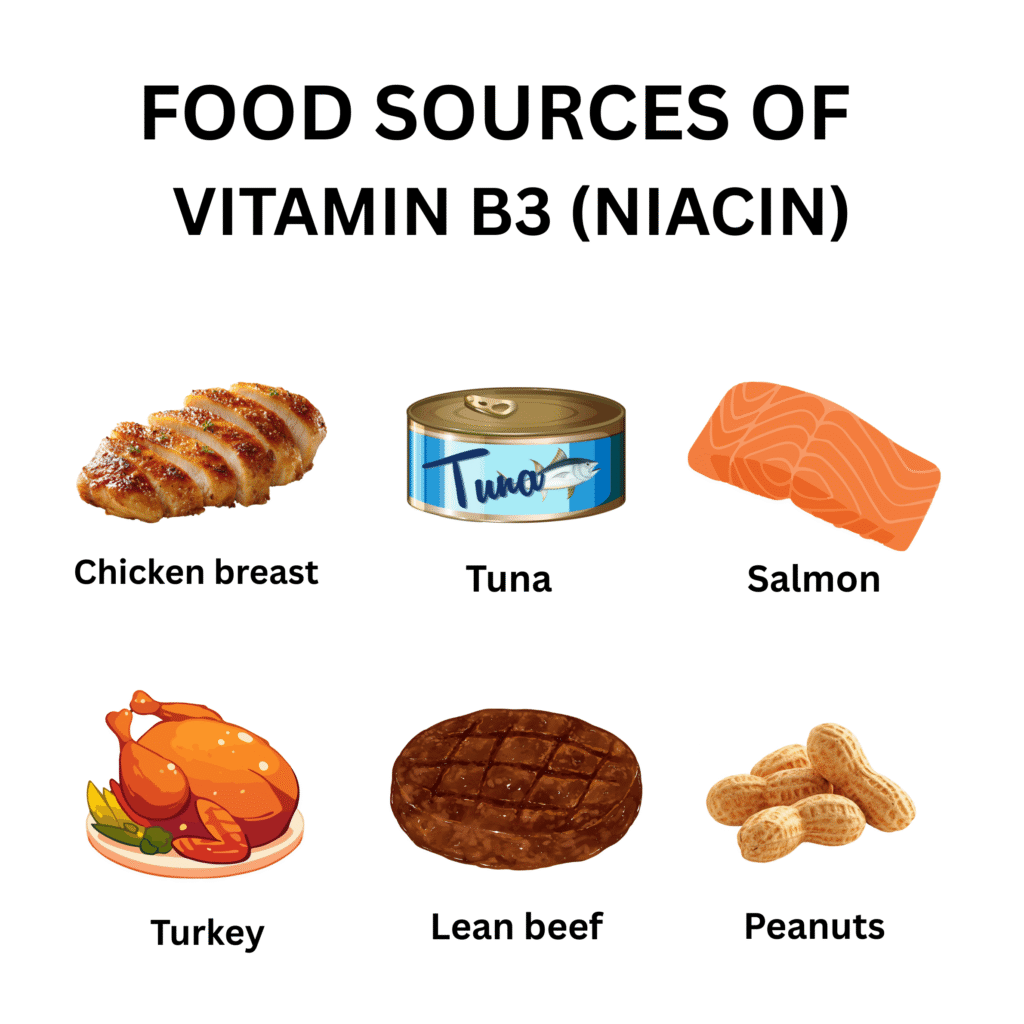
Food | Serving | Niacin (mg NE) | Notes |
Chicken breast, cooked | 85 g | 8.9 mg NE | Outstanding everyday source |
Tuna, light, canned in water | 85 g | 11.3 mg NE | Single richest common food source per serving |
Salmon, cooked | 85 g | 8.6 mg NE | |
Beef, lean, cooked | 85 g | 6.6 mg NE | |
Turkey, roasted | 85 g | 5.8 mg NE | Good protein and niacin source |
Fortified breakfast cereal | 1 serving | 5 to 27 mg NE | Mandatory US fortification includes niacin. Check label |
Pork loin, cooked | 85 g | 6.2 mg NE | Good everyday source |
Peanuts | 28 g | 4.2 mg NE | Best plant source per serving |
Peanut butter | 2 tablespoons | 4.0 mg NE | Accessible and affordable |
Brown rice, cooked | 1 cup | 3.0 mg NE | Provides niacin from bran layer retained in brown rice |
Whole wheat bread | 2 slices | 3.6 mg NE | US fortification adds niacin to wheat flour products |
Potatoes, baked with skin | 1 medium | 2.9 mg NE | Good vegetable source |
Mushrooms, cooked | Half cup | 3.5 mg NE | Excellent plant source alongside riboflavin |
Avocado | Half medium | 1.7 mg NE | Good fruit source |
Lentils, cooked | Half cup | 1.0 mg NE |
Table 6. Top dietary sources of niacin. Source: NIH ODS; USDA FoodData Central. Adult RDA: men 16 mg NE, women 14 mg NE per day. Values include both preformed niacin and niacin from tryptophan conversion.
Why fortification matters: White bread and white rice in the United States are enriched with niacin as a legal requirement. This single policy decision, implemented in 1943, eliminated pellagra from the American South within a decade. Without fortification, the widespread consumption of milled, refined grains would produce niacin deficiency across the lower-income segments of the US population as it did in the 1920s and 1930s.
Frequently Asked Questions About Niacin Deficiency
Related Articles on MedBeaconHub.com
- Nutritional Deficiency Diseases: The Complete Doctor’s Guide
- Vitamin B1 Thiamine Deficiency: Beriberi and Wernicke Encephalopathy
- Vitamin B2 Riboflavin Deficiency: Symptoms, Migraine and MTHFR
- Vitamin B6 Deficiency: Depression, Neuropathy and the OCP
- Folate Deficiency: The Pregnancy-Critical B Vitamin
- Vitamin B12 Deficiency: Nerve Damage and Pernicious Anaemia
- Vitamin B7 Biotin Deficiency: Hair Loss and the FDA Warning
- Iron Deficiency Anaemia: Symptoms and Treatment
- Zinc Deficiency: Immunity, Taste and Wound Healing
- Magnesium Deficiency: Sleep, Anxiety and Muscle Cramps
- Selenium Deficiency: The Thyroid and Mitochondrial Mineral
- Vitamin D Deficiency: The Most Common US Deficiency
- Vitamin C Deficiency: Scurvy and Iron Absorption
- Vitamin A Deficiency: Night Blindness and Immunity
- Vitamin K Deficiency: Bleeding and Warfarin
References and Authoritative Sources
- NIH Office of Dietary Supplements — Niacin Fact Sheet for Health Professionals
- NCBI StatPearls — Niacin Deficiency (Updated 2025)
- Merck Manual Professional Edition — Niacin Deficiency
- Cleveland Clinic — Pellagra
- CDC — History of Pellagra in the United States
- WHO — Pellagra and Its Prevention and Control in Major Emergencies
- SAMHSA — 2023 National Survey on Drug Use and Health
- PMC — Pellagra: Dermatitis, Diarrhoea, and Dementia (2023 Review)
- American Journal of Clinical Nutrition — High-Dose Niacin and Cardiovascular Outcomes: AIM-HIGH and HPS2-THRIVE Reanalysis (2024)
- PMC — Pellagra in the 21st Century: Current Cases and Emerging Risk Factors (2024)